
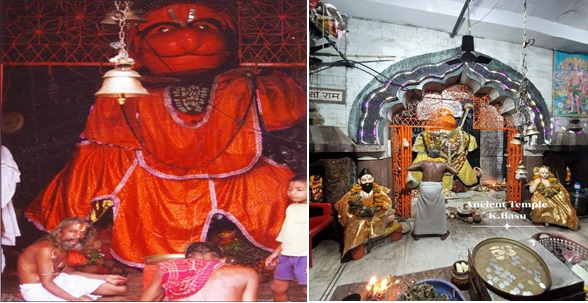
 Tapasvi Hanuman of Puri
Objectives
Objective 1: To describe the significance, location, and unique features of the Tapasvi Hanuman Temple in Puri
Objective 2: To explain the religious significance, architectural features, and guardian role of the Tapasvi Hanuman Temple
Objective 3: To describe the principal deity of the Tapasvi Hanuman Temple, and role as the guardian of the northern gateway of the Sri Jagannath Temple.
Objective 4: To narrate the scripture of how Lord Jagannath humbled the pride of Sudarsana Chakra through Lord Hanuman.
Objective 5: To provide information on the location of the Tapasvi Hanuman Temple and the various transportation options available for reaching the shrine from major landmarks and transit points in and around Puri.
Objective 1: To describe the significance, location, and unique features of the Tapasvi Hanuman Temple in Puri
Chari Chakra Hanuman – Tapasvi Hanuman Temple
Tapasvi Hanuman Temple is a small but important shrine dedicated to Lord Hanuman in Puri. It is located at the north gate (elephant gate or Hasti Dwara) of Jagannath Temple for the protection of the Temple. He is also called as Chari Chakra Hanuman and Asta Bhuja Hanuman. Chari Chakra means that he is holding four Chakras in his hands. This deity of Hanuman is four feet in height and faces east. Four hands holding Sudarsana Chakra, Two hands chanting the Holy name of the Lord and the other Two hands offering pranams, He is in Padmasana posture. This temple is regarded as one of the guardian Hanuman shrines protecting the sacred temple complex.
Structure of the shrine
Objective 2: To explain the religious significance, architectural features, and guardian role of the Tapasvi Hanuman Temple
The Tapasvi Hanuman Temple is one of the Ashta Mahaviras, the eight protective forms of Lord Hanuman that guard the holy city of Puri and the Jagannath Temple complex. The temple houses a distinctive 4-foot-tall, east-facing idol of Lord Hanuman, who is depicted in the unique Chari-Chakra form, holding four chakras (discs) that symbolize his authority over the four cardinal directions and his role as the guardian of the temple’s northern side.
Architecturally, the shrine reflects the traditional Kalinga style of Odisha. Constructed primarily from sandstone and local stone, it features a characteristic tiered or pyramidal roof that represents the region’s distinctive temple architecture. In the sacred geography of Puri, Tapasvi Hanuman is worshipped as the Kshetrapala (guardian deity), protecting the Artha Dwara (North Gate), which is traditionally associated with wealth and prosperity. He is revered as the divine protector who safeguards the temple from negative influences while ensuring the well-being, prosperity, and spiritual security of devotees. Thus, the temple occupies a significant place in the sacred landscape of Puri as a symbol of divine guardianship and unwavering protection.
Presiding deity
Objective 3: To describe the principal deity of the Tapasvi Hanuman Temple, and role as the guardian of the northern gateway of the Sri Jagannath Temple
The principal deity of the Tapasvi Hanuman Temple is Lord Hanuman, worshipped in a distinctive form known as Chari-Chakra Hanuman, where he is portrayed carrying four sacred chakras (discs) in his hands. In this form, Hanuman is revered as the divine protector of the northern gateway (Hasti Dwara) of the sacred Sri Jagannath Temple. He stands as an eternal guardian, safeguarding the temple precincts and preserving the sanctity of the holy shrine. The idol is about four feet high, faces east, and is depicted in a Padmasana (meditative) posture. The image symbolizes Hanuman performing deep penance (tapasya), so he is called Tapasvi Hanuman.
Scriptural Reference
Objective 4: To narrate the scripture of how Lord Jagannath humbled the pride of Sudarsana Chakra through Lord Hanuman
Once Sudarsana Chakra of the Lord became proud of being associated with the Lord. But Lord Jagannath did not like the pride of Sudarsana Chakra. The Chakra thought that he was the most powerful as the Lord was protected by him and depended upon him. Lord Jagannath decided to correct Sudarsana Chakra’s pride and sent the Chakra to call Hanuman. At that time Hanuman was engaged in Tapasya at Abhayarnaya.
Sudarsana Chakra informed Lord Hanuman that Lord Jagannath wanted to see him. Immediately, Lord Hanuman started his journey to meet the Lord. After informing Hanuman, Sudarsana Chakra returned to the temple and reached before Hanuman. As Hanuman neared the temple gates, Sudarsana Chakra started to move swiftly around the temple premises blocking the path of Hanuman and prevented him reaching the Ratna Simhaasana.
Lord Hanuman prayed to Lord Jagannath. The Lord blessed him with extra six arms. Thus he became Ashta Bhuja Hanuman. Four Hands holding Sudarsana Chakra, Two hands chanting the Holy name of the Lord and the other Two hands offered pranams. Lord Hanuman then proceeded towards the Ratna Simhaasana to meet Lord Jagannath. After some time, Sudarsana Chakra also reached there in great distress.
Lord Jagannath wanted to punish Sudarsana Chakra for his offence to Hanuman and also wanted to destroy his great pride. Sudarsana Chakra was ashamed to see Hanuman was more powerful than he and he was not able to prevent Hanuman from entering the temple. Thus, the Lord cursed Sudarsana Chakra that in the age of Kali he would not have his disc from rather he would take the form of a pillar/ stambha which would always be the left side of the Lord Jagannath.
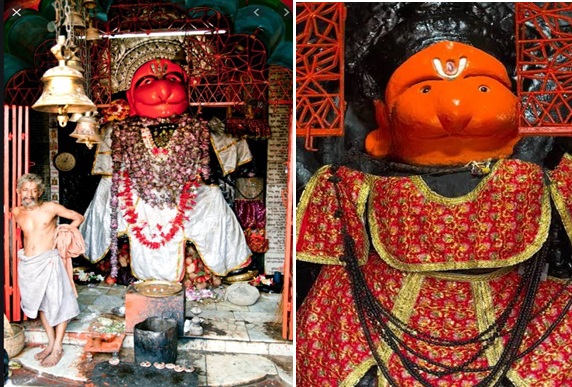 Tapasvi Hanuman
Location
Objective 5: To provide information on the location of the Tapasvi Hanuman Temple and the various transportation options available for reaching the shrine from major landmarks and transit points in and around Puri.
● The temple is located in the northern part of Puri town, near the northern side of the sacred precincts associated with the Jagannath tradition. It is one of the Ashta Mahavira (Eight Hanuman) shrines that protect Puri.
● From Puri Railway Station, the temple is about 3–4 km away. You can hire an auto-rickshaw, cycle-rickshaw, or taxi and reach it in about 10–15 minutes, depending on traffic.
● From Shree Jagannath Temple, the temple is roughly 1–2 km away and can be reached by auto-rickshaw or on foot through the local streets surrounding the temple area. It is located next to the Jay Vijay Dwar/Northern Gate of the main Shree Jagannath Temple.
● If arriving by air, the nearest airport is Biju Patnaik International Airport, about 60 km from Puri. From the airport, taxis and buses are available to Puri
