
Objectives:
Objective 1: To identify the location, architectural features, historical background, and ritual significance of the Bhoga Mandapa within the Jagannath Temple complex.
Objective 2: To understand the preparation, offering, distribution, and spiritual significance of Jagannath Mahaprasad, including the traditions of the temple kitchen and Bhoga Niti.
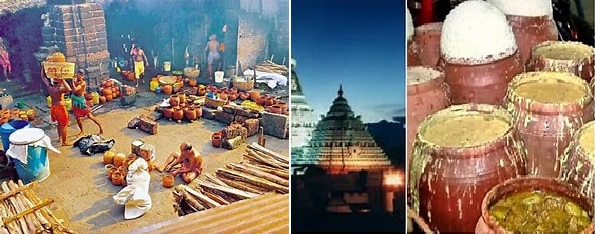
Objective 1: To identify the location, architectural features, historical background, and ritual significance of the Bhoga Mandapa within the Jagannath Temple complex.
The Bhoga Mandapa (or Hall of Offerings) is the outermost hall of the main temple structure at the Shree Jagannath Temple, Puri. It is located approximately 200 feet from the inner sanctum and serves as the primary location for offering and distributing the deity’s sacred food, known as Mahaprasad.
History and Architecture
● Construction: Built by King Purusottam Dev of the Suryavanshi dynasty in the 7th year of his reign.
● Design: It is a massive square hall measuring 58 by 56 feet, built of yellowish sandstone. Uniquely, it is the only structure in the complex that has remained without plastered.
● Exterior Carvings: The outer walls are covered in intricate stone carvings depicting mythological scenes, including Lord Shiva, Lord Krishna, and the marching of royal armies.
Significance and Rituals
● Chatra Bhog: This hall is the designated area for Chatra Bhog, a public offering tradition attributed to Adi Shankaracharya in the 8th century to allow pilgrims to share temple food.
● Two-Step Offering: Bhoga is first offered to the deities in the sanctum and is then offered again as Sankudi Bhoga in the Bhoga Mandapa.
● Darshan: When the bhoga is offered here, the connecting doors to the inner halls remain open, allowing devotees to have a direct vision (darshan) of the deities while the offerings are made.
Mahaprasad and Distribution
Objective 2: To understand the preparation, offering, distribution, and spiritual significance of Jagannath Mahaprasad, including the traditions of the temple kitchen and Bhoga Niti.
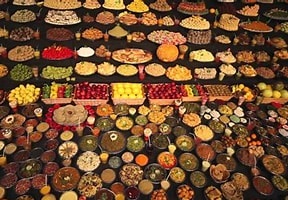
The Sacred Mahaprasad is the sanctified food offered to Lord Jagannath and his siblings at the Jagannath Temple in Puri, India. Cooked in the world’s largest temple kitchen using traditional clay pots and firewood, it is considered divine, completely egalitarian, and an agent of spiritual liberation.
The Jagannath Temple kitchen spans approximately 44,000 square feet, located in the southeastern part of the temple complex. Operated every single day of the year, it serves more than 20,000 devotees on a regular day, and on festivals, that number can exceed 50,000.
The massive temple kitchen operates 250 earthen ovens over a fire known as Vaishnava Agni, which is believed to have burned continuously for centuries without ever being extinguished.
● 9 clay pots (matkas) are stacked in pyramid style per burner
● Over 56 dishes prepared daily, served six times a day
● Only earthen pots are used; they are discarded after single use
This kitchen runs with such precise harmony and traditional rigor that it has functioned for centuries without a written operations manual.
1. The Structure and Layout of the Kitchen
Upon entering the temple through the Simhadwar (main gate), one finds the kitchen complex to the left. Inside, a vast courtyard buzzes with activity—yet operates with astonishing discipline.
Key architectural and ritual features:
● Located in the Agneya Kona (southeast corner) as per Vastu Shastra
● Contains 9 sacred wells, especially the Ganga Kua (square) and Yamuna Kua (circular), used for cooking water
● Tandoor-style stoves (chulhas) made from brick and clay
● Food is cooked using only firewood sourced with ritual purity
Each stove acts as a sacred yantra. Before cooking begins, Vedic fire rituals (Agni Sanskar) are performed to invoke divine energies.
2. The Cooking Process – Sacred and Scientific
The cooking process is awe-inspiring and esoteric:
● Clay pots filled with rice, dal, vegetables, and sweets are stacked vertically, one over another—up to five to seven levels high
● Miraculously, the food in the topmost pot cooks first, followed by the ones below, despite the fire being at the bottom
● This defies physics, but is accepted as a divine intervention by Lord Jagannath himself
This phenomenon is widely believed to be possible because Goddess Lakshmi herself prepares the food spiritually, and the fire acts merely as a conduit of her energy.
3. The Human Machinery Behind the Divine Process
This operation is managed by a vast and highly specialized human workforce divided into ancient guilds:
● Suaras – The main cooks (around 500), drawn from hereditary lines
● Joganias – Assistants handling water, firewood, cleanliness (about 300)
● Tunia – Helpers who provide support from outside the kitchen
● Mahasuaras – Those who transport and distribute Mahaprasad
● Kumbharas – Over 300 potters who make new clay pots daily
Training in these roles begins at the age of 12, ensuring a lifelong understanding of ritual purity, precision, and spiritual intent.
4. Mahaprasad – The Sacred Food Offerings
Mahaprasad is classified into three major categories:
1. Sankhudi (Cooked items) – Includes rice, dal, curries, khichdi, and vegetables
2. Nisankhudi (Dry items) – Includes laddus, khaja, gaja, malpua, and manohara
3. Nirmalya – Dried and consecrated rice used in rituals and healing
5. The 56 Bhog (Chhappan Bhog)
The temple prepares a divine menu of 56 items, traditionally offered to Lord Jagannath every day. The distribution includes:
• 9 varieties of rice: plain, lemon, ghee rice, curd rice, sweet rice, etc.
• 14 types of seasonal vegetables
• 9 milk-based items
• 11 sweetmeats
• 13 types of cakes, pancakes, and pithas
No garlic, onion, potato, or tomato is ever used. Instead, preferred ingredients include green banana, ridge gourd, pumpkin, and bottle gourd. The only fat used is pure desi ghee. Spices are kept minimal—ginger, cumin, pepper, turmeric, cardamom, and cinnamon.
6. Daily Offerings (Bhog Niti)
Mahaprasad is offered to Lord Jagannath six times daily, each with distinct menu items and spiritual significance:
1. Gopal Vallabh Bhog (8:00 AM) – Fruits, curd, and butter
2. Sakala Bhog (10:00 AM) – Boiled black gram and other offerings
3. Madhyanha Bhog (12:00 PM) – Grand noon meal for the Lord
4. Sandhya Dhupa (2:00 PM) – Evening meal
5. Sayana Dhupa (7:00 PM) – Dinner before sleep
6. Bada Singhara Bhog (10:00 PM) – Night offering with sweets and milk
7. Sacred Rituals – From Grain to Mahaprasad
Mahaprasad follows 11 sacred transformations, from simple grain to divine offering:
1. Rice → Amuniya
2. Cooking → Anna
3. Transport to inner sanctum → Cheka
4. Offering on Shree Yantra → Bhoga
5. Infusion with Mantras → Naivedya
6. Serving to deities → Prasada
7. Offering to Goddess Vimala → Mahaprasad
8. Sanctified by Five Devas’ Glance → Kaivalya
9. Devotees eat together → Aavadha
10. Dried rice → Nirmalya
11. Consumed post-puja → Parambrahma
8. Spiritual Significance
● Anna Brahma: The food is considered divine substance rather than mere nourishment. Eating it is believed to lead to Kaibalya (spiritual liberation).
● Nirmalya: The dried, consecrated rice given to devotees is believed to carry the Lord’s blessings. It is considered so sacred that a bit of it is often placed on the tongue of a dying devotee, believed to guarantee a place in heaven.
9. Rath Yatra & Gundicha Temple Kitchen
During the Rath Yatra festival, Lord Jagannath travels to the Gundicha Temple, where Mahaprasad is prepared in a completely open-air kitchen, known as Agnya. Not even birds or animals are allowed to interfere during the sacred preparation.
10. A Living Miracle in Modern Times
Despite handling tens of thousands of devotees daily, no food is ever wasted, and no one goes unfed. What’s even more astounding is that the amount of food cooked each day varies precisely with the number of devotees—without the use of any modern forecasting tools. This precision is considered divine intervention.
11. The Spirit of Equality
● At the Ananda Bazaar (the bustling market area inside the temple complex where the Mahaprasad is sold), all social barriers are broken. Kings and commoners sit together on the floor and share the exact same food out of banana leaves, symbolizing that God belongs to and unites everyone equally.
For devotees, consuming Mahaprasad is equivalent to a spiritual initiation. It is not merely food—it is the divine Brahma, offered with devotion, transformed through ritual, and blessed by the gods.
