
Objectives
Objective 1.To understand the significance of Ananda Bazaar as the sacred marketplace for Lord Jagannath’s Mahaprasad.
Objective 2.To examine the teachings of the Skanda Purana and Tulsidas on the sanctity of the Lord’s Prasadam.
Objective 3.To explore the sacred transformation of food into Mahaprasad through Lord Jagannath’s divine acceptance.
Objective 4.To recognize Mahaprasad as the Lord’s blessed food, revered by devotees for its sacredness.
Objective 1.To understand the significance of Ananda Bazaar as the sacred marketplace for Lord Jagannath’s Mahaprasad.
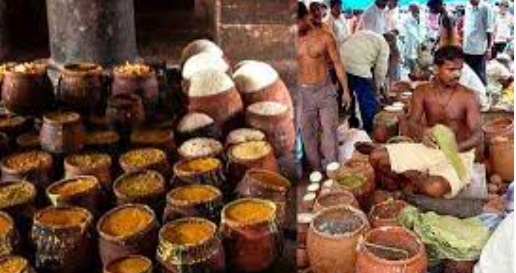
Ananda Bazaar, meaning “market of happiness,” is within the Jagannath Temple complex in Puri. Here Lord Jagganath’s Mahaprasad is distributed and sold. It is situated on the north-east side of the Singhadwara (Lion’s Gate) and to the right of the 22 steps (Baisi Pahacha).
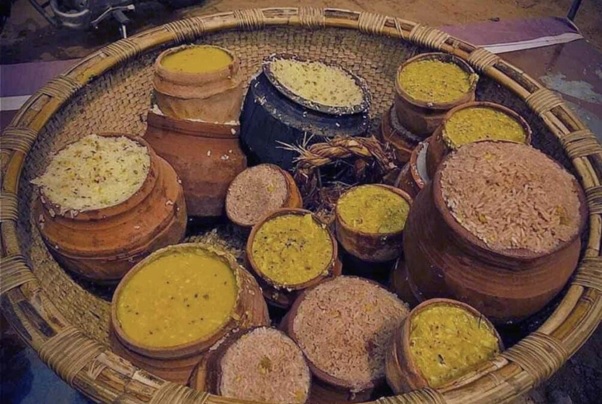
The Sacred Mahaprasad is the sanctified food offered to Lord Jagannath and his siblings at the Jagannath Temple in Puri, India. The Sacred Mahaprasad is strictly vegetarian food. Cooked in the world’s largest temple kitchen using traditional clay pots and firewood, it is considered divine, completely egalitarian, and an agent of spiritual liberation.
Scriptural reference:
Objective 2.To examine the teachings of the Skanda Purana and Tulsidas on the sanctity of the Lord’s Prasadam.
Skanda Purana
According to traditional references such as the Skanda Purana, Lord Jagannatha redeems the devotees by permitting them to partake in his Maha Prasad, to have his darshan and to worship him by observing rituals and by offering of gifts.
Maha Prasad is treated here as ‘Anna Brahma’. The Skanda Purāṇa reveals the profundity of this transformation:
“Mahaprasado janaih bhuktva na punarjanma labhate.
— Skanda Purana, Purushottama Mahatmya
“One who partakes Mahaprasad with sincere faith is freed from the cycle of rebirth.”
In the spiritual sciences of India, food carries vibration (spanda). When God accepts the offering, the vibration shifts — from the physical to the divine. Mahaprasad nourishes the body, yes. But more importantly — it nourishes the soul.
Mahaprasad: The Union of Bhakti, Equality & Liberation
Mahaprasad is rasa — the distilled essence of devotion. It is where bhāva (emotion) meets grace (kripā).
Tulsidas
Tulsidas writes with tenderness:
Prasadu Hari ka prema som, jo pavai so dhanya.
“Blessed is the one who receives the Lord’s prasadam, for it is soaked in His love.”
Mahaprasad is not simply received — it is accepted, experienced, absorbed. It is God saying, “I have accepted your offering; now accept My love.”
Maha Prasad
Objective 3.To explore the sacred transformation of food into Mahaprasad through Lord Jagannath’s divine acceptance.
When the simple food touches the Lord Jagganath’s feet, in that moment every grain becomes charged with His anugraha—divine blessing, divine vibration. The simple food becomes Mahaprasad.
The Divine Kitchen of Lord Jagannath
The kitchen of Jagannath Temple is the world’s largest functioning temple kitchen, serving 20,000–50,000 devotees daily. It uses 250 earthen ovens, sacred Vaishnava Agni, and single-use clay pots to prepare the Lord’s offerings. Built in the Agneya (southeast) corner according to Vastu Shastra, the kitchen draws water from sacred wells and follows strict ritual purity. A unique tradition holds that the topmost pot cooks first, a miracle attributed to the blessings of Goddess Lakshmi.
Hundreds of hereditary cooks prepare the famous 56 Bhog, which is offered to Lord Jagannath six times daily. The offering becomes Mahaprasad only after being presented to Vimala Temple. During Rath Yatra, Mahaprasad is prepared at the Gundicha Temple. At Ananda Bazaar, people of all backgrounds share the sacred food together, symbolizing equality and divine grace. For devotees, Mahaprasad is Anna Brahma—the Lord’s mercy that nourishes both body and soul.
Offering on Shree Yantra → Bhoga
Infusion with Mantras → Naivedya
Serving to deities → Prasada
In that moment when food touches the Lord’s feet, every grain becomes charged with His anugraha—divine blessing, divine vibration.
Offering to Goddess Vimala → Mahaprasad. (The sacred food cooked in the temple’s kitchen is not considered Mahaprasad until it is first offered to Goddess Vimala, whose shrine is located within the main Jagannath Temple complex in Puri. Considered one of the most significant Shakti Peethas, she is viewed as the guardian or protector of the entire Jagannath Temple.)
Sanctified by Five Devas’ Glance → Kaivalya
Devotees eat together → Aavadha
Dried rice → Nirmalya
This Maha Prasad is freely partaken by people without any discrimination.
Ananda Bazaar is more than just a marketplace; it is an integral part of the Jagannath Temple’s spiritual ecosystem. It represents the Lord’s compassion and his desire to nourish both the body and soul of his devotees.
The affordability and accessibility of Maha Prasad make Ananda Bazaar a true symbol of Lord Jagannath’s inclusive nature. It caters to people from all walks of life, ensuring that everyone can partake in the divine blessings. The market also supports numerous families who rely on the sale of Maha Prasad for their livelihood.
Fragrance of the Lord in Prasad:
Objective 4.To recognize Mahaprasad as the Lord’s blessed food, revered by devotees for its sacredness.
When the steam cooked food is carried to Lord in slings of earthen pots there is no mess up from the food but when the same is carried back to the sale point after being offered to the Lord a delicious distinct and pleasant aroma spreads after the offering to the pleasant surprise of the devotees.
Now the food is blessed. Most of the residents in and around Puri depend upon this Maha Prasad to entertain their guests during social functions.
Most of the devotees prefer to carry a particular type of dry Maha Prasad known as Khaja (made of Maida, sugar and ghee) which stays fresh for days together.
Dried rice Maha Prasad known as “Nirmalya” is also used by devotees for different sacred occasions.
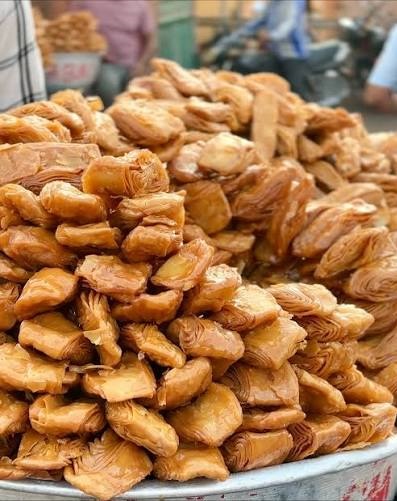
Khaja
