
Objectives
Objective 1: To explore the importance of Bedi Hanuman in Puri.
Objective 2: To understand the Historical & Architectural importance of the temple.
Objective 3: To know the specifications of the presiding deity.
Introduction
Objective 1: To explore the importance of Bedi Hanuman in Puri.
Lord Jagannatha engaged Hanuman to protect Puri Dham from his father-in-law, Ocean. Because sometimes the ocean waves would enter Puri and people would suffer. Thus, Hanuman was posted here by Jagannatha to guard so that the ocean waves could not enter the town.
Hanuman is situated near the ocean (daria). So, he is also known as Daria Hanuman.
Historical Significance
Objective 2: To understand the Historical & Architectural importance of the temple.
Once Hanuman left this place, without informing Lord Jagannatha to visit Ayodhya.
As a result, the ocean waves entered the town, and the people were in great distress. Lord Jagannatha brought Hanuman back from Ayodhya and bound him with the rope or Bedi, ordered him to never leave this place and to do his duty nicely.
Hanuman left this place as everyday he would be only fed with Khichadi prasadam. He wanted to relish delicious food. So, he secretly visited Ayodhya at night.
After this whole incident, Lord Jagannath ordered his servants to supply special Maha prasadam for Hanuman daily. Even today this deity of Hanuman is offered special laddus in the temple.
Architectural Significance
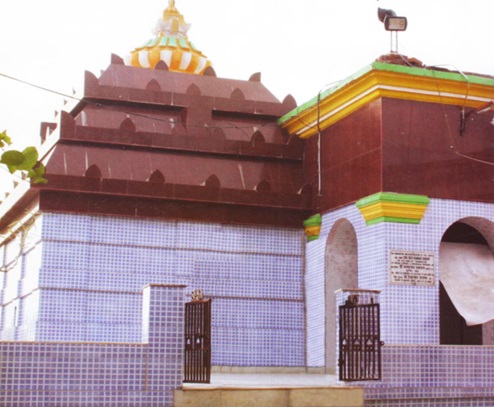
The temple is built in the classic Kalinga (Odia) style and features specific architectural components:
• Pidha Vimana: The main sanctum features a traditional square-plan, pyramidal tower.
• Jagamohana: An attached frontal assembly hall (Jagamohana) allows devotees space for prayer and observation.
• Direction: The temple faces east, allowing the first rays of the sun to illuminate the deity each morning.
The exterior of this shrine highlights regional stone carving traditions, with carefully sculpted niches:
• Western Wall: A deeply moving depiction of Anjana, Lord Hanuman’s mother, seated on a lotus throne while holding the infant Hanuman.
• Southern Wall: An image of Lord Ganesha, placed to welcome visitors and remove obstacles.
• Northern Wall: Various figures representing divine female energies and goddesses.
Presiding Deity
Objective 3: To know the specifications of the presiding deity.
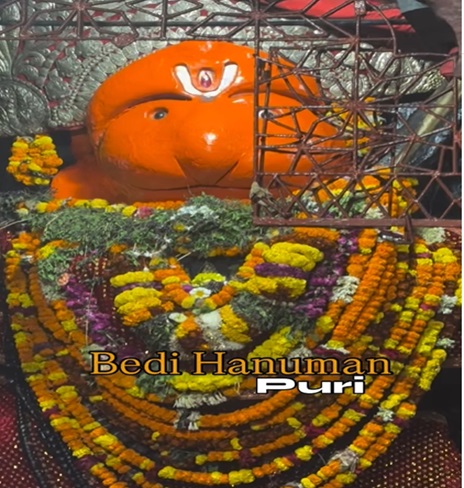
The sanctorum houses a 10-foot-tall idol sculpted from black chlorite stone. The two-armed form depicts Hanuman holding a mace in his right hand planted on the ground, representing defensive strength and left-hand rests close to his chest, cradling a massive laddu (sweet).
The defining feature of this deity is the presence of heavy ropes or chains (bedi) carved directly into the ankles and wrists.
Lord Jagannath ordered the binding of Hanuman with chains (“bedi”). This was done to keep Hanuman permanently stationed on the coast so he could never leave his post to find sweets, thereby protecting the city from the wrath of the sea.
The left eye of the Hanuman idol features a small, drilled hole through the stone. Standing directly behind the left eye allows a perfect, unobstructed line of sight to the Neela Chakra (the blue wheel atop the main Jagannath Temple).
Directly above Hanuman’s head, a small Shivalinga is carved, canopied by a seven-hooded serpent, symbolizing the unity of Shaivite and Vaishnavite traditions.
Festivals
Maha Bishuba Sankranti – the most significant annual festival celebrated in mid-April; it marks the Odia New Year and is traditionally observed as the birthday of Lord Hanuman across Odisha.
On this day, a grand religious procession originates from the main Jagannath Temple. The temple priests carry an Agyamala (a sacred garland symbolizing permission and divine blessing) from Lord Jagannath directly to the Bedi Hanuman shrine.
Devotees offer a special, traditional summer drink called Pana—made from wood apple (bael), cottage cheese, milk, bananas, jaggery, and pepper—to the deity to soothe him from the coastal summer heat.
Hanuman Jayanti – The 10-foot black chlorite idol is given a massive ritualistic bath using sacred waters, honey, curd, and milk.
Following the bath, the deity is intricately decorated with new silks, heavy floral garlands, and gold ornaments, highlighting the Rama-Sita carvings on his chest.
Rama Navami – As the supreme devotee of Lord Rama, Hanuman’s temple is a central hub in Puri during Rama Navami (March/April). Continuous recitations of the Ramayana and Hanuman Chalisa echo through the assembly hall (Jagamohana) for nine consecutive days.
Annual Rath Yatra Connection – It is not an isolated festival for this specific shrine, the Rath Yatra (Chariot Festival) in June/July is a highly critical occasion.
• Before the massive chariots of Lord Jagannath, Balabhadra, and Subhadra are pulled down the Grand Road, specific protective rituals are performed at the Bedi Hanuman Temple.
• Priests seek Hanuman’s spiritual protection to ensure that the sea stays calm, and no natural calamities or tidal surges disrupt the mega-festival.
Darshan
All days from early morning till late evening.
Every Tuesdays and Saturdays: These are considered the weekly sacred days for the deity. Residents and fishermen from the nearby Puri beach visit en masse on these days to offer laddus and pray for protection against oceanic storms and family mishaps.
Location
The Bedi Hanuman temple is situated on the left side of the Chakratirtha road leading from Subash Bose Chowk to Penthakata.
