
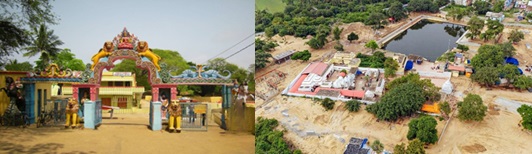
Objectives
Objective 1: To gain a clear understanding of the significance of Lokanath Mahadev Temple within the sacred Jagannath Puri ksetra.
Objective 2: To identify and appreciate the devotees and spiritual communities associated with Lokanath Mahadev Temple.
Objective 3: To learn about the divine pastimes (lilas) connected to Lord Lokanath and their spiritual importance.
Objective 4: To study the structure, and unique features of the Lokanath Mahadev Temple.
Objective 5: To recognize the presiding deities in Lokanath Mahadev Temple and develop a deeper devotional connection through their darshan.
Objective 6: To become familiar with the practical aspects of visiting, including location, travel routes, and darshan timings of Lokanath Mahadev Temple.
Objective 1. To gain a clear understanding of the significance of Lokanath Mahadev Temple within the sacred Jagannath Puri kṣetra
Lokanath Mahadev Temple holds a deeply revered position within the sacred Jagannath Puri ksetra, as Lord Lokanath (Shiva) is worshipped as the Ksetra Pala—the divine guardian of the dham. His presence signifies protection, sanctity, and spiritual completeness of the holy abode of Lord Jagannath.
This temple is situated on the south west side of the Jagannatha Temple on the Lokanatha Road. Sri Lokanatha Mahadeva is one of five dvara palas of Puri Dham and the main among
the five Mahadevas. These five Mahadevas are also known as the five Pandavas; He is known as Bhimasena.
It is traditionally understood that no pilgrimage to Jagannath Puri is complete without offering respects to Lord Lokanath, acknowledging His role in safeguarding the ksetra and guiding devotees on the spiritual path.
Objective 2. To identify and appreciate the devotees and spiritual communities associated with Lokanath Mahadev Temple holy place
Lord Rama: According to the legendary origins of the temple, Lord Rama stopped in Puri during his journey to Lanka to rescue Devi Sita. A local Sabara tribesman offered him a pumpkin (locally called Lau or Lauka) shaped like a Shivalinga. Rama consecrated and worshipped it, resulting in the deity’s original name, Laukanatha.
The Sabara Tribe:These indigenous forest dwellers of the region are intrinsically woven into the temple’s history. They are recognized as early and devoted caretakers who introduced the simple yet profound worship of the Lord to the area.
Ganga Dynasty Kings: Rulers like King Anantavarman Chodaganga (who began temple construction in the 12th century CE) and King Anangabhima-deva acted as dedicated patrons, funding and developing the shrine as a major Shaivite center.
Objective 3. To learn about the divine pastimes (lilas) connected to Lord Lokanath and their spiritual importance
The divine pastimes associated with Lord Lokanath reveal His compassionate and protective role within the sacred Jagannath Puri kṣetra. It is traditionally believed that Lord Sri Rama worshipped and installed this Shiva Linga, offering prayers to Lord Shiva during His pastimes, thereby sanctifying this place.
A unique and profound aspect of this temple is that the Shiva Linga remains constantly submerged in water, which is understood as a manifestation of the Lord’s mystical presence and connection with sacred waters. This continuous abhiṣeka signifies purity, humility, and the ever-flowing grace of the Lord.
Above all, Lord Lokanath’s foremost lila is His role as the Kṣetra Pala (guardian) of Jagannath Puri, where He lovingly protects the dham and all who take shelter there.
Objective 4. To study the structure, and unique features of the Lokanath Mahadev Temple.
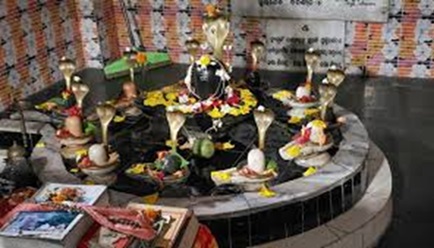
A unique feature of this temple is that the Shiva Linga is constantly submerged in water, believed to be connected to an underground sacred stream. This linga is visible to the devotees once in every year. The sanctum including the linga is filled with water throughout the year by a natural fountain. On the night of Pankoddhar Ekadashi (3 days before the famous Shivaratri festival) all the water is bailed out and the Shiva Linga becomes visible and thousands of devotees are able to worship the Lord directly.
Objective 5. To recognize the presiding deities in Lokanath Mahadev Temple and develop a deeper devotional connection through their darshan.
The presiding deity of the temple is Lord Lokanath Mahadev (Shiva), worshipped in the form of a swayambhu (self-manifested) Shiva Linga, which remains continuously submerged in sacred water.
Alongside Lord Lokanath, devotees also offer respects to Goddess Parvati and Nandi Maharaj, who are present within the temple premises and participate in the divine atmosphere of worship.
Objective 6. To become familiar with the practical aspects of visiting, including location, travel routes, and darshan timings of Lokanath Mahadev Temple.
The temple is located 2–3 km from Jagannath Temple, Puri and is accessible by auto or taxi.
Darshan Timings:
Morning: 5:00 AM – 12:00 PM
Evening: 3:00 PM – 9:00 PM
Special darshan is available during Maha Sivaratri.
