
Objectives:
Objective 1: To understand the role, functions, and religious authority of the Mukti Mandapa Sabha in the administration and preservation of Jagannath Temple traditions.
Objective 2: To identify the location, architectural features, historical background, and structural significance of the Mukti Mandapa within the Jagannath Temple complex.
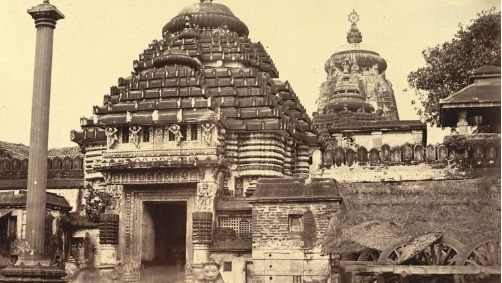
PROCEEDINGS AT MUKTHI MANDAPA:
Objective 1: To understand the role, functions, and religious authority of the Mukti Mandapa Sabha in the administration and preservation of Jagannath Temple traditions.
The Mukti Mandapa is a council of Pandits (Brahmin Scholars) and a Scholarly decision-making council related to various religious matters. Shankaracharya of Puri Govardhan Math is the permanent president of Mukti Mandapa. Disputes arising out of religious matters with regards to worship and religion are referred to this council of the Pandits for discussion and final verdict.
The yearly religious almanac popularly known as Panji, published by different publishers are submitted to Mukti Mandapa Sabha for their approval to authenticate specific dates of different religious rites.
The committee of nine scholars as selected by other scholars of Mukti Mandapa Sabha is considered as the apex committee to take immediate decision during any conflict in the religious field and in the administration of Jagannath Temple. During Nabakalebara, all rites pertaining to it are managed by the scholars of Mukti Mandapa Sabha.
STRUCTURAL DETAILS:
The structure consists of a raised platform with a pillared hall and corbelled roof. The area of the platform is nine hundred sq. ft., and it is square in shape. The mandapa height is about 20 feet and it has 16 numbers of pillars which support the stone beams under the corbelled roof, found in sections. Constructed using traditional stone materials typical of Kalinga architecture.
The steps leading to the pavilion are found on the west side of the Mukti Mandapa, in front of the Mukta Narasimha Temple. The flooring of the pavilion top is found in stone masonry. Few sculptural reliefs (stucco) are found at ceiling portion of the mandapa. Important among these are the Yajna Narasingha figure, opposite of the Mukta Narasingha Temple.
Objective 2: To identify the location, architectural features, historical background, and structural significance of the Mukti Mandapa within the Jagannath Temple complex.
Idols of different deities are situated around the platform, including Sri Krishna, Lord Narasimha, Lord Brahma, Durga and Ganesh. The pillars have been carved with artistic paintings.
Madala Panji, the chronicle of Jagannath Temple, mentions that it was built in the 15th century at the request of Queen Gauri Mahadevi, the consort of King Mansingh of Jaipur, who was the commander-in-chief of Mughal Emperor Akbar.
LOCATION:
Mukti Mandapa is located opposite to the Beharanadvara or the southern doorway of the porch or Mukhashala (usually referred to as Jagamohana) of the Sri Jagannatha Temple beyond the passage under the Jhulana Mandapa.
