
Objective 1: To understand the temple’s name and its alternative names, its dedication to Lord Jagannath’s maternal aunt, and the meaning behind her title as a guardian deity.
Objective 2: To provide precise geographical benchmarks, transit distances, and navigational reference points for the temple along Puri’s Grand Road.
Objective 3: To chronicle the temple’s 14th-century origins under the Ganga Kings and trace its scriptural validation within the evolving Jagannath cult.
Objective 4: To analyze the traditional Kalinga-style layout of the complex and catalog its intricate sculptural motifs and main deities.
Objective 5: To document the core legends—such as saving Puri from floods and hosting Goddess Subhadra—that form the temple’s sacred lore.
Objective 6: To examine the temple’s role as a cosmic guardian, a symbol of divine familial love, and a vital waypoint for pilgrims.
Objective 7: To detail Lord Jagannath’s exclusive chariot halt at the temple and the ritual offering of the sacred Poda Pitha sweet.
Objective 8: To outline the temple’s daily liturgical cycle, including specific mantras, holy baths, and food offerings for the deity.
Objective 9: To catalog the temple’s annual festive calendar, highlighting the major Bahuda Jatra and the cooling Jalasayi Ceremony.
Objective 10: To present essential tourist logistics, covering operational hours, rules, travel tips, and nearby transport infrastructure.
IntroductionMausi Maa Temple occupies a unique spiritual position in Puri; small in physical stature but immense in theological depth. It embodies the Shakti tradition within the Jagannath cult, serves as one of the eight guardian deities of Shree Kshetra, and anchors one of the most emotionally resonant rituals of the Rath Yatra: the Lord pausing to accept a simple home-cooked cake from his aunt, affirming that even divinity honours the bonds of family, sacrifice, and love.
Objective 1: To understand the temple’s name and its alternative names, its dedication to Lord Jagannath’s maternal aunt, and the meaning behind her title as a guardian deity. 1. Identity & Names
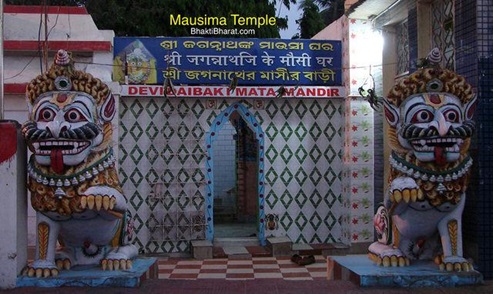
Mausi Maa Mandir — also known as the Ardhasini Temple or Ardhashosini Temple — is a small but deeply revered Hindu shrine located on the Grand Road (Bada Danda) of Puri, Odisha, India. The temple is dedicated to Goddess Ardhasini, who is venerated in the Jagannath tradition as the maternal aunt of Lord Jagannath himself. The name “Mausi Maa” is a blend of two Odia words: “Mausi” (maternal aunt) and “Maa” (mother or Goddess).

Other Names: Ardhasini Temple | Ardhashosini Temple | Mausima Temple
Presiding Deity: Goddess Ardhasini (Ardhashosini) — Maternal Aunt of Lord Jagannath
Status: One of the Ashta Shakti (eight guardian goddesses) of Srikshetra, Jagannath Puri
Name Meaning: ‘Ardha’ = half; ‘Shosini’ = one who drank water — she who drank half the sea.
Objective 2: To provide precise geographical benchmarks, transit distances, and navigational reference points for the temple along Puri’s Grand Road. 2. Location
The temple is situated midway along Puri’s Grand Road (Bada Danda), at Balagandi Square, on the right side of the road leading from the Jagannath Temple towards the Gundicha Temple.
| Location Details | Information |
|---|---|
| From Puri Bus Stand | ~500 metres (approx. 10-minute walk) |
| From Jagannath Temple | ~1.5 km |
| From Puri Railway Station | ~1.5 km |
| Road Landmark | Balagandi Square, Grand Road (Bada Danda) |
| Direction | Right side of the road from Jagannath Temple towards Gundicha Temple |
Objective 3: To chronicle the temple’s 14th-century origins under the Ganga Kings and trace its scriptural validation within the evolving Jagannath cult. 3. History
The Mausi Maa Temple was built in the 14th century AD by the Ganga Kings (also referred to as the Keshari dynasty). The temple is intrinsically linked to the evolution of the Jagannath cult in Puri, which gained prominence from the 12th century onward under the patronage of the Eastern Ganga dynasty, integrating diverse regional traditions into a unified Vaishnava framework centred on the Jagannath triad. This development positioned the temple as an integral part of Puri’s sacred landscape, known as Shree Kshetra, where subsidiary shrines like Mausi Maa reinforced the cult’s protective and familial motifs.
Medieval texts—particularly the Vaishnava Kanda of the Skanda Purana—reference the temple’s presiding deity, Ardhasini, as one of the Ashta Shakti (eight guardian goddesses) safeguarding Shree Kshetra from cosmic threats, underscoring her role in the broader mythological and ritualistic fabric of the Jagannath tradition. The temple has undergone several renovations over the centuries to preserve its historical essence while remaining accessible to an ever-increasing number of devotees.
Objective 4: To analyze the traditional Kalinga-style layout of the complex and catalog its intricate sculptural motifs and main deities. 4. Architecture
Though modest in scale compared to the grand Jagannath Temple, the Mausi Maa Temple follows the traditional Kalinga-style architecture and faces south.
The temple complex consists of three structures:
Rekha Vimana (tower/shikhara): Square in plan, Panchangabada in elevation, Pancharatha on plan.
Pidha Jagamohana (assembly hall): Rectangular in plan, with elaborate carvings.
Nata Mandapa (dance/festival hall): Triratha on plan, Panchangabada in elevation.
Architectural detailing includes: Udyota Simha figures in the gandi of the central raha; doorjambs carved with three vertical bands of puspa (floral motifs); a Gajalakshmi in lalitasana at the lalatabimba; Dvarapalikas at the base of the door jambs; and a Navagraha panel where Rahu is depicted holding a bow with a large head crowned by Jatamukuta and Ketu shown with a serpent tail.
The main sanctum houses a two-armed idol of Goddess Ardhasini made of black stone. On both sides of the main deity are Parswadevata (subsidiary deities). The idol of the Goddess closely resembles Devi Subhadra in appearance, reinforcing the familial bond with the divine trinity.

Objective 5: To document the core legends—such as saving Puri from floods and hosting Goddess Subhadra—that form the temple’s sacred lore. 5. Divine Significance & Mythology
a. Drinking Half the Sea (Skanda Purana): The most foundational legend is enshrined in the Vaishnava Kanda of the Skanda Purana: Goddess Ardhashosini drank half the sea water that flooded Puri and thereby saved the abode of Lord Jagannath. This act of self-sacrifice gave rise to her name — ‘Ardha’ (half) + ‘Shosini’ (one who drank water) — and established her as one of the two divine guardians of Puri Dham, alongside Kapalamochana Shiva. Local belief holds that Ardhasini and Kapalamochana Shiva serve as the day and night protectors of Puri town.
b. Sucking the Malini River: In a related legend, the Puri Grand Road (Bada Danda) was once divided into two parts by the Malini River. During the Rath Yatra, six chariots had to be built and the three deities transported in three chariots to the riverbank, then shifted to boats, then placed onto three more chariots on the other side — a process taking six to seven days. Understanding the hardships of the servitors, Ardhasini Devi began sucking the Malini River dry. In gratitude, Lord Jagannath promised to halt at her temple during the return Bahuda Yatra and consume Poda Pitha. This legend is considered the origin of the most celebrated ritual of the Bahuda Jatra.
c. Kaikeyi of the Ramayana: A third legend connects the temple to the Ramayana tradition. When Bharat accused his mother Kaikeyi of forcing Lord Rama to go to the forest, she felt deeply guilty and wept. To console her, Lord Rama promised that in his next birth he would visit her house and partake of Poda Pitha. Since then, the Mausi Maa Temple is considered to be the abode of Kaikeyi, who serves the sacred sweet to Lord Jagannath during the Bahuda Yatra.
d. Subhadra’s Refuge: According to Jagannath mythology (also referenced in the Lakshmi Purana of the Manabasa Gurubar Festival), once Goddess Lakshmi left Shri Mandira in displeasure, and thus Lord Jagannath and Lord Balabhadra became poor and had to go out for alms. During that difficult period, Goddess Subhadra stayed with Mausi Maa, her maternal aunt. This episode illustrates the temple’s role as a place of refuge and kinship within divine family narratives.
Objective 6: To examine the temple’s role as a cosmic guardian, a symbol of divine familial love, and a vital waypoint for pilgrims. 6. Spiritual Significance
The Mausi Maa Temple occupies a unique and irreplaceable position in the spiritual landscape of Puri. Despite being modest in physical stature, it embodies several layers of profound theological and devotional significance.
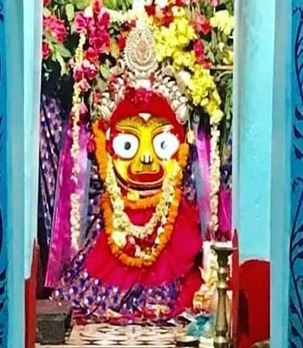
a. A Guardian Shakti of Srikshetra: As one of the eight Ashta Shaktis of Srikshetra, Goddess Ardhasini is not merely a local deity but a cosmic guardian within the Jagannath theological framework. She is described in the Skanda Purana as a divine force that mitigates deluge waters during pralaya (cosmic dissolution), reflecting her function as a protector of sacred order and divine habitation.
b. Symbol of Divine Familial Love: The temple is described by devotees and scholars alike as a symbol of devotion, faith, and relationship. The recurring image of Lord Jagannath — the supreme divinity of one of India’s most celebrated pilgrimage centres — pausing during the grandest festival to accept a home-cooked cake from his aunt is a powerful theological statement: that divinity honours the bonds of family and love, and that maternal care transcends all hierarchy. The temple thus affirms, through sacred ritual, the values of kinship, humility, and gratitude.
c. Spiritual Waypoint on the Grand Road: Situated midway between the Jagannath Temple and the Gundicha Temple, the Mausi Maa Temple serves as a spiritual waypoint on the Grand Road — a liminal space between departure and return, between the Lord’s journey outward and his homecoming. Its location amplifies its symbolic role in fostering communal bonds and shared devotional experience during the Rath Yatra.
d. Devotees’ Blessings Sought: Devotees visit Mausi Maa Temple to seek blessings for protection and resilience — blessings rooted in the legend of Goddess Ardhasini’s supreme act of sacrificial love. The temple draws pilgrims not only from Odisha but from across India, and is considered an essential stop in the Puri pilgrimage circuit, though it is often less known than the grand Jagannath Temple.
Objective 7: To detail Lord Jagannath’s exclusive chariot halt at the temple and the ritual offering of the sacred Poda Pitha sweet. 7. Connection with Rath Yatra (Car Festival)
The Mausi Maa Temple is most celebrated for its central role in the Bahuda Jatra (return Rath Yatra). The following are the key ritual dynamics:
a. The Chariot Halt: On the day of Bahuda Jatra (Ulta-Rath), the chariots of the divine trinity — Lord Jagannath, Lord Balabhadra, and Devi Subhadra — halt in front of Mausi Maa Temple. Notably, the chariots of Balabhadra and Subhadra are pulled directly to the Singha Dwara (Lion’s Gate of the Jagannath Temple), whereas the chariot of Lord Jagannath alone pauses at the Mausi Maa Temple — a singular honour accorded to the relationship between the Lord and his aunt. On the day of the outgoing Rath Yatra, the chariot also halts briefly near the Mausima Mandir as the Lord is on his way to Gundicha.
b. The Poda Pitha Offering: During this halt, Lord Jagannath is offered his favourite sweet — Poda Pitha — prepared by the servitors of Mausi Maa Temple on behalf of the Goddess. Poda Pitha is a traditional Odia baked cake made from rice, jaggery, coconut, camphor, cinnamon, cloves, and lentils (some accounts add cheese, flour, rice paste, ghee, dry grapes, and almonds). The specific cake offered to Lord Jagannath by his aunt during Bahuda Yatra is known as ‘Suropamanohi’. After the offering, the Poda Pitha is distributed to devotees gathered around the chariot as prasada. The chariot then proceeds to Srimandira.
c. Theological Meaning of the Offering: This ritual is far more than a festival custom. It symbolises the love and hospitality of a maternal aunt for her divine nephew; it reaffirms the significance of maternal blessings before the Lord’s return to his central abode; and it draws massive crowds, enhancing the cultural vibrancy of the Rath Yatra. The halt is a living re-enactment of the legends of Ardhasini sucking the Malini River and of Kaikeyi’s redemption through offering Poda Pitha.
Objective 8: To outline the temple’s daily liturgical cycle, including specific mantras, holy baths, and food offerings for the deity. 8. Daily Worship & Devotional Practices
Devotion flows continuously at the Mausi Maa Temple through a well-established cycle of daily rituals:
Temple Opening: The doors are opened early each morning.
Snana (Holy Bath): The Goddess is bathed every morning and evening, then dressed in fresh attire.
Balabhoga: Food offerings are made to the Goddess both morning and evening.
Bandurga Mantra: The Goddess is worshipped using this specific sacred chant dedicated to her.
Aarti: Priests perform aarti and recite prayers, invoking Goddess Ardhasini’s blessings for all devotees.
Devotee Offerings: Visitors offer flowers, incense, and light lamps before the deity, standing in quiet prayer.
The temple’s atmosphere promotes reflection and mindfulness, making it an ideal space for spiritual experience. The morning and evening aarti sessions are open to all devotees, and the rituals follow time-honoured practices rooted in the Jagannath tradition.
Objective 9: To catalog the temple’s annual festive calendar, highlighting the major Bahuda Jatra and the cooling Jalasayi Ceremony. 9. Festivals & Special Rituals
Bahuda Jatra (Return Rath Yatra) — Most Important: The centrepiece festival: Lord Jagannath’s chariot halts at the temple; Poda Pitha (Suropamanohi) is offered; the halt is witnessed by hundreds of thousands of pilgrims.
Jalasayi Ceremony — Narasimha Chaturdashi: On the holy day of Narasimha Chaturdashi, the Goddess is made ‘Jalasayi’ (symbolically merged in water) in a grand public ceremony. This ritual is performed to keep the Goddess cool from the scorching summer heat, reflecting the deep tenderness with which the community cares for its presiding deity.
Other ObservancesThe temple observes a rich calendar of festivals and religious occasions:
• Mahasaptami, Mahashtami, Mahanavami — observed with special rituals and Chandipatha.
• Kartik Purnima, Durga Puja, Diwali
• Makar Sankranti, Vasant Panchami, Maha Shivaratri
• Ram Navami, Akshay Tritiya, Rukmani Vivah
• Guru Purnima, Raksha Bandhan, Janmashtami
• Ganesh Chaturthi, Navratri, Vijaya Dashami
• Tulsi Vivah, Vaman Jayanti
Objective 10: To present essential tourist logistics, covering operational hours, rules, travel tips, and nearby transport infrastructure. 10. Darshan Timings & Visitor Information
| Information | Details |
|---|---|
| Regular Darshan Timings | 6:30 AM – 10:00 PM |
| Rath Yatra Period | Special extended access granted |
| Best Time to Visit | October to March (cooler months); during Bahuda Jatra for peak experience |
| Dress Code | Traditional / formal attire recommended |
| Photography | Photography inside the temple premises is not permitted |
| Nearest Railway Station | Jagannath Puri Railway Station |
| Nearest Airport | Biju Patnaik International Airport, Bhubaneswar |
| How to Reach | Auto-rickshaws, cabs from Puri bus stand or railway station; 10-minute walk from Jagannath Temple |
