
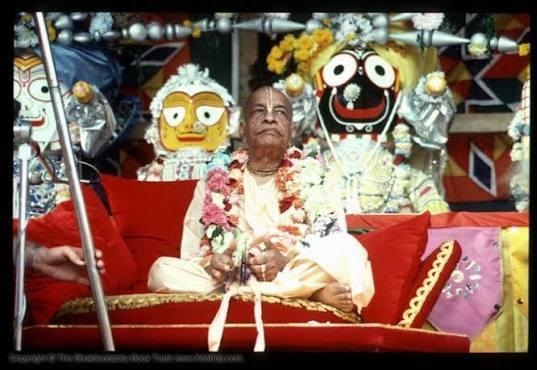
Srila Prabhupada in Lord Jagganath’s Rathayathra
Objectives
Objective 1. To develop faith and appreciation for the spiritual relationship between Lord Jagannath and Srila Prabhupada.
Objective 2. To explore the theological connection between Lord Jagannath, Sri Chaitanya Mahaprabhu, and the love of Srimati Radharani.
Objective 3. To appreciate the three fundamental stages of spiritual realization—Sambandha, Abhidheya, and Prayojana.
Objective 4. To learn about Srila Prabhupada’s early attraction to Lord Jagannath and the Rathayatra festival during his childhood.
Objective 5. To recognize how Srila Prabhupada’s visit to Puri strengthened his faith in Krishna consciousness as the highest goal of life.
Objective 6. To appreciate Srila Prabhupada’s determination to follow the teachings of the Vaishnava tradition without compromise.
Objective 7. To learn how the Guru’s instruction to preach in English became the turning point in Srila Prabhupada’s life.
Objective 8. To cultivate the humble mood taught by Srila Prabhupada while taking darshan of Lord Jagannath.
Objective 9. To learn about the discovery of Lord Jagannath’s form in San Francisco and its significance in ISKCON history.
Objective 10. To learn about Srila Prabhupada’s role in establishing Jagannath worship in the Western world.
Objective 11. To recognize Srila Prabhupada’s vision of making Lord Jagannath accessible to people of all nations and backgrounds.
Objective 12. To recognize Srila Prabhupada’s conviction that anyone who faithfully follows devotional principles is a genuine Vaishnava.
Objective 13. To understand the global impact of Srila Prabhupada’s efforts in spreading Krishna consciousness.
Objective 14. To trace the development of Srila Prabhupada’s devotion to Lord Jagannath from childhood to his worldwide preaching mission.
Introduction
Objective 1. To develop faith and appreciation for the spiritual relationship between Lord Jagannath and Srila Prabhupada.
Lord Jagannath is one of the most worshipable forms of Lord Sri Krishna and is especially adored in the sacred city of Puri, Odisha. The name “Jagannath” means “Lord of the Universe.” He is worshiped together with His brother Baladeva (Balabhadra) and sister Subhadra. The unique form of Lord Jagannath, with His large round eyes and merciful smile, symbolizes His boundless compassion for all living beings.
His Divine Grace A. C. Bhaktivedanta Swami Prabhupada, the Founder-Acharya of ISKCON, had a deep and lifelong attachment to Lord Jagannath. Through his preaching, writings, temple worship, and worldwide Rathayatra festivals, he introduced Lord Jagannath to millions of people across the globe.
Lord Jagannath – The Merciful Form of Krishna
2. To explore the theological connection between Lord Jagannath, Sri Chaitanya Mahaprabhu, and the love of Srimati Radharani.
According to the Gaudiya Vaishnava tradition, Lord Jagannath is Sri Krishna Himself in a special ecstatic mood. Sri Chaitanya Mahaprabhu and the Gaudiya acharyas explain that Lord Jagannath represents Krishna in separation from Vrindavan and in remembrance of the love of Srimati Radharani and the residents of Vraja.
The theological foundation for this understanding is found in Chaitanya-charitamrita. During the Rathayatra festival, Sri Chaitanya Mahaprabhu experienced the mood of Srimati Radharani meeting Krishna at Kurukshetra and longing to bring Him back to Vrindavan. Thus, Rathayatra is understood as the loving attempt of Radharani and the Vraja gopis to bring Krishna back to His original home in Vrindavan.
A significant reference appears in Sri Chaitanya-charitamrita, Madhya-lila 13.77:
“sei ta parāṇa-nātha pāinu
yāhā lāgi’ madana-dahane jhuri’ genu”
Translation: “Now I have gained the Lord of My life, in whose absence I was being burned by the fire of Cupid.”
Explanation: During the Rathayatra festival, Sri Chaitanya Mahaprabhu recited this verse in the mood of Srimati Radharani. Externally, it describes meeting a beloved after long separation, but internally it expresses Radharani’s desire to bring Krishna from Kurukshetra back to Vrindavan, where their intimate loving pastimes can fully flourish. The Gaudiya acharyas explain that Lord Jagannath represents Krishna in this mood of ecstatic separation and reunion, which is why Rathayatra holds such deep theological significance in the Chaitanya tradition.
The large eyes and unique form of Lord Jagannath are understood by the Gaudiya acharyas as manifestations of Krishna’s intense ecstatic emotions. Jagannath therefore represents the Lord’s unlimited mercy and divine love for all living beings.

Lord Jagganath
Lord Jagannath: Sambandha, Abhidheya and Prayojana
Objective 3. To appreciate the three fundamental stages of spiritual realization—Sambandha, Abhidheya, and Prayojana.
The Vedic scriptures explain three stages of understanding Lord Jagannath: Sambandha, Abhidheya, and Prayojana.
Sambandha refers to understanding our eternal relationship with the Lord. A devotee realizes that Lord Jagannath is not a wooden idol but the Supreme Personality of Godhead, Sri Krishna Himself, who mercifully appears in deity form for the benefit of humanity. One approaches Him with humility and a mood of service.
Abhidheya refers to the practical process of devotional service. Having understood the relationship with the Lord, the devotee engages in hearing, chanting, worship, and other devotional practices under the guidance of Sri Guru and the previous acharyas.
Prayojana is the ultimate goal—pure love of God. At this stage, a devotee sees everything in relation to Krishna and desires only His service. Such a devotee constantly remembers Lord Jagannath and experiences His presence everywhere.
Srila Prabhupada dedicated his life to giving people the opportunity to develop Sambandha, engage in Abhidheya, and ultimately attain Prayojana through Krishna consciousness.
Srila Prabhupada’s Love for Lord Jagannath in his life
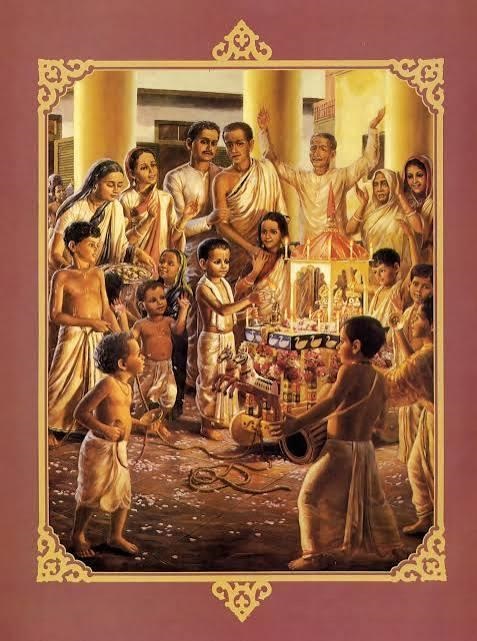
Young Prabhupa ( Abhay) conducting rathayatra
Rathayatra in Srila Prabhupada’s Childhood
Objective 4. To learn about Srila Prabhupada’s early attraction to Lord Jagannath and the Rathayatra festival during his childhood.
Early Attraction to Lord Jagannath
As a young boy named Abhay Charan De (later Srila Prabhupada), he was captivated by the annual Rathayatra festivals celebrated in Calcutta. He especially admired the grand Rathayatra organized by the Mullik family, where Lord Jagannath, Baladeva, and Subhadra rode on magnificent chariots. The young Abhay was captivated by these festivals and eagerly awaited them every year.
Desire to Conduct His Own Rathayatra
Building a Personal Rathayatra
Unlike other children who merely watched the festival, Abhay desired to organize one himself. Seeing his son’s enthusiasm, his father Gour Mohan encouraged him. A providential arrangement soon provided a small cart that could be transformed into a miniature Rathayatra chariot.
Father and son repaired, painted, and decorated the cart. Wooden horses, a canopy, and traditional ornaments were added so that it resembled the famous chariots of Jagannath Puri. Abhay personally supervised every detail.
Eight-Day Festival
Abhay organized an eight-day Rathayatra festival in his neighborhood. Children joined him in pulling the cart, singing bhajans, playing karatalas, and distributing prasadam. His enthusiasm was so genuine that adults were amazed by his devotion. The entire neighborhood became involved. Adults were astonished to see the seriousness and devotion of the young Abhay.
This childhood festival became an early manifestation of the worldwide Rathayatra movement he would later establish. It demonstrated Abhay’s natural devotion to Lord Jagannath and revealed his leadership qualities from childhood.
The Long-Awaited Pilgrimage to Jagannath Puri
Objective 5. To recognize how Srila Prabhupada’s visit to Puri strengthened his faith in Krishna consciousness as the highest goal of life.
A Dream Since Childhood
Since his early years, Abhay repeatedly wondered:
“When shall I go to Jagannath Puri?” For him, Puri was not merely a sacred city; it was the residence of Lord Jagannath and the place where Sri Chaitanya Mahaprabhu spent the final years of His earthly pastimes.
First Visit in 1920
After completing his college examinations in 1920, Abhay finally undertook the long journey to Jagannath Puri. Arriving at the sacred dham, he walked through the same roads that had witnessed centuries of Rathayatra processions and the ecstatic dancing of Sri Chaitanya Mahaprabhu.
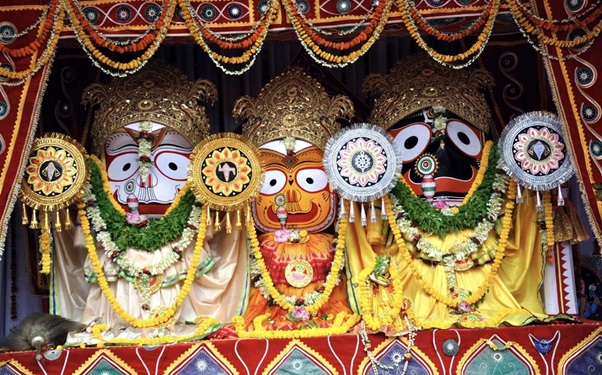
Lord Balram and Lord Subhathra and Lord Jagganath.
Darshan of Lord Jagannath
Upon entering the temple, he received darshan of Lord Jagannath, Lord Baladeva and Devi Subhadra. He also saw the deity of Sri Chaitanya Mahaprabhu in His six-armed form (Shad-bhuja), reminding him of Mahaprabhu’s deep love for Lord Jagannath.
Experiencing the Spiritual Atmosphere
Walking through Puri, Abhay reflected on-His childhood Rathayatra celebrations, The pastimes of Sri Chaitanya Mahaprabhu, The eternal presence of Lord Jagannath, The purpose of human life. This pilgrimage deepened his conviction that Krishna consciousness was the highest goal of life.
Commitment to Spiritual Principles
Objective 6. To appreciate Srila Prabhupada’s determination to follow the teachings of the Vaishnava tradition without compromise.
During his stay, an acquaintance unknowingly served him food containing meat. Abhay immediately refused to eat it and thereafter accepted only Jagannath prasadam from the temple. This incident demonstrated his firm commitment to Vaishnava principles. That incident Confirmed his dedication to pure devotional standards.
The Life-Changing Instruction from Jagannath Puri Dham
Objective 7. To learn how the Guru’s instruction to preach in English became the turning point in Srila Prabhupada’s life.
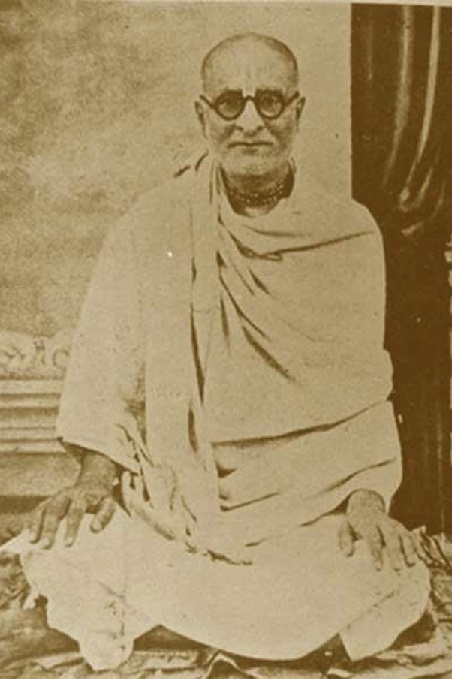
Srila Bhaktisiddhanta Sarasvati Thakura
Writing to His Spiritual Master
In December 1936, Srila Bhaktisiddhanta Sarasvati Thakura was residing in Jagannath Puri. Feeling eager to serve, Abhay wrote a humble letter asking:
“Is there any particular service I can do?”
The Historic Reply
Bhaktisiddhanta Sarasvati Thakura replied:
“I am fully confident that you can explain in English our thoughts and arguments to the people who are not conversant with the languages of other people.”
He instructed Abhay to preach Lord Chaitanya’s teachings in English for the benefit of the world.
Realization of His Mission
Upon receiving the letter, Abhay immediately understood that this was the mission of his life. The instruction confirmed what his guru had already told him during their first meeting in 1922.
Jagannath Puri Dham thus became the place where Prabhupada received final confirmation of his global preaching mission. That incident Became the foundation of Prabhupada’s worldwide preaching mission and Linked Jagannath Puri Dham directly with the future establishment of ISKCON. It also Inspired the translation and publication of Vedic literature in English.

As he grew older and started the mission of spreading Krishna consciousness worldwide, his attachment to Lord Jagannath remained central to his preaching. He desired that people everywhere receive the mercy of Lord Jagannath regardless of nationality, race, language, or social background.
Prabhupada often emphasized that Lord Jagannath is truly the Lord of the Universe and therefore belongs to everyone.
View of Lord Jagannath by Srila Prabhupada
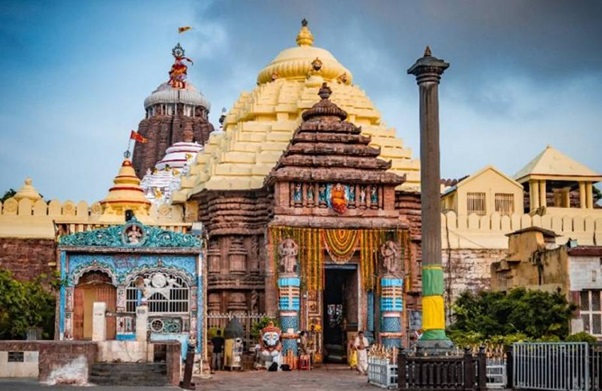
Jagganath Puri Dham with Garuda stambha
Objective 8. To cultivate the humble mood taught by Srila Prabhupada while taking darshan of Lord Jagannath.
Once, Śrīla Prabhupāda, accompanied by his disciples, visited the temple of Lord Jagannath. Upon reaching the temple, he stood behind the Garuḍa Stambha; he gazed at Lord Jagannath and said, “It is appropriate for us to have the darshan of Lord Jagannath from behind the Garuḍa pillar.” Prabhupāda explained, “Lord Jagannath is not someone we see; Rather He is the seer. When the living entities give up their ego of being the seer and fully realize themselves as the object of Lord Jagannath’s vision or enjoyment, only then do they become ‘sevonmukha’ (inclined to service). With the eyes of such loving service, they truly behold Lord Jagannath.” As long as we think, “We will see Jagannath,” we do not see Lord Jagannath. Instead, we see an idol made of wood or stone, or an unfeeling image as perceived by the Buddhist writer or historians. However, when we accept with all our heart that Lord Jagannath will see us and we all are the objects of His enjoyment; we have no right to enjoy independently and interfere in His enjoyment; He possesses absolute and unrestricted free will, only then does Lord Jagannath reveal Himself to us. But knowingly or unknowingly, the mundane people think that “I will see Jagannath, my physical eyes will measure and enjoy His sac-cid-ānanda form” and are deluded. Therefore, Although they pretend that they have seen Lord Jagannath, their minds rush toward various ugly mundane objects of the world.
The First Jagannath Deities in the West
Objective 9. To learn about the discovery of Lord Jagannath’s form in San Francisco and its significance in ISKCON history.
One of the most significant events in ISKCON history occurred in San Francisco in 1967. Malati Devi Dasi discovered a small wooden figure of Lord Jagannath in an import shop and showed it to Srila Prabhupada. He immediately recognized the form of Lord Jagannath and instructed his disciples to find corresponding forms of Baladeva and Subhadra.
Establishment of New Jagannath Puri
Objective 10. To learn about Srila Prabhupada’s role in establishing Jagannath worship in the Western world.
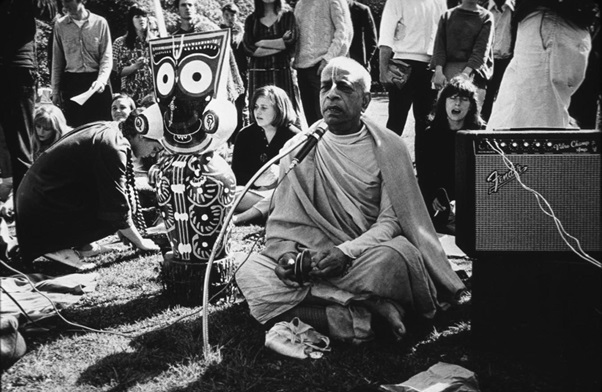
A Merciful Form of Krishna
First Installation Ceremony of Lords outside India
The installation ceremony in San Francisco was simple yet profound. Prabhupada personally conducted the worship and encouraged devotees to continue serving the Lord with devotion.
San Francisco Becomes “New Jagannath Puri”
Prabhupada affectionately referred to San Francisco as: “New Jagannath Puri.” Through his vision, Lord Jagannath’s mercy extended beyond India to the entire world. Soon afterward, larger Deities were carved and installed. This became the first public worship of Lord Jagannath outside India in modern times and marked the beginning of Jagannath worship throughout the Western world.
The Worldwide Rathayatra Movement
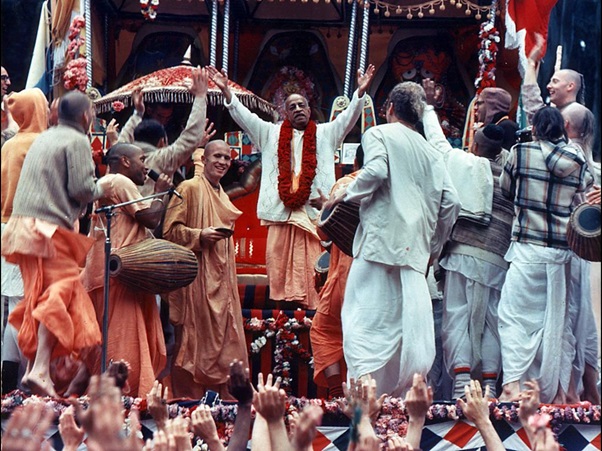
Objective 11. To recognize Srila Prabhupada’s vision of making Lord Jagannath accessible to people of all nations and backgrounds.
One of Srila Prabhupada’s greatest contributions was introducing the Jagannath Rathayatra festival to the Western world.
In 1967 he organized the first Rathayatra festival in San Francisco. Inspired by the famous Rathayatra of Puri, he encouraged his disciples to construct chariots, perform kirtana, distribute prasadam, and bring Lord Jagannath through the streets so that everyone could receive His blessings.
IN PRABHUPADA’s own words
“Prabhupāda: …introduce the Jagannātha Swami’s culture. Jagannātha svāmī nayana-pathagāmī bhavatu me.
You’ll be very much pleased that in the year 1967 I introduced Ratha-yātrā in San Francisco. And it is going on continually for the last six or seven years, and the government, they have fixed up a holiday for Ratha-yātrā. We have got 25th July as government fixed-up day, holiday, for Ratha-yātrā. And people take part in the Ratha-yātrā, not all my devotees, even outsiders. Ten to twelve thousand people attend, and we distribute prasādam to all of them. They feel very much obliged. And the newspaper writes that “People in general never felt such ecstasy as they are feeling in the Ratha-yātrā festival.”
And the police said that the crowd… In the Western country, as soon as there is some big crowd, there is some disturbance. So police were surprised that “This crowd is not window-breaking crowd.” And next we introduced Ratha-yātrā in London, in the London, Trafalgar Square. That is the most famous square within the city. And there is a big column. It is called Nelson Column. So our ratha was so high that the Guardian paper, they criticized that “This Ratha-yātrā is rival to Nelson Column.” Next we introduced Ratha-yātrā in Philadelphia, and this year we have introduced Ratha-yātrā in New York and…

Rathayathra at San Francisco
The festival became extremely popular. Thousands attended, and local authorities appreciated the peaceful and joyful atmosphere created by the devotees.
Following San Francisco, Rathayatra festivals were established in London, New York, Philadelphia, and many other cities. Today, Rathayatra is celebrated in hundreds of cities worldwide, including London, New York, Melbourne, Moscow, Durban, Singapore, and many others.
Through these festivals, millions of people have received the darshan of Lord Jagannath, participated in kirtana, and tasted Krishna prasadam.
Srila Prabhupada and Jagannath Puri Dham
Objective 12. To recognize Srila Prabhupada’s conviction that anyone who faithfully follows devotional principles is a genuine Vaishnava.
Although Srila Prabhupada had great affection for Jagannath Puri, he was saddened that many of his Western disciples were not permitted to enter the Jagannath Temple.
Out of compassion for them, he often declined to take darshan alone while his disciples remained outside. In a well-known letter written in 1974, he stated:
“When you arrange that we can visit the temple with my disciples then I can come immediately.”
This statement reflects his conviction that sincere devotees of Krishna should be respected regardless of birth or nationality. He considered his disciples genuine Vaishnavas because they followed devotional principles and constantly chanted the holy names of the Lord.
The Spiritual Significance of Lord Jagannath in ISKCON
Objective 13. To understand the global impact of Srila Prabhupada’s efforts in spreading Krishna consciousness.
Srila Prabhupada taught that Lord Jagannath represents Krishna’s special mercy upon the fallen souls of Kali-yuga. The worship of Jagannath is closely connected with the teachings of Sri Chaitanya Mahaprabhu, who spread the congregational chanting of the Hare Krishna maha-mantra.
Today, Jagannath, Baladeva, and Subhadra are worshiped in ISKCON temples throughout the world. Festivals such as Snana-yatra, Rathayatra, and other Jagannath celebrations continue to inspire devotees and introduce countless people to Krishna consciousness.
Lord Jagannath’s Universal Mercy
Through Prabhupada’s efforts:
- Millions have seen Lord Jagannath.
- Millions have honored Jagannath prasadam.
- Millions have participated in Rathayatra.
- Lord Chaitanya’s mission has spread worldwide.
Objective 14. To trace the development of Srila Prabhupada’s devotion to Lord Jagannath from childhood to his worldwide preaching mission.
As a summary
The relationship between Lord Jagannath and Srila Prabhupada is a profound example of how the Lord guides and empowers His pure devotee to fulfill a divine mission.
From his childhood days of organizing a small Rathayatra festival in Calcutta, to his sacred pilgrimages to Jagannath Puri, and finally to his worldwide mission of spreading Krishna consciousness, Srila Prabhupada remained deeply connected to Lord Jagannath throughout his life.
Recognizing Lord Jagannath as the most merciful form of Sri Krishna, Srila Prabhupada dedicated himself to sharing the Lord’s blessings with people everywhere. Following the instructions of his spiritual master and the mission of Sri Chaitanya Mahaprabhu, he established ISKCON, introduced Jagannath worship outside India, installed Jagannath, Baladeva, and Subhadra Deities in temples around the world, and inaugurated the international Rathayatra movement.
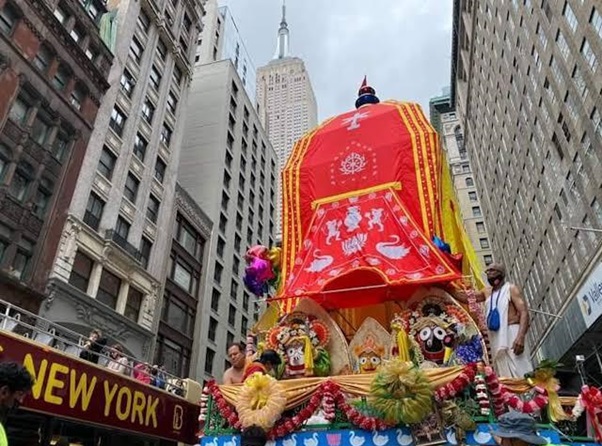
Rathayathra at Newyork
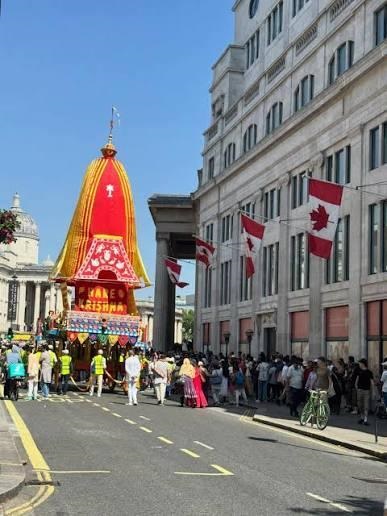
Rathayathra at Canada
Through his tireless efforts, Lord Jagannath’s mercy crossed geographical, cultural, and religious boundaries, reaching millions of people across the globe. Today, whenever the chariots of Lord Jagannath roll through the streets of cities around the world, they stand as a living testimony to Srila Prabhupada’s vision and dedication.
His life demonstrates how a sincere devotee can become an instrument of the Lord’s compassion, transforming a cherished tradition of Jagannath Puri into a worldwide spiritual celebration and enabling countless souls to receive the blessings of Lord Jagannath, the eternal Lord of the Universe.
