
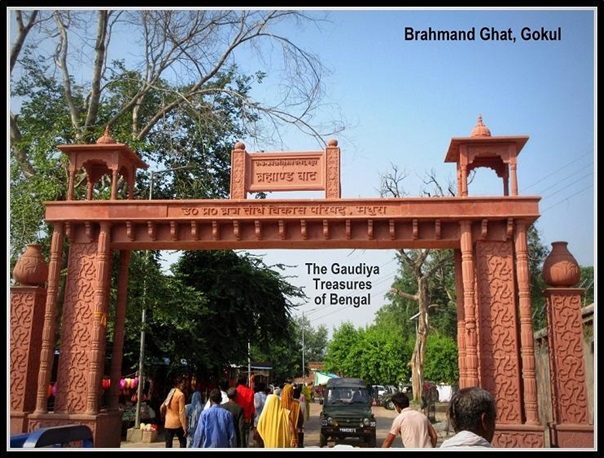
Objectives:
Objective 1: To understand the divine pastime where Krishna showed the universe in His mouth.
Objective 4: To highlight the teasing pastime of Krishna crying to Mother Yaśodā.
Objective 5: To learn about the deity, temple, and worship practices at Brahmand Ghat.
Objective 6: To understand the local Braj tradition and belief in the sacred dust (raj) of Brahmand.
Objective 7: To know the importance of Brahmand Ghat in ISKCON and Gaudiya Vaishnava philosophy.
Objective 9: To meditate on the sweetness (mādhurya) of Krishna over His cosmic majesty (aiśvarya).
Objective 10: To know the geographical location and nearby landmarks of Brahmand Ghat.
Objective 1: To understand the divine pastime where Krishna showed the universe in His mouth.
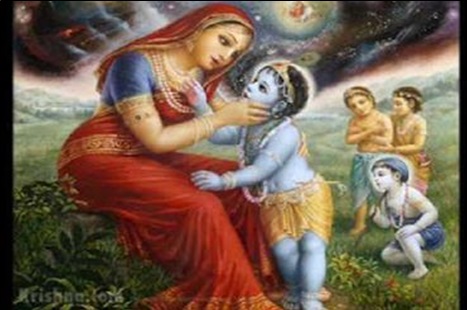
At Brahmand Ghat, Krishna’s cowherd friends—including Balarama—accused Him of eating clay. When Mother Yaśodā asked if it was true, Krishna denied it and said, “Look into My mouth.”
Upon looking, Yaśodā Māiyā witnessed not just mud, but the entire universe inside Krishna’s mouth:
Sun, moon, stars, oceans, mountains, beings
Brahmā, Vishṇu, Mahesh, time, karma
Even herself holding Krishna in her lap
Shocked and confused, she closed her eyes, wondering if it was an illusion.
Krishna’s Yogamāyā immediately removed the vision and restored her mood of motherly affection (vatsalya-bhāva).
Objective 2: To know the scriptural significance of Brahmand Ghat as described in the Śrīmad-Bhāgavatam.
This pastime is found in Śrīmad-Bhāgavatam 10.8.32–45. It establishes Krishna’s dual nature:
As a helpless child dependent on His mother’s love
And as the Supreme Personality of Godhead, capable of containing the entire cosmos in His mouth
This reveals the philosophical truth of acintya-bheda-abheda tattva—simultaneous oneness and difference.
Objective 3: To describe the unique loving relationship between Krishna and Mother Yaśodā (Vatsalya-bhāva).
Even after seeing the universal form, Yaśodā’s mood did not change. She didn’t think of Krishna as God, but only her son.
This is the glory of Vraja-prema.
In contrast:
Devaki and Vasudeva’s parental love diminished after seeing Krishna’s Vishnu form
Arjuna was shaken after seeing the Viśvarūpa
But in Vraja, even cosmic revelations cannot shake their love.
“The love of the Vrajavasis is so pure that not even the vision of the universal form could weaken
— Bhakti-rasamrita-sindhu
Objective 4: To highlight the teasing pastime of Krishna crying to Mother Yaśodā.
Krishna’s friends teased Him, saying:
“You are not Yaśodā Māiyā’s son! You’re dark, and they are fair.”
Krishna ran home crying, rolling in the dust, and refused to sit on His mother’s lap.
He sobbed: “They say I’m not your son!”
Yaśodā comforted Him with an oath on Nārāyaṇa, saying:
“You are born from my very womb, my son.”
She then breastfed Him lovingly, calming His heart.
This pastime shows the sweetness and vulnerability of Krishna’s child form.
Objective 5: To learn about the deity, temple, and worship practices at Brahmand Ghat.
At Brahmand Ghat today:
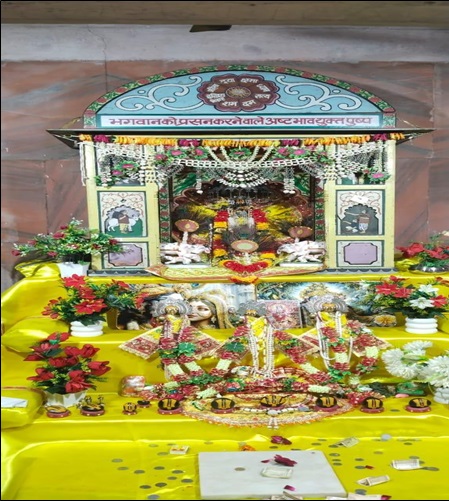
A temple with a deity of Baby Krishna (Bāla Gopāla) is present
The exact place where Krishna opened His mouth is revered
Pilgrims offer Yamuna water, perform parikrama, and chant the Hare Krishna mantra.
Devotees also pray under a sacred Peepal tree, especially women seeking blessings for their husbands’ long life.
Objective 6: To understand the local Braj tradition and belief in the sacred dust (raj) of Brahmand Ghat.
The dust of Brahmand Ghat is believed to hold special spiritual power:
Pilgrims take it home as prasāda.
Said to bring health, fortune, and devotion.
Some believe it cures diseases
Locals sell sacred mud balls, based on the deep faith that Krishna’s eternal pastimes reside in Braj Raj.
Objective 7: To know the importance of Brahmand Ghat in ISKCON and Gaudiya Vaishnava philosophy.
ISKCON devotees regularly visit Brahmand Ghat during:
Vraja Mandala Parikrama in Kartik
Janmashtami yatras
Pastime is often remembered in:
Bhajans, lectures, dramas, kīrtans
It represents the mādhurya (sweetness) of Krishna, preferred in Gaudiya bhakti over His aiśvarya (majesty).
Objective 8: To reflect on Srila Prabhupada’s teachings related to this pastime and its deeper meaning.
In this tender pastime, where Mother Yaśodā peers into little Krishna’s mouth and beholds the entire universe, Srila Prabhupāda guides us to look beyond the miracle and into the heart of devotion. He writes, “Krishna, the Supreme Personality of Godhead, can show the universe within His mouth. Yet He prefers to be bound by His devotee’s love.” Despite revealing His cosmic form, Krishna remains the beloved child of Yaśodā, choosing the sweet bondage of her affection over the grandeur of His divinity.
Srila Prabhupāda explains that this is the work of Yogamāyā, the divine energy that protects the intimacy of devotional relationships. Even after witnessing such an astonishing vision, Mother Yaśodā’s love does not waver. She does not see Krishna as God—she sees Him as her son. “Such is the power of Yogamāyā,” Prabhupāda writes, “that Mother Yaśodā’s love remains unaffected even after such cosmic revelations.”
Through this, Srila Prabhupāda teaches us that bhakti, pure devotion, surpasses even the most majestic displays of divine opulence. Krishna is conquered not by strength or knowledge, but by love. This pastime reminds us that the highest truth is not found in cosmic visions, but in the simple, unwavering affection of a devotee’s heart.
Objective 9: To meditate on the sweetness (mādhurya) of Krishna over His cosmic majesty (aiśvarya).
Brahmand Ghat reminds devotees that:
Krishna prefers to be bound by love, not to display His power.
Even showing the cosmic form is secondary to stealing butter or crying in Yaśodā’s lap
Meditating on this pastime cultivates rāgānugā bhakti, spontaneous devotion based on love, not awe
Objective 10: To know the geographical location and nearby landmarks of Brahmand Ghat.
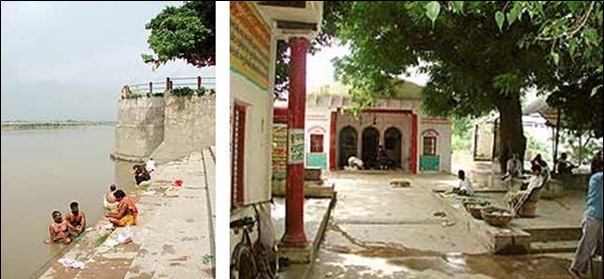
Brahmand Ghat is located in Gokul-Mahavan, a sacred area in Vraja Mandala, Uttar Pradesh, India.
It lies on the banks of the Yamuna River, one of the holiest rivers in India, where many of Krishna’s early childhood pastimes took place.
It is very close to other important places in Gokul, such as:
- Raman Reti (where Krishna played daily in the soft sand)
- Nanda Bhavan (residence of Nanda Maharaja and Yaśodā Māiyā)
Pilgrims often visit these sites together during Vraja Maṇḍala Parikrama or individual pilgrimages.
The peaceful riverbank setting makes it ideal for devotional meditation, chanting, and remembering Krishna’s divine lilas.
