
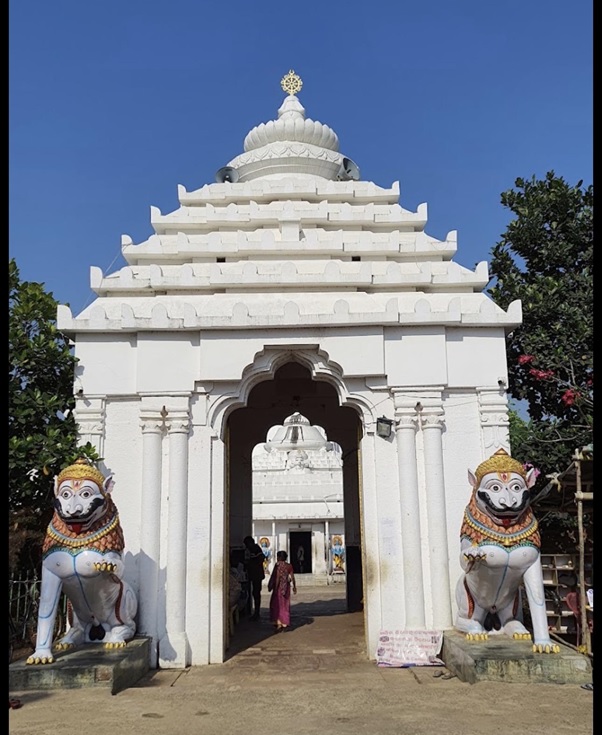
Alarnath Temple
Objectives:
Objective 6: To describe the significance and celebration of the Chandan Yatra festival.
Introduction
Objective 1: To understand the sacred significance, location, and historical origins of Alarnath Temple near Jagannath Temple.
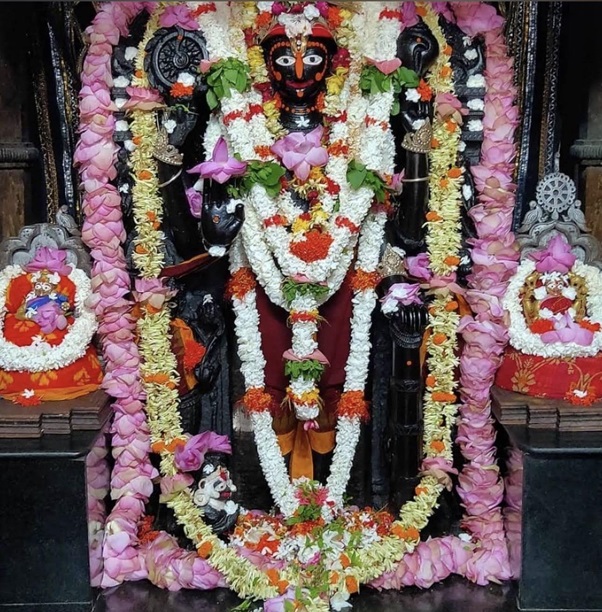
Lord Alarnath
Alarnath Mandir is one of the famous temples in Puri, Odisha. It is located in Brahmagiri near Puri. It is a significant Hindu temple dedicated to Lord Vishnu. The present temple of Lord Alarnath is said to be two hundred years older than the Jagannath Temple in Puri. Alarnath temple is a famous religious place for all Krishna devotees.
Legend says that Lord Brahma came and worshipped Lord Vishnu here on top of a hill. According to history, the rulers of Alwar in Rajasthan had established the temple here.
Alvars of South India migrated to Puri district and Brahmagiri worshipped Lord Vishnu here hence called Alvarnath and then Alarnath.
History of Alarnath Temple
Objective 2: To understand the importance of the Anavasara period and the manifestation of Lord Jagannath as Lord Alarnath.
The temple holds special importance during the Anavasara period (a 15-day phase in June-July after Snana Yatra). During this period Lord Jagannath remains unseen to devotees as he is said to fall ill.
During this period, thousands of devotees flock to Alarnath Temple to offer their prayers, believing that Lord Jagannath manifests himself as Lord Alarnath.
Association with Chaitanya Mahaprabhu
Objective 3: To understand the significance of Sri Chaitanya Mahaprabhu’s visit and the importance of Alarnath Temple during Anavasara.
Alarnath temple is associated with the visit of Sri Chaitanya Mahaprabhu to Orissa. Sri Chaitanya Mahaprabhu, during his stay in Puri, used to see Lord Jagannath daily.
During the Anavasara period, when Lord Jagannath and his siblings were taken to a secret chamber for 15 days, he was unable to see his dear Lord. So, as per the legend, Lord Jagannath directed him to go to Brahmagiri and visit Alarnath Temple.
It is believed that those who cannot worship Lord Jagannath during the Anavasara period can get the blessings of the deity if they visit the Alarnath Temple.
During this time, every year, thousands of devotees visit Alarnath Temple to get the blessings of Lord Alarnath.
Alarnath Temple Deities and Worship
Objective 4: To describe the form of Lord Alarnath and the associated deities and worship practices in the temple.
Lord Vishnu is worshipped here as Alarnath with four hands holding a shankha (conch), chakra (discus), gada (mace), and padma (lotus).
Lord Vishnu’s carrier, Garuda, kneels at the feet of the deity with his hands folded in a prayer position.
Separate shrine for Goddess Lakshmi inside the temple compound.
Deities like Rukmini, Satyabhama, and Lord Chaitanya are also found inside the temple.
Miraculous Stone Slab at Alarnath Temple
Objective 5: To understand the spiritual significance of the stone slab associated with Sri Chaitanya Mahaprabhu.
There is a stone slab in front of the deity which bears impressions from Sri Chaitanya Mahaprabhu’s body.
When Sri Chaitanya Mahaprabhu first lay in full respect in front of Lord Alarnath, the stone below him melted with his blissful touch.
This miraculous event is a significant attraction for devotees.
Chandan Yatra Festival
Objective 6: To describe the significance and celebration of the Chandan Yatra festival.
There is a lake behind the temple where the Chandan Yatra festival is celebrated during summer for 21 days every year.
The festival is a major event, drawing numerous devotees who participate in the rituals and celebrations.
Objective 7: To understand the unique features, sacred elements, and spiritual atmosphere of the Alarnath Temple.
Unlike the Puri Jagannath Temple, Alarnath is less crowded, offering a peaceful and serene atmosphere.
- Sacred Alarnath Kund: Temple is surrounded by a sacred water tank, Alarnath Kund, where pilgrims take a holy dip for spiritual purification.
- Bhagavad Gita Connection: Alarnath Temple is believed to be connected to the teachings of the Bhagavad Gita, where Lord Vishnu (as Alarnath) imparted wisdom to a devotee.
- Mysterious Wooden Idol: Temple houses an ancient wooden idol of Lord Vishnu, believed to have divine powers and is untouched by time.
- Traditional Kalinga Architecture: Temple showcases the intricate Kalinga architectural style, reflecting Odisha’s rich cultural heritage.
- Spiritual Retreat: Temple’s tranquil and scenic surroundings make it a perfect spot for spiritual reflection and meditation.
- Special Celebrations During Rath Yatra: Alarnath Temple holds special significance during the Rath Yatra, attracting many pilgrims for blessings and prayers.
Historical Evidence
Objective 8: To understand the historical associations and Vaishnava tradition connected with the temple.
The temple is associated with the visit of the saint Ramanujacharya to Odisha.
Sri Chaitanya Mahaprabhu during his stay in Puri used to see the deity form of Jagannath daily. During Anavasara when Jagannath and his sibling deities were taken to the secret chamber for 15 days, he was unable to see the Lord.
So as per legend, Jagannath directed him to go to Brahmagiri and visit the Alarnath temple.
Still today the Shila over which Chaitanya Mahaprabhu used to do Sankirtana is there.
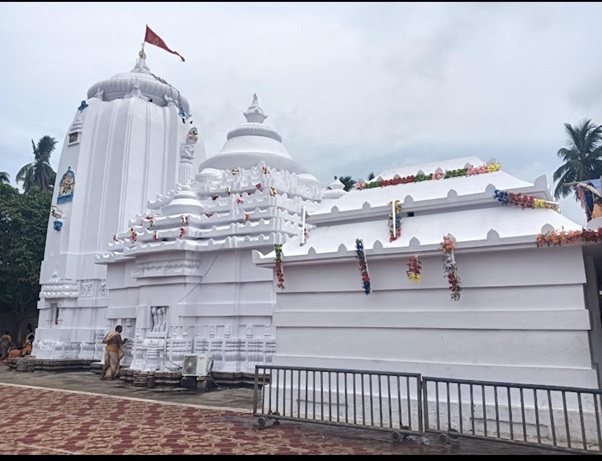
Alarnath temple
Sri Brahma Gaudiya Math
Objective 9: To understand the significance of Sri Brahma Gaudiya Math and its connection with Srila Bhaktisiddhanta Sarasvati Thakura.
Close to the temple is Brahma Gaudiya Math.
Brahma Gaudiya Math was established by Srila Bhaktisiddhanta Sarasvati Thakura.
ISKCON (International society for Krishna Consciousness) has taken up several renovation works here.
This Math is visible while approaching the main temple from Brahmagiri market side.
Alarnath Temple Timings
Alarnath Temple in Brahmagiri, near Puri, is open to devotees daily. Here are the detailed timings:
- Opening Time: 6:00 AM
- Closing Time: 6:30 PM
During these hours, visitors can participate in various rituals and darshan (viewing) of the deity.
The temple also offers different types of prasad (sacred food offerings) throughout the day, including Baal Bhoga (breakfast) in the morning and a variety of rice, daal, vegetable curries, and kheer (rice pudding) at midday.
