

Temple entrance
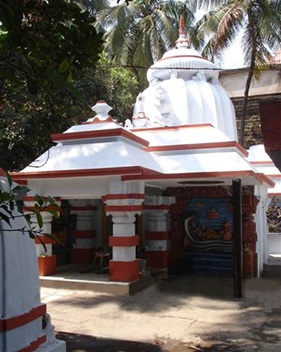
Kapala Mochana Mahadeva
Objectives
Objective 1: To provide a brief introduction to Sri Kapala Mochana Mahadeva Temple and its significance in Puri
Objective 2: To identify the devotees associated with Sri Kapala Mochana Mahadeva Temple and their connection to its spiritual significance
Objective 3: To describe the divine pastime of Lord Shiva’s deliverance from Brahmahatya and the origin of the name Sri Kapala Mochana Mahadeva
Objective 4: To describe the architectural features, and spiritual importance of Sri Kapala Mochana Mahadeva Temple
Objective 5: To provide information about the presiding deity and other important deities worshiped within the Sri Kapala Mochana Mahadeva Temple complex
Objective 6: To present the scriptural and traditional references associated with Sri Kapala Mochana Mahadeva Temple and its spiritual significance in Sri Kshetra
Objective 7: To provide information about accessibility, darshan timings of Sri Kapala Mochana Mahadeva Temple
Objective 1: To provide a brief introduction to Sri Kapala Mochana Mahadeva Temple and its significance in Puri
The Sri Kapala Mochana Mahadeva Temple in Puri, Odisha, is an ancient, highly revered Shiva shrine with deep mythological and structural significance. Located near the southern gate (Horse Gate / Aswa Dwara) of the famous Jagannath Temple, it stands on the left side of Kanduva Saura Chowk along Manikarnika Street. The temple derives its name from Kapala Mochana, meaning “the release of the skull.”
It is one of the Pancha Mahadevas who protect the sacred Sri Kshetra and is traditionally associated with Nakula, one of the five Pandava brothers. The temple is also notable for its sanctum, which lies below the present ground level, making it a unique pilgrimage site in Puri.
Objective 2: To identify the devotees associated with Sri Kapala Mochana Mahadeva Temple and their connection to its spiritual significance.
Lord Shiva
The foremost personality associated with this temple is Lord Shiva himself, who came to Puri seeking liberation from the sin incurred by severing one of Lord Brahma’s heads.
Lord Jagannath
The temple glorifies the supreme mercy of Lord Jagannath, whose sacred abode freed Lord Shiva from the effects of Brahmahatya.
Nakula (Pandava)
Among the Pancha Mahadevas who guard Puri, Kapala Mochana Mahadeva is identified with Nakula, one of the five Pandava brothers.
Objective 3: To describe the divine pastime of Lord Shiva’s deliverance from Brahmahatya and the origin of the name Sri Kapala Mochana Mahadeva
According to sacred tradition:
- Lord Brahma originally possessed five heads.
- During a divine dispute, Lord Shiva severed one of Brahma’s heads.
- As a result, Shiva incurred the grave sin of Brahmahatya (killing a Brahmana).
- Brahma’s severed skull became permanently attached to Shiva’s hand.
- Shiva wandered throughout the universe seeking relief, but the skull would not detach.
- Upon entering the holy boundaries of Sri Kshetra (Puri), the skull immediately fell from his hand.
- Thus Shiva became free from the sin of Brahmahatya through the mercy of Lord Jagannath and the spiritual power of Puri Dham.
Because the skull (Kapala) was released (Mochana) here, the deity became known as Sri Kapala Mochana Mahadeva.
Objective 4: To describe the architectural features, and spiritual importance of Sri Kapala Mochana Mahadeva Temple
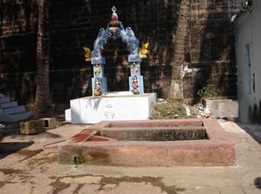
Manikarnika Tirtha
Architectural Features
Below Ground Level
- The temple is approximately 6.6 meters (about 40 feet) below the present road level.
- Devotees descend a staircase to reach the sanctum.
The temple follows the traditional Kalinga style:
- Vimana (Sanctum): Rekha Deula style.
- Jagamohana (Assembly Hall): Pidha Deula style.
- East-facing temple.
Sacred Manikarnika Tirtha
The temple contains the sacred Manikarnika Tirtha, presently preserved as a well. Tradition holds that this sacred water source is associated with Lord Shiva’s atonement and purification.
Spiritual Importance
- One of the Pancha Mahadevas protecting Sri Kshetra.
- Represents Nakula among the Pancha Pandava guardians.
- Closely associated with Jagannath Temple rituals and festivals.
Considered a powerful place for seeking purification from sins and obstacles.
Objective 5: To provide information about the presiding deity and other important deities worshiped within the Sri Kapala Mochana Mahadeva Temple complex
Main Deity
Sri Kapala Mochana Mahadeva
- Worshiped as a Shiva Lingam.
- Installed within a circular Yonipitha.
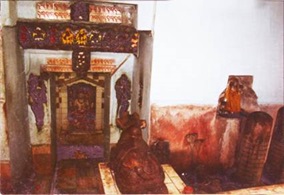
Deities inside the Kapala Mochana Mahadeva Temple
Other Deities in the Temple Complex
Sri Shyamakali Devi
- Ten-armed (Dasa-bhuja) form of Goddess Kali.
- Located inside the Jagamohana.
Sri Siddhi Ganapati
- Ancient sandstone deity of Lord Ganesha.
- Remarkable because the traditional mouse vehicle is absent, indicating great antiquity.
Other Sacred Images
- Lord Kartikeya.
- Lord Lakshmi Narasimha.
Objective 6: To present the scriptural and traditional references associated with Sri Kapala Mochana Mahadeva Temple and its spiritual significance in Sri Kshetra
The legend of Kapala Mochana is connected with the well-known Puranic narration of Lord Shiva’s liberation from Brahmahatya after severing Brahma’s fifth head.
References include:
- Skanda Purana (Utkala Khanda) – glorifies Sri Kshetra and the sacred sites of Puri.
- Brahma Purana – describes the sanctity of Purushottama Kshetra.
- Local temple traditions and Oriya religious literature preserve the Kapala Mochana narrative as part of the sacred history of Puri.
The pastime emphasizes the extraordinary spiritual potency of Sri Jagannath Dham, where even Lord Shiva became freed from a grave sin.
Objective 7: To provide information about accessibility, darshan timings of Sri Kapala Mochana Mahadeva Temple
Distance from Major Landmarks
- Jagannath Temple South Gate – approximately 200 meters.
- Puri Railway Station – approximately 3 km.
- Puri Bus Stand – approximately 2.5 km.
- Swargadwar Beach – approximately 2 km.
Darshan Timings
- Morning: 6:00 AM – 12:00 Noon
- Evening: 4:00 PM – 8:00 PM
Timings may vary on festival days.
