
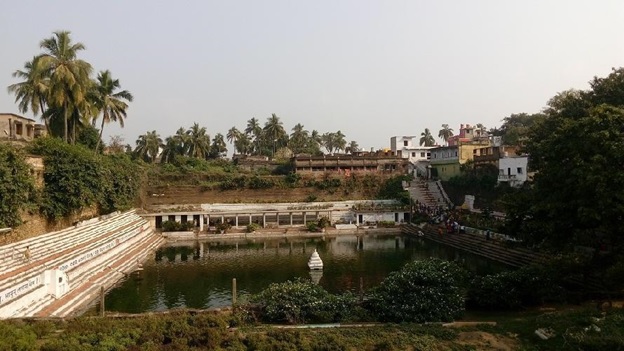
Sweta Madhav temple is in the bank of the Sweta Ganga
ObjectivesObjective 1: To understand the historical and spiritual significance of Sweta Madhava Temple in Sri Kshetra, Puri.
Objective 2: To appreciate how the lives of King Sweta and Gangamata Goswamini contributed to the sanctity of Sweta Ganga and Sweta Madhava Temple.
Objective 3: To explore the origin and historical tradition of Sweta Madhava as described in the Utkala-khanda.
Objective 4: To learn about the scriptural glories and spiritual merits associated with worshipping Sweta Madhava.
Objective 5: To identify the presiding deities worshipped at Sweta Madhava Temple.
Objective 6: To understand how these scriptures establish the sanctity and importance of Sweta Ganga in Sri Kshetra.
Objective 7: To identify the location of Sweta Madhava Temple within the sacred geography of Sri Kshetra, Puri.
IntroductionObjective 1: To understand the historical and spiritual significance of Sweta Madhava Temple in Sri Kshetra, Puri.
Sweta Madhav Temple is a small shrine located on the banks of the Sweta Ganga, which is one of the Pancha Mukti Tirthas (Five Sacred Waters) in the Jagannath Puri Dham. The importance of Sweta Madhava is inseparable from Sweta Ganga, which is traditionally counted among the sacred waters of Puri.
The Sweta Madhava Temple holds special importance in the sacred land of Puri Dham, the Sri Kshetra, and is revered as one of the important forms of Lord Vishnu associated with Lord Jagannath.
Devotees Associated with the PlaceObjective 2: To appreciate how the lives of King Sweta and Gangamata Goswamini contributed to the sanctity of Sweta Ganga and Sweta Madhava Temple.
King Sweta is a devotee of the Lord. As mentioned in the Purushottama Kṣetra Māhātmya and Skanda Purana, Ganga Devi appeared after King Sweta worshipped Lord Jagannath here and pleased Bhagavan.
Gangamata Goswamini (also known as Sachi Devi or Gangamata Thakurani) was one of the most revered women saints of the Gaudiya Vaishnava tradition in the 17th century. She is closely associated with Sweta Ganga and the area around the Sweta Madhava Temple in Puri. Gangamata Goswamini (1601–1721 CE) was a renowned Vaishnava saint and spiritual teacher of Jagannath Puri, celebrated for her scholarship on the Srimad Bhagavatam, her renunciation, and her role in the Gaudiya Vaishnavism lineage descending from Chaitanya Mahaprabhu.
Gangamata Goswamini – Early Life and RenunciationPrincess Saci Devi (birth name), daughter of King Naresh Narayana (Rajshahi, Bangladesh), displayed deep devotion to Lord Krishna from childhood. Rejecting marriage, she ruled briefly after her parents’ death, then renounced royal life to devote herself entirely to Krishna bhakti.
Journeying to Vrindavan, she met Haridas Pandit Goswami, who initiated her into the Radha-Krishna mantra. Following his instruction, she lived austerely—begging from door to door, chanting incessantly, and serving at Radha-Kunda.
Gangamata Goswamini – Service in Puri and TransformationOn her guru’s order, she moved to Jagannath Puri, where she restored the house of Sarvabhauma Bhattacharya and began daily lectures on the Bhagavatam. Mataji served Sri Rasika Raya at Gangamata Math near Sweta Ganga. Her deep understanding attracted scholars and devotees, including King Mukunda Deva.
During the festival of Mahavaruni Snana, a miracle occurred—divine waters carried her from the Sweta Ganga tank into the Jagannath Temple. Mistaken for a trespasser, she was jailed until Lord Jagannath appeared in the king’s dream, commanding her release and instructing that he take initiation from her. King Mukunda Deva of Puri became her disciple.
The temple (Gangamata Math) continues to receive daily offerings of Jagannath Mahaprasad—a tradition begun by King Mukunda Deva as guru-dakshina. Thereafter she was honored as Gangamata Goswamini, “the saintly mother blessed by the Ganga.” Her Samadhi is at Puri. Her life exemplifies the Gaudiya ideal of pure devotion transcending gender, caste, and social status, and she remains revered among Vaishnava saints of Odisha and Bengal.
Origin of Sweta MadhavaObjective 3: To explore the origin and historical tradition of Sweta Madhava as described in the Utkala-khanda.
According to the Utkala-khanda, there was a King Sweta in the Treta Yuga who was a devotee of Lord Jagannath. He made arrangements for Jagannath’s bhoga just as King Indradyumna had done. One morning he came to the Temple and saw the offerings made by the demigods—thousands and thousands of wonderful gifts that were beyond the power of any mortal to present to the Lord.
King Sweta became disturbed at the insignificance of his own offerings and stood at the Temple door with his head bowed in shame. As he meditated on his own insignificance, he had a divine vision in which he saw Lakshmi Devi herself taking his food offerings and feeding them to both sets of Jagannath Deities, who accepted them with great enthusiasm. The King immediately considered his life perfected by this vision and continued to serve Lord Jagannath with unflagging enthusiasm.
Jagannath eventually granted him the boon of being liberated in a spot which faces Matsya Madhava, halfway between Akshaya Bata and the ocean, which was subsequently named Sweta Madhava in his honor. The tank excavated here was also named Swetaganga. On the banks of this tank, Deities of Sweta Madhava, Matsya Madhava and the nine planets are still worshiped.
Importance of Sweta MadhavaObjective 4: To learn about the scriptural glories and spiritual merits associated with worshipping Sweta Madhava.
Manifestation of Lord Vishnu – Sweta Madhava is worshipped as a sacred form of Lord Vishnu and is regarded as one of the important Madhava shrines of Sri Kshetra. It reflects the belief that the entire sacred landscape of Puri is pervaded by the divine presence of Lord Jagannath and Vishnu.
Association with Sweta Ganga – The temple stands beside the holy Sweta Ganga tank, one of Puri’s sacred pilgrimage waters. Devotees believe that bathing in or worshipping at this site brings spiritual purification and merit.
Connection with King Sweta – Tradition associates the shrine with the pious King Sweta, whose devotion is said to have led to the manifestation of the sacred Sweta Ganga. The temple thus symbolizes faith, devotion, and divine grace.
Part of the Sacred Pilgrimage Circuit
Devotees visiting Puri often include Sweta Madhava in their pilgrimage along with the Jagannath Temple and other sacred sites.
The shrine is especially significant for those undertaking the traditional Pancha Tirtha pilgrimage of Puri.
Pilgrims pray here for spiritual cleansing, protection, and liberation (moksha). It is said in the Sastras that if one bathes in Sweta Ganga and takes darshan of Sweta Madhava (this name was given to King Sweta by the Lord, as he was a great devotee of Lord Jagannatha) and Matsya Madhava, one becomes free from all sins, especially the offence of inadvertently stepping over Jagannatha Prasadam.
Presiding DeitiesObjective 5: To identify the presiding deities worshipped at Sweta Madhava Temple.
The shrine houses beautiful Deities of Sweta Madhava and Matsya Madhava.
Scriptural ReferencesObjective 6: To understand how these scriptures establish the sanctity and importance of Sweta Ganga in Sri Kshetra.
The Skanda Purana (Purushottama Kṣetra Māhātmya), Nīlādri Mahodaya, Kapila Saṁhitā, and Brahma Purana describe the origin and glory of the holy tank known as Sweta Ganga in Puri. These scriptures establish its sacred importance and thereby glorify the sanctity of Sri Purushottama Kshetra. Sweta Madhava Temple stands on the banks of Sweta Ganga.
LocationObjective 7: To identify the location of Sweta Madhava Temple within the sacred geography of Sri Kshetra, Puri.
Sweta Madhava Temple is situated on the banks of Sweta Ganga in the area between the Singhadwara (Lion Gate) of Sri Jagannath Dham and Swargadwar. It lies toward the south-southwest of the Jagannath Temple and is situated near Gangamata Math.
The temple is located approximately 10–12 minutes’ walking distance from Sri Jagannath Temple, Puri.
