
Objectives:
Objective 1: To understand the meaning, location, and significance of Dola Bedi.
Objective 2: To identify the devotees associated with Dola Bedi.
Objective 3: To study the Dola Yātrā festival and traditions connected with Dola Bedi.
Objective 4: To examine the history and structure of Dola Bedi.
Objective 5: To understand the deities worshipped at Dola Bedi.
Objective 6: To explore the scriptural and traditional references related to Dola Bedi.
1. Introduction
Objective 1: To understand the meaning, location, and significance of Dola Bedi.
Meaning and Location: The word “Dola” means swing and “Bedi” means platform or altar. Dola Bedi, also known as Dola Mandapa, is a sacred festival platform situated near the Śrī Jagannātha Temple in Puri, Odisha. It is the place where the representative deities of Lord Jagannātha are brought during the Dola Yātrā festival.
Festival and Historical Significance: Dola Bedi is the principal venue for the annual Dola Yātrā (Swing Festival), one of the important festivals in the ritual calendar of Lord Jagannātha. During this festival, the representative deities of the Lord are brought in procession to Dola Bedi, where special worship and ceremonial swing pastimes are performed. According to temple tradition, Dola Bedi developed from an earlier Dola Mandapa used for Dola Utsava celebrations.
2. Devotees Associated with the Place
Objective 2: To identify the devotees associated with Dola Bedi.
Lord Jagannātha’s Devotees and Temple Servitors (Sevakas): Thousands of devotees gather at Dola Bedi during Dola Yātrā to participate in devotional activities and receive the Lord’s blessings. The temple servitors conduct the procession, rituals, and worship associated with the festival.
Gauḍīya Vaiṣṇavas and Followers of Śrī Caitanya Mahāprabhu: Inspired by the teachings of Śrī Caitanya Mahāprabhu, they celebrate Dola Yātrā through kīrtana and devotional activities, remembering the loving pastimes of Śrī Śrī Rādhā-Kṛṣṇa.
Pilgrims of Śrī Kṣetra: Pilgrims visiting Jagannātha Purī often visit Dola Bedi, especially during Dola Yātrā and Dola Pūrṇimā.
3. Leelas Associated with the Place
Objective 3: To study the Dola Yātrā festival and traditions connected with Dola Bedi.
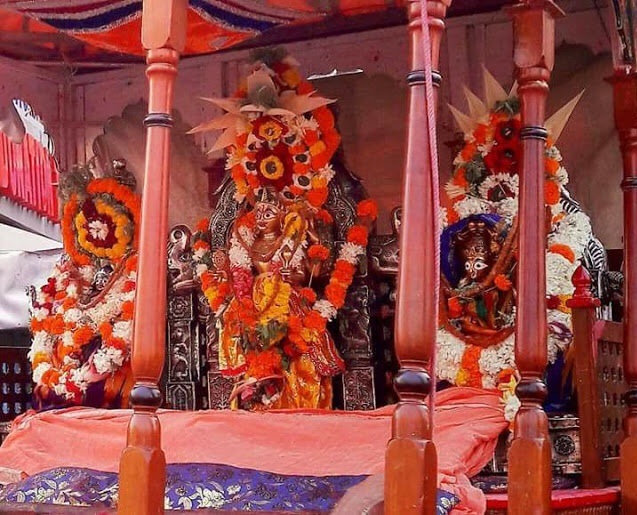
Dola Yātrā Festival: The principal pastime associated with Dola Bedi is the annual Dola Yātrā celebration. During the festival, Dolagovinda, accompanied by Śrīdevī and Bhūdevī, is taken in procession from the temple to Dola Bedi. The deities are placed on a decorated swing and worshipped through kīrtana, devotional singing, offerings of abira (colored fragrant powder), flowers, and festive celebrations, celebrating the joyful springtime pastimes of Lord Kṛṣṇa. During this period, Dola Bedi becomes a major center of devotional activities in Śrī Kṣetra.
Traditional History: According to temple tradition, Dola Utsava was originally celebrated at a Dola Mandapa within the Jagannātha Temple complex and was performed with the main deity of Lord Jagannātha. During one of the swing ceremonies, Lord Jagannātha’s hand was accidentally damaged. Following this incident, the temple began sending the representative festival deities—Dolagovinda, Śrīdevī, and Bhūdevī—known as the Chalanti Pratimas (Bije Pratimas), for the Dola Yātrā celebrations at Dola Bedi. This tradition has continued to the present day.
4. Place and Significance
Objective 4: To examine the history and structure of Dola Bedi.
Place and Structure: Dola Bedi is a raised ceremonial platform located outside the Meghanada Prachira (outer wall) of the Śrī Jagannātha Temple. It serves as the principal venue for the annual Dola Yātrā and Dola Pūrṇimā celebrations.
Historical Development: According to temple tradition, Dola Utsava was originally celebrated at a Dola Mandapa within the temple premises. After the original structure became damaged, the present Dola Bedi was constructed outside the temple area by King Bira Keshari Deva.
Importance: Darshan of Lord Dolagovinda at Dola Bedi during Dola Yātrā is traditionally regarded as spiritually beneficial and auspicious for devotees.
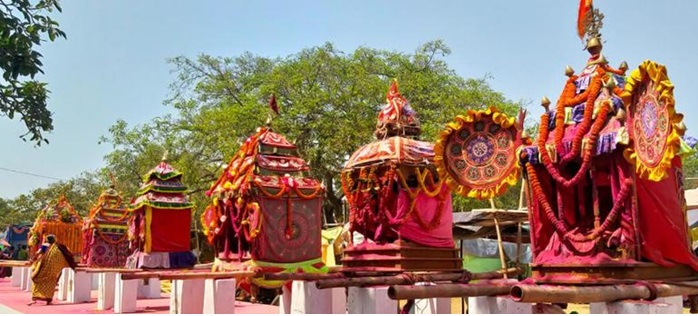
Dola Bedi (Dola Mandapa), the sacred festival platform
near the Śrī Jagannātha Temple where the annual Dola Yātrā
celebrations are held.
5. Presiding Deities
Objective 5: To understand the deities worshipped at Dola Bedi.
Dolagovinda: The representative form of Lord Jagannātha worshipped during Dola Yātrā.
Śrīdevī: The goddess of fortune who accompanies the Lord.
Bhūdevī: The goddess representing Mother Earth and the Lord’s protection of all living beings.
During Dola Yātrā, Dolagovinda, Śrīdevī, and Bhūdevī are ceremonially brought to Dola Bedi after the completion of traditional temple rituals and are worshipped there throughout the festival celebrations.
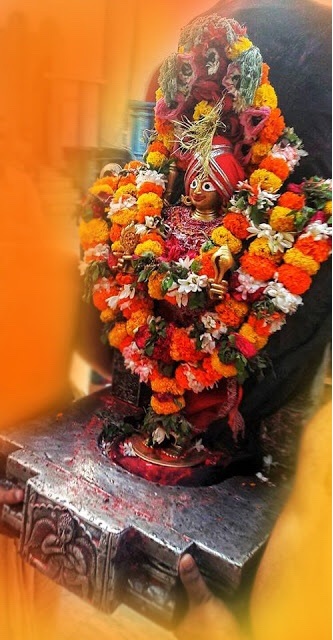
Dolagovinda, accompanied by Śrīdevī and Bhūdevī,
worshipped during the Dola Yātrā festival
at Dola Bedi.
6. Scriptural Reference
Objective 6: To explore the scriptural and traditional references related to Dola Bedi.
● Padma Purāṇa: The spiritual benefits of witnessing Lord Govinda during the Dola festival are glorified in the Padma Purāṇa:
Dolasthaṁ śītalaṁ dṛṣṭvā Govindaṁ Puruṣottamam
Phālgunyāṁ Phālgunotsave sarva-pāpa-vināśanam
Meaning: One who beholds Lord Govinda seated upon the swing during the Phālguna festival becomes freed from accumulated sinful reactions.
● Traditional Jagannātha Verse: A traditional verse associated with the major festivals of Lord Jagannātha states:
Ḍole ca Dola-Govindaṁ, Chāpe ca Madhusūdanam
Rathe tu Vāmanaṁ dṛṣṭvā, punarjanma na vidyate
Meaning: Seeing Lord Dolagovinda during Dola Yātrā, Lord Madhusūdana during Chandan Yātrā, and Lord Vāmana during Ratha Yātrā bestows great spiritual merit and is traditionally associated with liberation from the cycle of birth and death.
● Jagannātha Temple Tradition: The Dola Yātrā rituals at Dola Bedi are performed according to the traditional Nītis (ritual procedures) of the Śrī Jagannātha Temple and have been preserved through the temple’s long-standing festival traditions and annual ritual calendar.
7. Travel Guide
- Location: Situated near the Śrī Jagannātha Temple, Puri, Odisha.
- By Road: Easily accessible from all major points within Puri town.
- By Rail: Approximately 3 km from Puri Railway Station.
- By Air: About 60 km from Biju Patnaik International Airport, Bhubaneswar.
8. Darśana Timing
Dola Bedi can be visited throughout the year.
Special darśana and festival celebrations take place during:
- Fagu Daśamī
- Dola Yātrā
- Dola Pūrṇimā
Festival timings are observed according to the annual Jagannātha Temple ritual calendar.
