
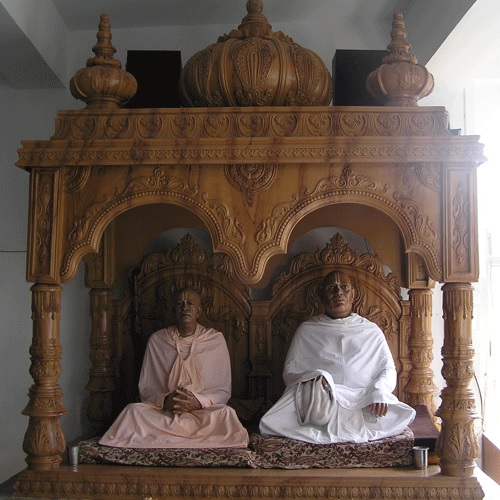
Bhajan Kutir of Srila Bhaktivinoda Thakura in Puri
Objectives
Objective 1: To gain insight into the traditional origin of the Bhakthi Kutir (meaning in English – meditation cottage of saints), and its divine significance.
Objective 2: To analyse how the Bhakthi Kutir has stood as the hermitage of many saints over the past and the meditative worship established there.
Objective 3: To explore the location and significance associated with Bhakthi Kutir in Puri.
Objective 4: To know about the devotees associated with this place and the various kings guided by Thakurji.
Objective 5: To trace the historical development of the temple structure, including its original construction and later restoration.
Objective 6: To describe the main Deity forms in the temple, their arrangement, and the presence of other sacred Deities worshiped at the Kutir.
Objective 7: To gain insight into the scriptural references about the temple.
Objective 8: To analyse how the various Kutirs were established by Bhakthi Vinoda Thakura and other saints across the country over the past.
Objective 1: To gain insight into the traditional origin of the Bhakthi Kutir (meaning in English – meditation cottage of saints), and its divine significance.
Bhakti Kutir in Jagannath Puri was established in the early 20th century by the illustrious Gaudiya Vaishnava saint, Srila Bhaktivinoda Thakura. It served as his personal bhajana kutira (meditation cottage) where he performed solitary spiritual practice, absorbed in uninterrupted meditation.
Objective 2: To analyse how the Bhakthi Kutir has stood as the hermitage of many saints over the past and the meditative worship established there.

Words of Bhakthi vinoda Thakura outside the kutir in Puri
Establishment and Historical Evolution
The Original Vision (1908–1914): In 1908, Bhaktivinoda Thakura retired from household and government life to accept the renounced order (babaji-vesa). He established Bhakti Kutir by the sea in the Swargadwar area, immediately opposite the samadhi (tomb) of Srila Haridasa Thakura. He spent his final four years there in solitary devotion.
The Sacred Site: According to spiritual tradition, this exact location was historically significant, as the Sapta-rishis (seven celestial sages) performed severe austerities and Hari-bhajana millions of years ago.
Revitalization by ISKCON: After Bhaktivinoda Thakura passed away, the property fell into disuse. Because the government declared that any Vaishnava society could take responsibility for the land, ISKCON assumed stewardship.
Modern Temple Complex: ISKCON transformed the site into a beautiful temple and spiritual retreat. The main shrine now houses deities of Sri Sri Radha Giridhari Jiu and Chaitanya Mahaprabhu. The prayer hall also features statues of Bhaktivinoda Thakura and ISKCON founder Srila Prabhupada.
Objective 3: To explore the location and significance associated with Bhakthi Kutir in Puri.
The Heritage and Location
Location: Bhakti Kutir is situated at Swargadwar, right beside the sea in Jagannath Puri, Odisha, just a short walk from the Samadhi of Srila Haridasa Thakura.
Current Structure: ISKCON transformed the site into a beautiful, functioning temple. The place now includes the original 100-year-old marble name plaque and a pure, sattvic restaurant on the ground floor.
Pilgrimage Information
Address: K M Munshi Marg, Swargadwar, Puri, Odisha 752001.
Accessibility: It is located near the sea in the well-known Swargadwar area, just minutes from the main Jagannath Temple.
Darshan Timings: The Kutir is open from 04:30 AM to 01:00 PM and from 04:15 PM to 08:45 PM.
Objective 4: To know about the devotees associated with this place and the various kings guided by Thakurji.
Royal Families Associated with Bhaktivinoda Thakur
Bhaktivinoda Thakur had good relations with various kings, and their support greatly helped his spiritual work:
• Raja Prasanna Kumar Thakur (Raja Krishnananda Datta): He was the father of Bhaktivinoda Thakur (Kedarnath Datta). He was an ardent devotee of Nityananda Prabhu.
• Raja Birchandra Manikya of Tripura: The king of the hill states of Tripura, he was an ardent disciple and supporter of Bhaktivinoda Thakur. In July 1896, Thakur went to Tripura at the invitation of the king and preached extensively on the glories of Lord Krishna for four days. The king also sponsored the publication of Bhaktivinoda’s novel Prema Pradipa.
• Raja of Puri: While serving as a magistrate in Jagannath Puri, Bhaktivinoda Thakura found some irregularities in the temple administration. The king misused 80,000 rupees belonging to the temple for his own pleasures. Bhaktivinoda Thakura protested against this misuse and made the king provide funds to ensure proper food offerings (Bhoga) to the Lord.
Saints and Devotees of Bhakthi Kutir
Srila Bhaktivinoda Thakur:The founder of the site, who lived and chanted here.
The Seven Celestial Sages (Sapta-Rishis): According to scripture, Bhakti Kutir is situated on land where these sages performed severe austerities and hari-bhajana millions of years ago.
ISKCON Devotees & Sadhus: Administered by the Gaudiya Vaishnava order, the site is regularly visited, cared for, and maintained by ISKCON sannyasis, brahmacharis, and initiated babajis.
International & Local Pilgrims: Millions of devotees and tourists visit the premises to pay their respects to the enshrined Deities of Sri Sri Radha Giridhari, Chaitanya Mahaprabhu, Bhaktivinoda Thakur, and Srila Prabhupada.
Objective 5: To trace the historical development of the temple structure, including its original construction and later restoration.
Historical & Architectural Evolution
Original Structure: Between 1900 and 1910, the prominent Gaudiya Vaishnava reformer Srila Bhaktivinoda Thakura lived off and on in a modest kutir (cottage) by the sea to focus on his solitary devotional practices.
Modern Complex: Today, the property is administered by ISKCON, who replaced the original structure with a multi-storied temple and guesthouse. The site features modern concrete and stone architecture typical of current Indian ashrams, blending spiritual utility with facilities for visiting pilgrims.
Preserved Relic: The only remaining physical element of Bhaktivinoda Thakura’s original dwelling is a century-old marble name plaque embedded in the outer boundary wall.
Temple Layout: The complex includes a vibrant temple hall featuring deities of Sri Sri Radha Giridhari, Sri Chaitanya Mahaprabhu, and an altar where Bhaktivinoda Thakura and Srila Prabhupada are seated together. The ground floor of the premises also houses a pure sattvic (vegetarian) restaurant.
Objective 6: To describe the main Deity forms in the temple, their arrangement, and the presence of other sacred Deities worshiped at the Kutir.
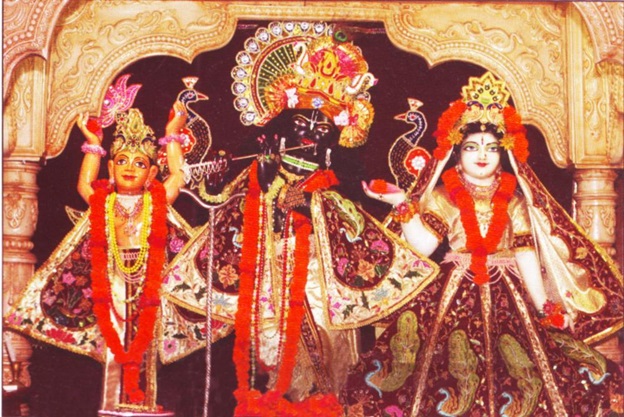
Sri Radha Giridhari Mahaprabhu
in Bhajan Kutir, Puri
Presiding Deities:
The presiding deities at Srila Bhaktivinoda Thakura’s Bhakti Kutir in Jagannath Puri are Sri Sri Radha Giridhari Jiu and Sri Chaitanya Mahaprabhu.
The temple also houses deities of Srila Bhaktivinoda Thakura and Srila Bhaktivedanta Swami Prabhupada on the altar.
Located in the Swargadwar area near Haridash Thakura’s Samadhi, this sacred site is managed and maintained by ISKCON.
Srila Bhaktivinoda Thakura (Kedarnath Datta) was a 19th-century magistrate, prolific author, and foundational spiritual leader in the Gaudiya Vaishnava tradition who revived the teachings of Sri Chaitanya Mahaprabhu.
His Bhajan Kutir (meditation cottage) in Jagannath Puri is recognized globally as a deeply sacred pilgrimage site.
Srila Bhaktivinoda Thakura spent significant time living, writing, and engaging in deep spiritual meditation at his personal bhajana kutira, which he originally named Bhakti Kutir.
Objective 7: To gain insight into the scriptural references about the temple.
Primary Scriptural & Inscriptional References
1. The Bhakti Kutir Plaque
Written entirely by Bhaktivinoda Thakura himself, this verse is permanently etched onto a century-old marble plaque at the entrance of the cottage. It captures the essence of his internal consciousness while residing there:
gaura-prabhoh prema-vilasa-bhumau
niskincano bhakti-vinoda-nama
ko’pi sthito bhakti-kutira-kosthe
smrtvanizam nama-gunam murareh
Translation
“In this land of Lord Gauranga’s loving pastimes, one desireless devotee named Bhaktivinoda resides in a small room of Bhakti Kutir, continuously remembering the holy name and qualities of Lord Murari throughout the night.”
2. Context in His Compositions
The mindset cultivated at Bhakti Kutirs is rooted in his earlier poetic writings. In Saranagati, he references his deep desire to reside in a cottage of devotion on the banks of the Ganges (analogous to his spiritual residence in Puri) to constantly sing the holy name:
kīṭa-janma hou jatha tuyā dāsa
Translation
“My dear Lord, I have no objection if I have to take my birth next as an insect. But I must be in the house of a devotee.”
Objective 8: To analyse how the various Kutirs were established by Bhakthi Vinoda Thakura and other saints across the country over the past.
Other Major Bhajan Kutirs Associated with Bhaktivinoda Thakura
While “Bhakti Kutir” most famously refers to the retreat in Puri, Srila Bhaktivinoda Thakura had other prominent meditation sites essential to Gaudiya Vaishnavism:
Godrumadvipa (Navadvip Dham, West Bengal): Known as Sri Svananda Sukhada Kunja, this ashram is where he primarily wrote many of his devotional books. It is also the site of his Samadhi temple.
Vrindavan Dham: He is also historically associated with humble bhajan kutirs in the Vraja area where he performed deep meditation.
