
Objectives
Objective 1: To seek Divine Blessings of Lord Chaitanya Mahaprabhu, Lord Jagannath, Sarvabhauma Bhattacharya and Ganga Mata.
Objective 2: To experience Spiritual Peace in the math offers a calm and devotional atmosphere that helps visitors meditate, pray, and find inner peace.
Objective 3: To learn about Sri Chaitanya Mahaprabhu and the Gaudiya Vaishnava tradition.
Objective 4: To explore the Rich Heritage of Puri that contribute to the spiritual and cultural heritage of Puri.
Objective 5: To visit the Sacred Sweta Ganga Tank a revered pilgrimage site believed to be connected with the sacred River Ganga.
Objective 6: To understand Vaishnava Philosophy about devotion (Bhakti), humility, and surrender to God through the traditions preserved at the math.
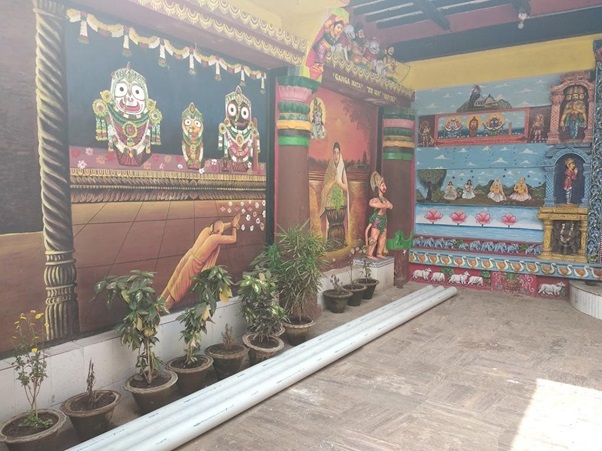
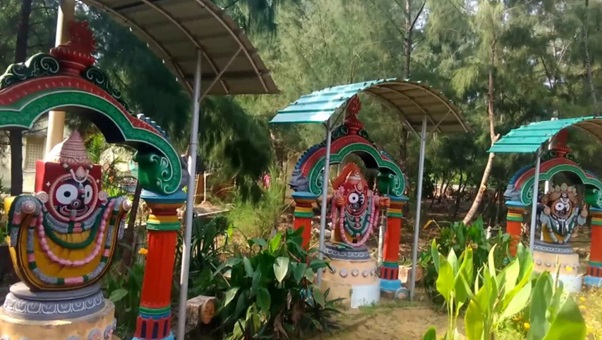
Objective 7: To appreciate Religious Art and Sculptures in the premises that contain beautiful statues and devotional displays depicting Hindu scriptures and divine pastimes.
Objective 8: To strengthen Faith and Devotion to increase the love for God through prayer, kirtan, and association with a sacred place connected to saints and spiritual teachers.
Objective 9: To understand the importance of Women in Spiritual Leadership.
Objective 1: To seek Divine Blessings of Lord Chaitanya Mahaprabhu, Lord Jagannath, Sarvabhauma Bhattacharya and Ganga Mata.
History of Sarvabhauma Bhattacharya
Sarvabhauma Bhattacharya was a renowned scholar of Vedanta who lived in Puri. He was respected throughout India for his vast learning and was closely associated with the temple of Jagannath Temple. Although he was deeply learned in scriptures, he primarily followed the impersonal interpretation of Vedanta (Advaita philosophy).
At the age of 24, Chaitanya Mahaprabhu accepted sannyasa (renounced order of life) and travelled to Puri. Upon seeing Lord Jagannath, He became overwhelmed with divine love and fainted inside the temple. Sarvabhauma Bhattacharya witnessed this extraordinary event. Concerned for the young sannyasi, he took Mahaprabhu to his home and cared for Him.
Sarvabhauma thought:
“This young sannyasi is very emotional. To remain steady in spiritual life, He should study Vedanta.”
Out of affection, he invited Mahaprabhu to hear his explanations of the Vedanta-sutras. For seven days Mahaprabhu listened silently.
Finally, Sarvabhauma asked:
“Why do You not ask questions or comment?”
Mahaprabhu replied that the original Vedanta-sutras were clear, but Sarvabhauma’s interpretations obscured their direct meaning.
A profound discussion followed. Mahaprabhu explained the scriptures from the perspective of devotion (bhakti), revealing deep meanings that astonished Sarvabhauma. In many different ways, demonstrating extraordinary spiritual wisdom, Sarvabhauma realized that this was not an ordinary scholar.
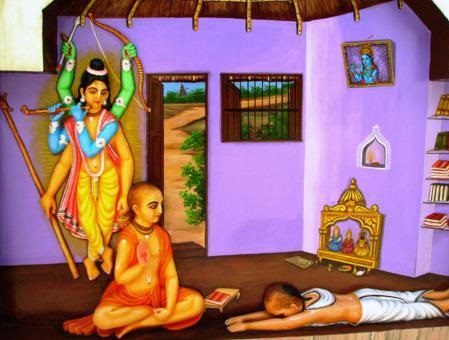
According to Gaudiya Vaishnava tradition, Mahaprabhu revealed His divine form to Sarvabhauma—a form combining Lord Krishna and Lord Rama, and also the six-armed (Shad-bhuja) manifestation.
Overwhelmed, Sarvabhauma surrendered to Mahaprabhu and became a devotee of Krishna. After his transformation, Sarvabhauma composed many verses glorifying Chaitanya Mahaprabhu. One famous verse is:
Vairagya-vidya-nija-bhakti-yoga-
shikshartham ekah purushah puranah…
In this prayer he declares that the Supreme Lord Himself had appeared as Chaitanya Mahaprabhu to teach devotion and detachment.
History of Ganga Mata Goswamini (Saci Devi)
Ganga Mata Goswamini, originally known as Saci Devi, was one of the most revered female saints in the Gaudiya Vaishnava tradition. She lived during the 17th century and became famous for her deep devotion to Lord Krishna and her miraculous connection with the sacred Ganga River.
Saci Devi was born into a royal family in the region of present-day Bangladesh. Her father was a king or local ruler, and she was raised amidst wealth, comfort, and education. From childhood, however, she showed little interest in royal pleasures. Her heart was drawn toward spiritual life and devotion to Krishna.
When the time came for her marriage, Saci Devi chose a different path. She renounced worldly life and dedicated herself entirely to spiritual practice. She left her royal home and travelled to holy places associated with Krishna and Chaitanya Mahaprabhu.
Eventually, she reached Vrindavan and became a disciple of Haridasa Pandita, a respected spiritual teacher in the disciplic succession of Chaitanya Mahaprabhu.
Under his guidance, she studied scriptures such as:
Bhagavad-Gita
Shrimad-Bhagavatam
Teachings of the Goswamis
Her scholarship and devotion became widely respected.
Following her guru’s instruction, Saci Devi later travelled to Puri.
She took residence at the monastery now known as Ganga Mata Math. At that time, the math was known as Sarvabhauma Bhattacharya’s residence, the historic place where Chaitanya Mahaprabhu had transformed Sarvabhauma Bhattacharya through His teachings.
The most famous event of her life occurred during the festival of Mahavaruni Snana.
Unable to travel to the distant Ganga due to her service and advanced age, she remained in Puri. That night, according to Gaudiya tradition, Lord Jagannath appeared in a dream and instructed her to bathe in the waters of the temple’s sacred area.
When she entered the water in devotion, a miraculous current carried her spiritually to the Ganga. Witnesses later found her near the Jagannath Temple, and the event was understood as the mercy of Mother Ganga herself.
Because of this miracle, she became known as “Ganga Mata” (“Mother Ganga”).

Objective 2: To experience Spiritual Peace in the math offers a calm and devotional atmosphere that helps visitors meditate, pray, and find inner peace.
Ganga Mata spent most of her life in prayer, chanting, scriptural study, and service. The math preserves the atmosphere of devotion she established centuries ago. The peaceful surroundings help devotees:
Meditate on God
Chant holy names
Escape worldly stress
Develop inner calm and spiritual focus
Many pilgrims visit simply to sit quietly and absorb the spiritual atmosphere.
Objective 3: To learn about Sri Chaitanya Mahaprabhu and the Gaudiya Vaishnava tradition.
Although Chaitanya Mahaprabhu did not personally establish Ganga Mata Math, the Math stands on the site traditionally associated with the residence of Sarvabhauma Bhattacharya, where Mahaprabhu delivered some of His most important teachings.
Pure devotion to Krishna: Mahaprabhu taught that pure loving devotion to Krishna is superior to mere intellectual knowledge, ritualism, or the pursuit of liberation. He taught that love of God is the ultimate goal of life.
Chanting the holy names: Mahaprabhu emphasized the chanting of God’s names as the most effective spiritual practice in the present age.
The Maha-mantra is:
Hare Krishna Hare Krishna
Krishna Krishna Hare Hare
Hare Rama Hare Rama
Rama Rama Hare Hare
He taught constant remembrance of God purifies the heart.
Humility and compassion: One of Mahaprabhu’s most famous teachings is:
“Be humbler than a blade of grass and more tolerant than a tree.”
This teaching encourages humility, patience, and respect for all living beings.
Scholarship Should Lead to Devotion: During His discussions with Sarvabhauma Bhattacharya, Mahaprabhu demonstrated that scriptural learning reaches perfection when it awakens devotion to Krishna. He taught knowledge without devotion remains incomplete.
Service to Lord Jagannath and devotees: In Puri, Mahaprabhu spent many years immersed in devotion to Jagannath Temple and encouraged selfless service to the Lord and His devotees. He stressed the importance of keeping the company of sincere devotees, as good association strengthens faith and spiritual progress.
Equality of all souls: Mahaprabhu taught that every living being is an eternal servant of Krishna, regardless of birth, social status, wealth, or education. He taught spiritual worth is determined by devotion, not social position.
Objective 4: To explore the Rich Heritage of Puri that contribute to the spiritual and cultural heritage of Puri.
Puri is one of Hinduism’s most sacred pilgrimage centers and home to the famous Jagannath Temple.
Ganga Mata Math is one of the traditional monasteries (maths) that have preserved Vaishnava teachings for centuries.
Devotees can:
Learn about Odisha’s spiritual heritage.
Understand monastic traditions.
Explore the history of Jagannath culture.
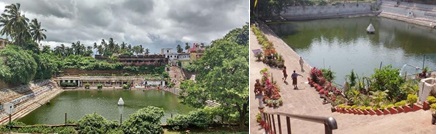
Objective 5: To visit the Sacred Sweta Ganga Tank, a revered pilgrimage site believed to be connected with the sacred River Ganga.
The most famous event associated with Ganga Mata is the appearance of the sacred Ganga River in Puri.
Tradition says that while observing a sacred vow, Ganga Mata Goswamini (Saci Devi) entered the waters of Sweta Ganga. Through divine grace, she was carried spiritually to the River Ganga itself and later returned. Witnessing this miracle, people began calling her “Ganga Mata.” Pilgrims visit to remember this miracle and strengthen their faith in divine mercy and spiritual power.
Objective 6: To understand Vaishnava Philosophy about devotion (Bhakti), humility, and surrender to God through the traditions preserved at the math.
Although born a princess, Ganga Mata left wealth, power, and comfort to dedicate her life to spiritual realization.
Her life teaches that:
Spiritual wealth is greater than material wealth.
True happiness comes from devotion.
Dedication and faith can transform one’s life.
This inspires devotees to focus on higher values and spiritual growth.
Objective 7: To appreciate Religious Art and Sculptures in the premises that contain beautiful statues and devotional displays depicting Hindu scriptures and divine pastimes.
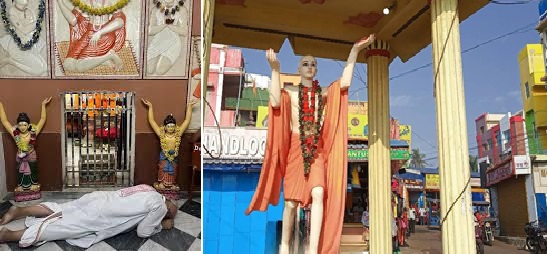
1. Shadbhuja (Six-Armed) Gauranga Deity
One of the most significant sacred images in the Math is the deity of Shadbhuja Gauranga (Six-Armed Chaitanya Mahaprabhu). The deity commemorates the tradition that Mahaprabhu revealed His divine form to Sarvabhauma Bhattacharya at this location.
The six arms symbolize:
Two arms of Lord Rama carrying bow and arrow.
Two arms of Lord Krishna carrying flute.
Two arms of Chaitanya Mahaprabhu carrying the sannyasa staff and water pot.
Religious significance: It represents the unity of Rama, Krishna, and Chaitanya Mahaprabhu.

2. Radha-Krishna Deities
The Math houses several pairs of Radha-Krishna deities, including:
Radha Rasika Raya
Radha Shyamasundara
Radha Madanamohana
Radha Vinoda
Radha Raman
These beautifully decorated deities are the center of daily worship and festival celebrations.
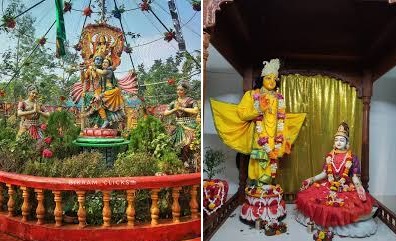
3. Dancing Gauranga
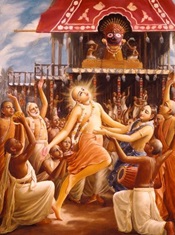
A dancing form of Chaitanya Mahaprabhu is also worshipped in the Math. This artistic representation depicts Mahaprabhu performing ecstatic kirtana (devotional chanting).
4. Sacred Relics and Iconography
The Math preserves the Damodara Shalagrama-shila associated with Sarvabhauma Bhattacharya and other sacred Vaishnava images.
5. Murals and Devotional Paintings
Chaitanya Mahaprabhu’s meeting with Sarvabhauma Bhattacharya
Ganga Mata Goswamini’s life and miracles
Lord Jagannath
Radha and Krishna
Gaudiya Vaishnava acharyas
These paintings function as visual storytelling tools that help pilgrims understand the history and teachings of the Math.

Objective 8: To strengthen Faith and Devotion to increase the love for God through prayer, kirtan, and association with a sacred place connected to saints and spiritual teachers.
The art and sculptures at Ganga Mata Math are designed to teach three main principles:
Bhakti (devotion) to Krishna
The mercy of Chaitanya Mahaprabhu
The exemplary life of Ganga Mata Goswamini
Thus, every sculpture, deity, and painting in the Math serves both an artistic and spiritual purpose, helping devotees connect with the sacred history of Puri and the Gaudiya Vaishnava tradition.
The central objective of visiting Ganga Mata Math is:
“To learn from the life of Ganga Mata Goswamini, receive divine blessings, deepen devotion to Lord Krishna and Lord Jagannath, and experience the rich spiritual heritage of Puri.”
Objective 9: To understand the importance of Women in Spiritual Leadership.
Ganga Mata Goswamini is one of the most respected women saints in the Gaudiya Vaishnava tradition. At a time when spiritual institutions were mostly led by men, she became a renowned teacher and spiritual leader.
Her life shows that devotion, wisdom, and spiritual realization are not limited by gender.
Location and Timings
Location: Ganga Matha Math is located in the Bali Sahi neighbourhood of Puri, Odisha.
Landmark: To the south of the Jagannath Temple, directly opposite the Sweta Ganga Tank.
Distance: Approximately a 10-minute walk from the Jagannath Temple.
Darshan Timings
Morning: 6:00 AM to 12:00 PM
Evening: 4:00 PM to 9:00 PM
