
Objective 1: To trace the historical evolution of Ahulaa Math from a bustling 16th-century Gauḍīya Vaiṣṇava hub to its current secluded, contemplative state.
Objective 2: To examine the site’s association with key figures—Advaita Ācārya, Śrī Sītā Ṭhākurāṇī, and the Pañca-Tattva—and trace the etymology of the name “Ahulaa.”
Objective 3: To analyze the theological and socio-religious significance of the annual “Grand Reunion” and the “Mystic Storm and Private Feast” narrative.
Objective 4: To evaluate the site’s physical preservation, uncommercialized heritage, and the spiritual importance of its altar deities.
Objective 5: To correlate local oral histories with canonical Gauḍīya texts while documenting practical access information for modern researchers and pilgrims.
Introduction Objective 1: To trace the historical evolution of Ahulaa Math from a bustling 16th-century Gauḍīya Vaiṣṇava hub to its current secluded, contemplative state.
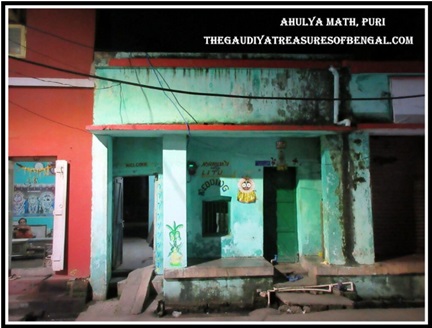
Ahulaa Math (also known as Ahulya Math) is an ancient Gauḍīya Vaiṣṇava monastery located in the Hera Gohiri Sahi area of Purī, Odisha, revered as the traditional residence of Advaita Ācārya during his visits to Jagannātha Purī. Beyond this connection, the monastery served as a vital cultural and spiritual hub during the sixteenth century, functioning as the primary residence and gathering point for the hundreds of devotees who travelled from Bengal each year to meet Śrī Caitanya Mahāprabhu during the Ratha-yātrā festival.
Advaita Ācārya (born Kamalākṣa Miśra in 1434, in the village of Nabagrāma in the Sylhet region of undivided Bengal, present-day Bangladesh) later settled with his wife, Sītā Ṭhākurāṇī, in Śāntipur, Nadia, where he became a senior elder of the emerging Vaiṣṇava community and one of the foremost associates of Śrī Caitanya Mahāprabhu. His annual journeys to Purī with Bengali devotees, and his residence at this Math, place Ahulaa Math directly within the inner circle of sites connected to Mahāprabhu’s confidential pastimes.
The tradition of the annual Bengal-to-Purī pilgrimage, of which Ahulaa Math became a principal lodging point, is itself traced to Mahāprabhu’s own words. According to the Śrī Caitanya-caritāmṛta (Madhya-līlā 1.46–49), after Advaita Ācārya and the Bengal devotees spent their first cātūrmāsya (four-month rains retreat) with Mahāprabhu in Purī, He instructed them to return every year for the Ratha-yātrā festival—a request that transformed what began as a single visit into a sustained, centuries-long tradition of pilgrimage.
Although presently less prominent and more secluded than some of the larger, bustling maṭhas of the holy city, Ahulaa Math remains deeply revered among practitioners, preserved as a sacred space intimately connected to the confidential līlās of Mahāprabhu and His closest associates.
Devotees Associated with the Place Objective 2: To examine the site’s association with key figures—Advaita Ācārya, Śrī Sītā Ṭhākurāṇī, and the Pañca-Tattva—and trace the etymology of the name “Ahulaa.”
The spiritual legacy of Ahulaa Math is tightly bound to the topmost figures of the Gauḍīya Vaiṣṇava tradition, serving as a sanctuary of divine fellowship during the sixteenth-century Ratha-yātrā festivals.
Advaita Ācārya & Śrī Sītā Ṭhākurāṇī — As the foremost personality associated with the Math, Advaita Ācārya used this site as his primary residence whenever he travelled from Bengal to Purī. His wife, Sītā Ṭhākurāṇī, actively assisted him here, managing the household and overseeing the service of the devotees. Within Gauḍīya theology, she is honoured as an incarnation of Yogamāyā, and her independent presence on the altar here—discussed further under Presiding Deities—is considered one of the Math’s most distinctive features.
Śrī Caitanya Mahāprabhu — Most importantly, Mahāprabhu frequently visited this Math and accepted prasādam (sanctified food) here upon the personal invitation of Advaita Ācārya, an act that permanently sealed the monastery’s reputation as a vital centre of divine pastimes.
Lord Nityānanda Prabhu — He is said to have resided here alongside Advaita Ācārya and a large contingent of Gauḍīya devotees during their yearly four-month stays in Purī for the Ratha-yātrā festival, strengthening the Math’s role as a major hub for the annual gathering of Bengali Vaiṣṇavas.
The Origin of the Name: “Ahulaa”The Legend of the Oar: The Math owes its distinctive name to Vinod Goswāmī, a direct disciple of Advaita Ācārya. While most pilgrims undertook the arduous overland journey to Purī on foot, Vinod Goswāmī travelled from Bengal by rowing a boat along the region’s river networks. Because the word ahulya translates to “oar,” he came to be affectionately known as Ahulya Goswāmī, and the Math that housed him inherited this unique, lasting name.
Pastimes Associated with the Place Objective 3: To analyze the theological and socio-religious significance of the annual “Grand Reunion” and the “Mystic Storm and Private Feast” narrative.
The historical accounts of Ahulaa Math are filled with deep spiritual emotion, serving as a primary stage for the intimate, confidential pastimes (līlās) shared between Śrī Caitanya Mahāprabhu and His closest companions.
The Grand Reunion of Bengal DevoteesEvery year during the Ratha-yātrā festival, Ahulaa Math transformed into a vibrant spiritual sanctuary. Devotees from Bengal would travel to Purī and spend several months residing at the Math, immersing themselves in continuous kīrtana, philosophical discussions, and loving fellowship. The monastery served as the ultimate emotional reunion point where these pilgrims would gather to receive Mahāprabhu’s direct blessings before finally returning home.
The Confidential Feast and the Mystic StormThe most celebrated pastime recorded at this site beautifully illustrates the reciprocation of love between the Lord and His pure devotee.
The Private FeastDuring the third year of the Bengal devotees’ annual pilgrimage to Purī, Advaita Ācārya harboured a confidential desire: he wanted to cook an elaborate feast and serve Caitanya Mahāprabhu entirely in private, away from the usual, overwhelming crowds of sannyāsīs and onlookers.
Knowing the desire of His devotee, the cosmic order responded. On that exact day, a massive storm accompanied by torrential rains suddenly struck Purī. The weather was so severe that it completely blocked Mahāprabhu’s usual entourage from travelling.
Against all odds, Mahāprabhu arrived at Ahulaa Math completely alone. Seeing his desire perfectly fulfilled, Advaita Ācārya joyfully thanked the demigod Indra for orchestrating the storm. Hearing this, Mahāprabhu smiled lovingly and remarked that Kṛṣṇa always fulfils the innermost desires of His pure devotees—a pastime that continues to be cited as a vivid illustration of bhakta-vatsalya in the oral tradition surrounding the Math.
Architectural Features and Sacred Space Objective 4: To evaluate the site’s physical preservation, uncommercialized heritage, and the spiritual importance of its altar deities.
Unlike the massive, modern architectural marvels that populate Purī today, Ahulaa Math remains an ancient, unassuming, and tranquil structure. It is preserved not as a commercial tourist hub, but as a solemn bhajana-sthalī—a dedicated place of worship and intense internal meditation.
The primary significance of the Math rests not on outward architectural grandeur, but on its historical layout, sacred spaces, and the profound devotional atmosphere it has preserved for over five centuries.
The Traditional Layout and Courtyard SystemThe monastery maintains a traditional residential temple courtyard system. This layout directly mirrors the exact sixteenth-century settings in which the foundational saints of the Gauḍīya Vaiṣṇava movement lived, cooked, and chanted together. The compact, inward-facing architecture fosters an environment of secluded contemplation and intimate devotional association (sādhu-saṅga).
Key Sacred SpacesThe Sacred Chamber (Gambhīrā-style Room): The heart of the monastery is a small, cave-like inner room reminiscent of a Gambhīrā—the term traditionally used for Mahāprabhu’s own private residential chamber near the Jagannātha Temple in Purī. This room at Ahulaa Math is directly associated with the personal residence, internal meditation, and daily worship of Advaita Ācārya, echoing the same architectural language of seclusion found at the more widely known Gambhīrā.
The Traditional Kitchen and Prasādam Area:The layout preserves the area where Sītā Ṭhākurāṇī and Advaita Ācārya prepared meals—the historic site of the famous “Private Feast” where Śrī Caitanya Mahāprabhu accepted prasādam alone during the mystic storm.
Historical Preservation and AtmosphereA Living Monument of Devotion: While time and the humid coastal climate of Purī have caused visible structural deterioration to the ancient brickwork, the Math remains structurally intact in its original spirit. Its true value lies in its refusal to modernize; by remaining quiet and uncommercialized, it successfully preserves the raw, unadulterated devotional atmosphere of the early Gauḍīya Vaiṣṇava movement in Jagannātha Purī.
Presiding Deities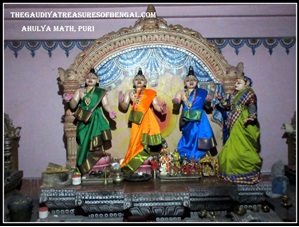
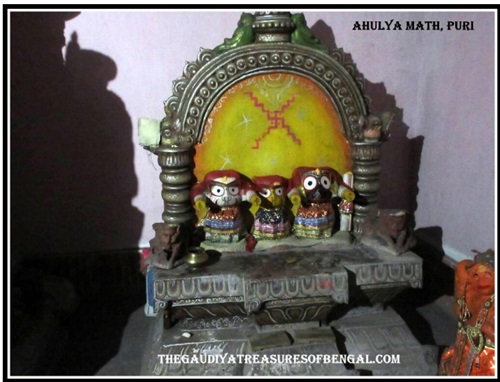
The altar of Ahulaa Math hosts profoundly beautiful deities that sit at the very heart of Gauḍīya Vaiṣṇava history. What makes these shrines exceptionally rare and sacred is the tradition holding that some of these deities were personally served and worshipped by Advaita Ācārya himself during the sixteenth century.
The Altar ManifestationsThe temple shrines commemorate the divine pastimes of the lineage through two primary manifestations.
Śrī Śrī Rādhā-Kṛṣṇa:The eternal divine couple, representing the ultimate object of devotion (sambandha and abhidheya) in Gauḍīya theology.
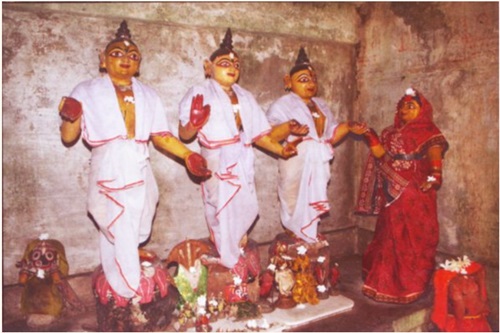
The Pañca-Tattva Shrines: The altar prominently features Śrī Caitanya Mahāprabhu, Lord Nityānanda (Gaura-Nitāi), and Śrī Advaita Ācārya, alongside His eternal consort, Śrī Sītā Ṭhākurāṇī.
Theological and Historical SignificanceThe Rare Presence of Sītā Ṭhākurāṇī: While Gauḍīya temples worldwide worship Gaura-Nitāi or the full Pañca-Tattva, it is uncommon to find a shrine where Śrī Sītā Ṭhākurāṇī—regarded in the tradition as an incarnation of Yogamāyā—is independently installed and served alongside Advaita Ācārya.
A Living Link to the Past: Because these forms are traditionally understood to have been directly established by Advaita Ācārya during His earthly stay, receiving darśana of the deities allows contemporary devotees to connect directly with the raw, unadulterated roots of the early Vaiṣṇava movement in Jagannātha Purī.
Scriptural References Objective 5: To correlate local oral histories with canonical Gauḍīya texts while documenting practical access information for modern researchers and pilgrims.
Although Ahulaa Math is not prominently featured in the major ancient Purāṇas, its immense spiritual and historical significance is deeply rooted in foundational Gauḍīya Vaiṣṇava literature, which meticulously documents the visits of Advaita Ācārya, Lord Nityānanda, and their associates to Jagannātha Purī.
The rich traditions and oral histories preserved within the Math are tightly bound to the classical accounts found in the Śrī Caitanya-bhāgavata and the Śrī Caitanya-caritāmṛta. Specifically, within the Madhya-līlā (Chapters 1 and 12) of the Caitanya-caritāmṛta, the text vividly chronicles the annual four-month pilgrimages (cātūrmāsya) of the Bengal Vaiṣṇavas, detailing their intense devotional ecstasies, congregational saṅkīrtana festivals, and intimate cooking pastimes.
As noted above, it is in this same section (Madhya-līlā 1.46–49) that Mahāprabhu’s instruction to the Bengal devotees to return every year is recorded—the scriptural root of the very tradition that gave Ahulaa Math its historic role as a lodging and reunion site.
How to ReachAhulaa Math is situated in Hera Gohiri Sahi, near the Police Line area of Purī, within easy reach of several other Gauḍīya Vaiṣṇava sites in the city.
Address: Ahulya Math, Heragoharisahi Road, Duttatota, Puri, Odisha 752001
• From the Jagannātha Temple: approximately 1–2 km. • From Purī Railway Station: approximately 3 km. • From Biju Patnaik International Airport (Bhubaneswar): approximately 60 km.
Auto-rickshaws, cycle-rickshaws, and taxis are readily available throughout Purī. Pilgrims visiting Ahulaa Math often combine the trip with nearby Gauḍīya sites in the same locality, such as the Satasana bhajana-sthalī and the samādhi of Śrīla Haridāsa Ṭhākura at Swargadwar, making a short circuit of related sacred spots feasible in a single outing.
Darshan Timings Ahulaa Math generally follows traditional Math schedules. Darshan is usually available during daytime hours, particularly:
• Morning: 6:00 AM – 12:00 PM • Evening: 4:00 PM – 8:00 PM (closes slightly later during special festivals such as Ratha-yātrā or Gaura Pūrṇimā)
However, timings may vary depending on local festivals, ārati schedules, and the availability of resident caretakers. Visitors are advised to confirm timings locally before planning their visit.
