
Objectives
Objective 1: To study the importance of Phate Hanuman temple in Puri
Objective 2: To explore the Historical & Architectural importance of the temple
Objective 3: To know the way Bhoga is offered and different rituals being performed
Introduction
Objective 1: To study the importance of Phate Hanuman temple in Puri
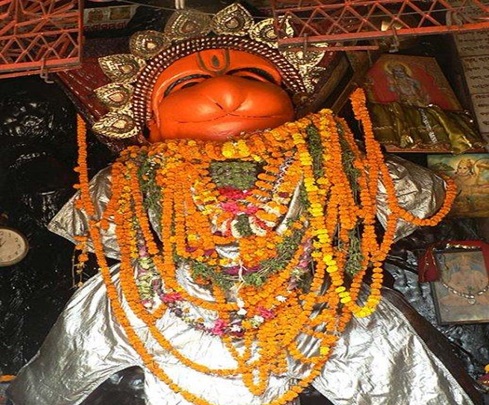
Phate Hanuman (also referred as Fateh Hanuman or Fateh Mahavir) is one of the pivotal guardian deities of the holy town of Puri, stationed specifically at the Singha Dwara (Lion’s Gate / Eastern Gate) of the main Sri Jagannath Temple complex.
The Meaning of “Phate/Fateh” : The word Fateh translates directly to “Victory” or “Triumph”. He is revered by local devotees as the ultimate symbol of success, obstacle removal, and victory over evil forces.
Presiding Deities
A small, powerful idol of Phate Hanuman is enshrined on the left side wall of the main entrance of the Lion’s Gate. He is the first guardian that millions of devotees encounter when beginning their entry into the main temple grounds.
Phate Hanuman is tasked with guarding the primary, most sacred gateway of the Dham.
Objective 2: To explore the Historical & Architectural importance of the temple
Historical significance
Local history recorded by temple chroniclers suggests that the name Fateh (a Persian term for victory widely used in medieval India) was popularized during the era of the Gajapati Kings of Odisha. When Odia rulers returned victorious from battles against southern kingdoms or northern sultanates, they would first offer prayers at the Lion’s Gate. The Hanuman idol stationed there became synonymous with these military victories.
Historically, Puri faced multiple foreign invasions where invaders targeted the main Lion’s Gate to desecrate the temple. The placement of Phate Hanuman right at the entrance wall was intended to inspire the Paika (traditional warrior clans of Odisha) with raw bravery.
He is historically classified as a Khetrapala Mahavir (a regional guardian deity).
Objective 3: To know the way Bhoga is offered and different rituals being performed
Maha prasad Rituals
Phate Hanuman is the only guardian who constantly witnesses the daily outbound procession of the famous Maha prasad (the Lord’s holy food) as it enters Ananda Bazar.
His daily offerings are tightly tied to the main door-opening rituals (Dwara Palaka Pooja) managed by the Sevayats (priests) every single morning.
Bhoga Offering
Phate Hanuman’s food offerings are deeply tied to the kitchen of Lord Jagannath:
● The Maha prasad Grace: He is one of the few guardian deities who receives a portion of the main Kotha Bhoga (the official daily food cooked in the grand temple kitchen) after it is offered to Lord Jagannath.
● Dry Bhoga (Sukhila Bhoga): Devotees regularly offer him Ukhuda (sweet fried paddy), Kora (coconut sweets), and Besan Ladoo.
● Betel Leaf Offering: It is a traditional custom to offer him Gua (betel nut) and Pana (betel leaf) to honour his status as the tireless messenger and guard of the Lord.
Daily Pooja & Rituals
● Dwara Pooja Co-ordination: Every morning, before the main doors of the Jagannath Temple are opened, the priests perform a purification ritual at the gate. Phate Hanuman is honoured during this time to grant permission for the day’s holy activities to begin.
● Sindoor Lagi: The idol is regularly anointed with pure vermilion (sindoor) mixed with jasmine oil, keeping him radiant in his classic warrior form.
● Tuesday & Saturday Special Alati: On these two days, a special evening ghee-lamp Alati is performed. Huge crowds gather in the entrance corridor to recite the Hanuman Chalisa here before entering the main complex.
Darshan Timings
Phate Hanuman does not have a separate gate closure, meaning he is accessible whenever the main temple is open.
● Daily Hours: 5:00 AM to 11:00 PM
● Best Time for Darshan: 5:30 AM to 6:30 AM (during the opening of the Lion’s Gate and Mangala Alati) and 6:30 PM to 8:00 PM when the evening rituals take place.
