

Main Temple
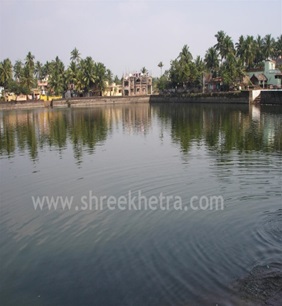
Indradyumna Tank
Objectives
Objective 1: To learn about the location, historical significance, and role of the Nilakantheswar Mahadev Temple as an important Shaiva pilgrimage site in Puri.
Objective 2: To describe the spiritual and mythological connection of the Nilakantheswar Mahadev Temple.
Objective 3: To understand the significance of Nilakantheswar Temple in the Pancha Shiva tradition of Puri.
Objective 4: To explore the sacred traditions and religious associations connected with the Nilakantheswar Mahadev Temple.
Objective 5: To study the Structure and architectural importance of the temple.
Objective 6: To recognize the main deity and associated deities of the temple.
Objective 7: To provide travel details, darshan timings, and accessibility.
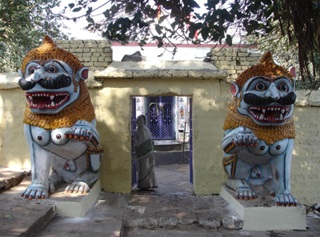
Jhapa Simhas (Lions) at Main Gate
Objective 1: To learn about the Nilakantheswar Mahadev Temple and its importance as a center of Shiva worship in Puri.
Nilakantheswar Mahadev Temple is an ancient Shaiva shrine situated near the southern bank of Indradyumna Tank in Puri. Dedicated to Lord Shiva in the form of a Shiva Lingam, the temple forms part of the sacred religious landscape of Puri and is closely associated with the city’s network of traditional Shiva shrines.
Although overshadowed by the prominence of Jagannath Temple, Nilakantheswar remains an important center of Shaiva devotion and pilgrimage.
Objective 2: To describe the spiritual and mythological connection of the Nilakantheswar Mahadev Temple.
● The Blue-Throated Lord Nilakantha, the name “Nilakantheswar” derives from:
Nila (Neela) – Blue; Kantha – Throat; Ishvara/Eshwara – Lord.
● The title commemorates the celebrated Puranic episode of the Samudra Manthana. During the churning of the cosmic ocean, the deadly poison Halahala emerged and threatened all creation. Lord Shiva consumed the poison to protect the universe, retaining it in his throat, which turned blue. He thus became known as Nilakantha, the Blue-Throated Lord.
● For devotees, the temple symbolizes Shiva’s supreme act of sacrifice, compassion, and cosmic protection.
Objective 3: To understand the significance of Nilakantheswar Temple in the Pancha Shiva tradition of Puri.
According to local tradition, Nilakantheswar is one of the five principal Shiva shrines of Puri, collectively known as the Pancha Shiva temples:
1. Lokanath Temple
2. Jameswar Temple
3. Kapalamochana Temple
4. Markandeswar Temple
5. Nilakantheswar Mahadev Temple
Devotees traditionally visit all five shrines as part of a complete Shaiva pilgrimage within Puri.
Objective 4: To explore the sacred traditions and religious associations connected with the Nilakantheswar Mahadev Temple.
1. Pancha Pandava Association
Local religious tradition further associates these five Shiva temples with the five Pandava brothers of the Mahabharata. Within this framework, Nilakantheswar is identified with Sahadeva, the youngest Pandava. This association is devotional and traditional rather than historically documented.
2. Ashta Sambhu Tradition
Nilakantheswar is also regarded as one of the Ashta Sambhu, the eight guardian manifestations of Shiva believed to protect the sacred Puri Dham. This belief reflects the deeply integrated Shaiva traditions that coexist alongside Jagannath worship.
3. Devotees’ association- Association with Indradyumna Tradition
The temple occupies an important place in the sacred narratives surrounding King Indradyumna, the legendary king associated with the establishment of Jagannath worship. Traditional accounts state that Indradyumna performed preparations for major sacrificial rites near this location. Consequently, pilgrims often visit: Indradyumna Tank, Nilakantheswar Temple and Narasimha Temple as part of a connected pilgrimage circuit.
The temple’s religious importance is unquestioned; however, many details concerning the Pandava connection, the Ashta Sambhu tradition, and King Indradyumna derive primarily from local temple tradition and pilgrimage literature. But, Nilakantheswar Mahadev Temple is best appreciated through both lenses: as a historically significant Shaiva shrine and as a living center of sacred tradition within the holy city of Puri.
Objective 5: To study the Structure and architectural importance of the temple.
The temple exhibits characteristics of traditional Kalinga Architecture, the classical temple style of Odisha. Constructed primarily of sandstone with lime-plastered surfaces. Sanctum containing the Lingam installed within a Shakti-pitha.
Temple Components
The structure traditionally consists of:
Vimana – the sanctum sanctorum housing the deity.
Jagamohana – the assembly hall for devotees.
Natamandapa – a ceremonial hall used during festivals and religious observances.
Objective 6: To recognize the main deity and associated deities of the temple.
The presiding deity of the Nilakantheswar Temple in Puri, Odisha, is Lord Shiva, worshipped in the form of a Shiva Lingam placed within a Shakti pitha. It is one of the revered Pancha Pandava shrines in Puri and is traditionally associated with Sahadeva.
The temple’s layout and deities include:
● Main Sanctum: Features a Shiva Lingam installed slightly below the Shaktipitha.
● Side Deities (Koshtam): The niches on the outer walls of the temple’s Vimana house specific deities, including:
Ganesha (Southern side)
Kartikeya (Western side)
Shiva-Parvati (Northern side)
● Narayana: An idol of the four-handed Lord Narayana is carved into the back wall of the sanctum.
Objective 7: To provide travel details, darshan timings, and accessibility.
Location:
● Near Indradyumna Tank, Puri, Odisha
● Close to Jagannath Temple area (approx. 2–3 km)
Darshan Timings
● Morning: 6:00 AM – 12:00 PM
● Evening: 4:00 PM – 8:00 PM
(Timings may vary on festival days like Maha Shivaratri)
Nearby Places to Visit
● Indradyumna Tank
● Narasimha Templebr>
● Other Pancha Shiva temples (Lokanath, Markandeswar, etc.)
