
Objectives
Objective 1. To explore the significance of Maa Bata Mangala Temple as the spiritual gateway to Puri.
Objective 2. To understand Maa Bata Mangala’s role as the guardian deity of the path to Sri Jagannath Dham.
Objective 3. To learn the sacred traditions connected with Lord Brahma and Nabakalebara.
Objective 4. To appreciate the architectural, cultural, and spiritual importance of the temple.
Objective 5. To understand the symbolism and worship of Maa Bata Mangala.
Objective 6. To study the scriptural and cultural references connected with Maa Bata Mangala Temple.
Introduction
Objective 1. To explore the significance of Maa Bata Mangala Temple as the spiritual gateway to Puri.
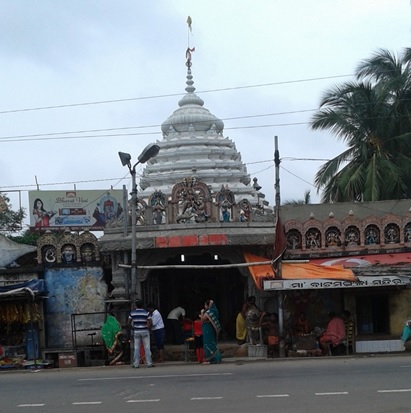
Maa Bata Mangala Temple, the Gateway to Puri, is located on the historic Jagannath Sadak and serves as the spiritual gateway to Sri Jagannath Puri Dham.
● The Name: In Odia, “Bata” means path/road, and “Mangala” means auspiciousness. Maa Mangala is known as Bata Mangala because she is believed to guide and protect devotees on their spiritual journey to Jagannath Dham.
● The Tradition: According to long-standing tradition, pilgrims stop at Maa Bata Mangala Temple before entering Puri to seek the blessings, permission, and protection of the Divine Mother. The temple therefore represents not only a physical gateway to Sri Kshetra but also a spiritual transition from worldly consciousness to devotional remembrance.
2. Devotees Associated with This Place
Objective 2. To understand Maa Bata Mangala’s role as the guardian deity of the path to Sri Jagannath Dham.
Lord Brahma: Temple traditions associate Lord Brahma with the origin of Maa Bata Mangala Temple. He is remembered as one of the earliest divine personalities connected with this sacred place.
Pilgrims of Sri Jagannath Dham: For generations, pilgrims have begun their journey to Puri by first offering prayers to Maa Bata Mangala.
Daita Sevakas: The traditional servitors of Lord Jagannath maintain a special ritual relationship with Maa Bata Mangala, especially during important ceremonies connected with Nabakalebara.
Gaudiya Vaishnava Devotees: Followers of Sri Chaitanya Mahaprabhu also traditionally visit Maa Bata Mangala Temple while proceeding toward Jagannath Dham.
3. Leelas (pastimes)
Objective 3. To learn the sacred traditions connected with Lord Brahma and Nabakalebara.
The Divine Guidance of Maa Bata Mangala to Lord Brahma
According to temple tradition, when King Indradyumna invited Lord Brahma to install the sacred wooden deities of Lord Jagannath, Sri Balabhadra, and Srimati Subhadra, the intense divine energy surrounding Puri caused Lord Brahma to lose his way. At this sacred place, Maa Mangala appeared and guided Lord Brahma toward the holy dham. In gratitude, Lord Brahma installed the deity of Maa Bata Mangala here. Since then, she has been worshipped as the divine guide and eternal guardian of the path to Jagannath Dham.
Maa Bata Mangala and Nabakalebara
Maa Bata Mangala plays a vital role in Nabakalebara, the sacred ceremony in which the old wooden forms of Lord Jagannath, Sri Balabhadra, Srimati Subhadra, and Sudarshana are replaced with newly carved ones.
Before beginning the search for the sacred neem trees (Daru) used for carving the new deities, the Daita Sevakas first visit Maa Bata Mangala Temple and seek the blessings of the Goddess. According to tradition, Maa Mangala guides them toward the selected Daru through divine signs and spiritual intuition.
The sacred Daru is also brought toward Sri Kshetra after offering prayers to Maa Bata Mangala for the successful completion of the holy task.
4. Place, Structure & Importance
Objective 4. To appreciate the architectural, cultural, and spiritual importance of the temple.
Location and Significance:
Maa Bata Mangala Temple is located on the Bhubaneswar–Puri Highway (NH-316), about 3 km before Puri. It marks the sacred entrance to Sri Kshetra, the holy land of Lord Jagannath.
Architecture
Built in the traditional Kalinga architectural style, the temple features:
● A Rekha Deul (main sanctum tower)
● A Jagamohana (assembly hall)
● Smaller shrines dedicated to guardian deities
The temple’s graceful and simple structure reflects Odisha’s ancient temple heritage.
Spiritual Importance
● First Darshan for Pilgrims: Maa Bata Mangala is the first deity worshipped by many pilgrims on their journey to Jagannath Dham. Devotees pray that she may reveal the true spiritual nature of Sri Kshetra to them.
● Shakta-Vaishnava Harmony: The temple beautifully reflects Odisha’s spiritual tradition where Shakti worship and Jagannath devotion exist in harmony.
● The Pilgrim’s Milestone: Symbolizes a psychological and spiritual pause to clear away material attachments before entering the holy dham.
5. Deities
Objective 5. To understand the symbolism and worship of Maa Bata Mangala.
Maa Bata Mangala is the main presiding deity worshipped in the temple sanctum.
Form of the Goddess:
The deity is beautifully carved from sacred black chlorite stone and is seated in Padmasana (lotus posture).
Unlike fierce forms of Goddess Durga, Maa Bata Mangala appears peaceful, compassionate, and graceful.
She possesses:
● Three eyes
● Four hands
● Sacred symbols such as the pasa (noose) and ankusa (goad)
The Goddess is lovingly decorated with colorful silk saris, silver ornaments, and fresh garlands offered daily by devotees.
Her Blessings:
Devotees pray to Maa Bata Mangala for:
● Safe journeys
● Divine protection
● Spiritual guidance
● Blessings before entering Jagannath Dham
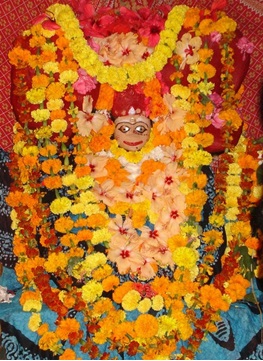
The sacred presiding deity, Maa Bata Mangala.
6. Scriptural Reference and Cultural Significance
Objective 6. To study the scriptural and cultural references connected with Maa Bata Mangala Temple.
Scripture Reference:
● According to the Skanda Purana, especially the Purushottama Kshetra Mahatmyam, Sri Jagannath Puri (Shankha Kshetra) is protected by divine spiritual energies.
Maa Bata Mangala is identified as one of the Asta-Shakti forms of Goddess Durga who guard the sacred boundaries of Sri Kshetra and preserve its spiritual purity.
The sacred region of Puri is traditionally described as being shaped like a conch shell (Shankha), and Maa Bata Mangala is worshipped as one of the divine protectors associated with this holy region.
● In Chaitanya-caritamrta (Madhya-lila 5), A. C. Bhaktivedanta Swami Prabhupada explained in his purports that this divine energy helps to remove material distractions (“Bata”), enabling pilgrims to enter the pure spiritual atmosphere of Sri Kshetra.
Odisha’s Shakta Heritage:
The temple is an important part of Odisha’s rich Shakta tradition and is one of the revered goddess temples associated with Sri Kshetra. Temple traditions state that pilgrims should first offer prayers to Maa Bata Mangala before crossing Atharanala (the historic 18-arched bridge), and entering the sacred dham of Lord Jagannath.
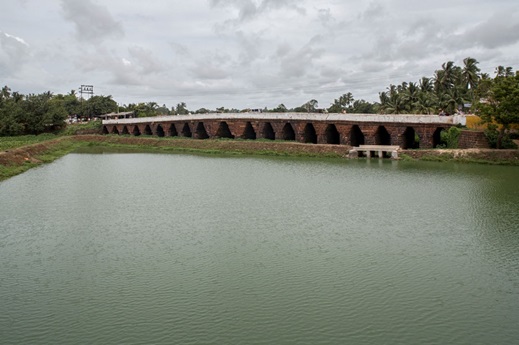
The historic Atharanala Bridge, the traditional entrance to Puri.
7. Travel Guide:
By Road: Located directly on the Bhubaneswar–Puri Highway (NH-316).
By Rail: 6 km from Puri Railway Station (15 minutes by auto-rickshaw).
By Air: 60 km from Biju Patnaik Airport (BBI), Bhubaneswar (1.5 hours by taxi).
8. Darshan Timings:
Daily Hours: 5:00 AM – 10:00 PM.
Festivals: The temple remains open for extended hours during Durga Puja, Chaitra Mangala, and Ratha Yatra.
