Srila Bhaktisiddhanta Sarasvati
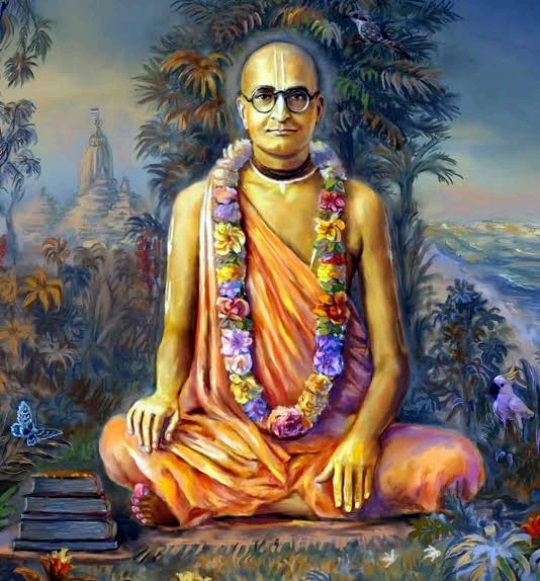
Srila Bhaktisiddhanta Sarasvati Thakura (1874–1936) was the spiritual master of A. C. Bhaktivedanta Swami Prabhupada.He was a lifelong celibate and a influential teacher of bhakti all over India. In Sri Krishna Lila ,Srila Bhaktisiddhanta Sarasvati is his eternal assistant, Nayana-manjari.
Srila Bhaktisiddhanta Sarasvati Pranamam
nama om vishnu padaya krishna presthaya bhutale
srimate bhaktisiddhanta Sarasvati iti namine
WORD FOR WORD
namah–obeisances; om-address; visnu-padaya–unto him who is at the feet of Lord Visnu; krsna-presthaya–who is very dear to Lord Krsna; bhu-tale–on the earth; srimate–all-beautiful; bhaktisiddhanta Sarasvati–Srila Bhaktisiddhanta Sarasvati; iti–thus; namine– who is named.
TRANSLATION<
I offer my respectful obeisances unto His Divine Grace Srila Bhaktisiddhanta Sarasvati, who is very dear to Lord Krishna, having taken shelter at His lotus feet.
sri varsabhanavi devi dayitaya krpadhaye
krishna sambandha vijnana dayine prabhave namah
WORD FOR WORD
sri-varsabhanavi-devi-dayitaya–unto Sri Varsabhanavi-devi-dayita Dasa, the servant of the lover of Srimati Radharani; krpa-abdhaye–who is an ocean of mercy; krsna-sambandha–(of) the relationship with Krsna; vijnana–(of) the science; dayine–who is the deliverer; prabhave–unto the master; namah–obeisances.
TRANSLATION
I offer my respectful obeisances to Sri Varsabhanavi-devi-dayita Dasa [another name of Srila Bhaktisiddhanta Sarasvati], who is favored by Srimati Radharani and who is the ocean of transcendental mercy and the deliverer of the science of Krishna.
madhuryojjvala premadhya sri rupanuga bhaktida
sri gaura karuna sakti-vigrahaya namo ‘stu te
WORD FOR WORD
madhurya–conjugal; ujjvala–brilliant; prema–love; adhya–enriched with; sri-rupa-anuga–following Srila Rupa Gosvami; bhakti-da–delivering devotional service; sri-gaura–(of) Lord Caitanya Mahaprabhu; karuna–(of) the mercy, sakti–energy; vigrahaya–unto the personified; namah–obeisances; astu–let there be; to–unto you.
TRANSLATION
I offer my respectful obeisances unto you, the personified energy of Sri ’s mercy, who deliver devotional service which is enriched with conjugal love of Sri Sri Radha and Krishna, coming exactly in the line of revelation of Srila Rupa Gosvami.
namas te gaura vani sri murtaye dina tarine
rupanuga viruddhapasiddhanta dhvanta harine
WORD FOR WORD
namah–obeisances; to–unto you; gaura-vani–teachings of Lord Caitanya; sri-murtaye–unto the personified; dina–(of) the fallen; tarine–unto the deliverer; rupa-anuga–the philosophy which follows the teachings of Srila Rupa Gosvami; viruddha–against; apasiddhanta–(of) unauthorized statements; dhvanta–the darkness; harine–unto you who are removing.
TRANSLATION
I offer my respectful obeisances unto you, who are the personified teachings of Lord Chaitanya. You are the deliverer of the fallen souls. You do not tolerate any statement which is against the teachings of devotional service enunciated by Srila Rupa Gosvami.
Objectives
Objective1. To learn about the divine appearance of Srila Bhaktisiddhanta Sarasvati Thakur in Jagannath Puri.
Objective 2. To understand the significance of Lord Jagannath’s special blessing upon Bimala Prasad during the Ratha Yatra festival and learn how he developed devotion to Krishna from his early childhood.
Objective 3. To explore the spiritual training and guidance Bimala Prasad received from his father Srila Bhaktivinoda Thakur and extraordinary memory, intelligence, and mastery of various subjects.
Objective 4. To explore his dedicated service to Srila Bhaktivinoda Thakur, especially in Puri and at Bhakti Kuthi and his association with Srila Gaurakisora Das Babaji
Objective 5. To explore Srila Bhaktisiddhanta Sarasvati Thakur’s extraordinary vow of chanting one billion Holy Names, his life of intense austerity, and the significance of his accepting sannyasa in 1918.
Objective 6. To explore Srila Bhaktisiddhanta Sarasvati Thakur’s humility and respect for his disciples through his practice of addressing them as “Prabhu.”
Objective 7. To examine Srila Bhaktivinoda Thakur’s special instructions to Srila Bhaktisiddhanta Sarasvati Thakur for preserving and spreading pure Vaishnavism.
Objective 8. To examine how Srila Bhaktisiddhanta Sarasvati Thakur used scriptures to establish the glory of the Gaura Mantra and Sri Chaitanya Mahaprabhu.
Objective 9. To explore Srila Bhaktisiddhanta Sarasvati Thakur’s preaching and pilgrimage activities for spreading Krishna bhakti.
Objective 10. To understand how Srila Bhaktisiddhanta Sarasvati Thakur inspired Srila Prabhupada to preach Krishna consciousness in English throughout the world.
Objective 11. To understand how Srila Prabhupada fulfilled his spiritual master’s mission by spreading Lord Chaitanya Mahaprabhu’s Nama-sankirtana movement throughout the world.
Objective 12. To explore his role as the “Simha Guru”, known for his powerful scriptural knowledge and preaching.
Objective 13. To understand how Srila Bhaktisiddhanta Sarasvati Thakur used modern facilities to spread Krishna consciousness and became known as “Prabhupada.”
Objective 14. To explore the important Vaishnava and astronomy books written, edited, and published by Srila Bhaktisiddhanta Sarasvati Thakur.
Objective 15. To learn about Srila Bhaktisiddhanta Sarasvati Thakur’s final days and his valuable instructions for spiritual perfection.
Objective 16. To appreciate his deep attachment to Sri Chaitanya Mahaprabhu and the teachings of Srila Rupa Goswami until the end of his earthly pastimes.
Objective 17. To recognize how Srila Prabhupada (disciple of Srila Bhakthi siddhanandha sarasvati )carried forward his spiritual master’s mission through ISKCON.
Objective 1. To learn about the divine appearance of Srila Bhaktisiddhanta Sarasvati Thakur in Jagannath Puri.
CHILDHOOD- 1874-1892

Srila Bhaktivinoda Thakur – and Srimati Bhagavati Devi
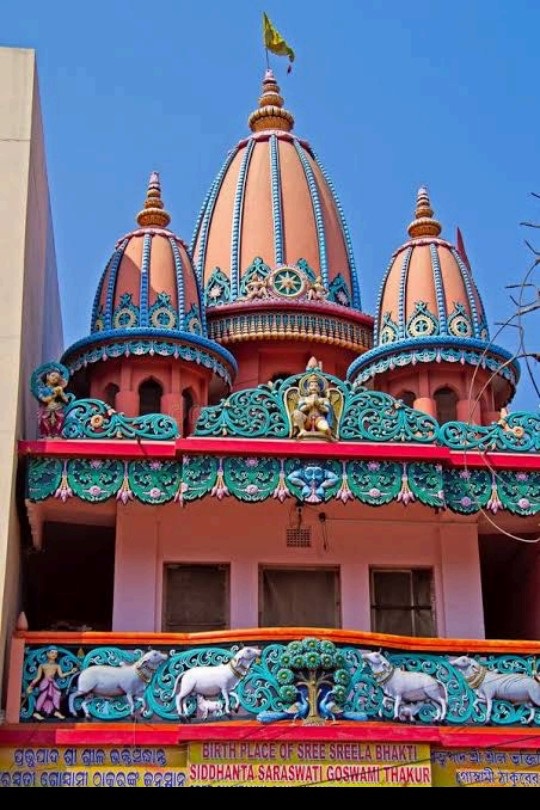
Srila Bhaktisiddhanta Sarasvati Thakur appeared in this world on the 6th of February, 1874 in Purusottama Kshetra (Jagannath Puri) in the state of Orissa. He was the fourth son of Kedaranath Datta – later known as Srila Bhaktivinoda Thakur – and Srimati Bhagavati Devi. Bhaktivinoda Thakur was at this time the Magistrate at Puri, and one of his duties was to oversee the smooth running of the Jagannath Temple.
Ray of Vishnu:
The Thakur visited the Temple daily. At this time he was immersing himself in the study of Sankskrit and familiarising himself with many important Vaisnava literatures. Taking on the huge task of regenerating the pure movement of Lord Chaitanya, the Thakur was feeling somewhat overwhelmed. He had prayed to Lord Jagannath “to send a Ray of Vishnu” – a shaktavesh avatar or empowered living entity – a qualified assistant to help him in his mission to preach the message of Sri Chaitanya Mahaprabhu all over the world.
The Divine Dream:
One night, the Deity of Jagannath personally spoke to the Thakur in a dream, saying:
“I didn’t bring you to Puri to execute legal matters, but to establish Vaisnava siddhanta”.
Srila Bhaktivinoda Thakur, who was at this time about forty-two, replied:
“Your teachings have been significantly depreciated, and I lack the power to restore them. Much of my life has passed and I am otherwise engaged, so please send somebody from Your personal staff so that I can start this movement”.

Lord Jagannath and Bimala Devi:
Jagannath then requested Srila Bhaktivinoda Thakur to pray for an assistant to the Deity of the Goddess Bimala Devi. Bimala is a name of Mayadevi. As an expansion of Goddess Laksmi, she is considered to be the consort and transcendental potency of Lord Jagannath. The Bimala Devi Temple is located within the Jagannath Temple complex. No separate food offerings are cooked for Goddess Bimala, who eats only the remnants of Lord Jagannath’s vegetarian prasadam. When his wife gave birth to a new child, the Thakur linked the event to the divinatory dream and named his son Bimala Prasad. Bimala Prasad means “the mercy of the transcendental potency of Lord Jagannath, Srimati Bimala Devi.”
Astrologer’s comment:
The child was born near the Jagannath-vallabha gardens, in a large house adjacent the Narayana Chata Matha. Sri Bimala Prasad Datta exhibited the thirty-two bodily symptoms of a great personality, at the time of his birth. He was born with his umbilical cord wrapped around his neck like a Brahmin’s thread, perhaps a sign of his glorious mission. An astrologer commented at his birth:
“I have done many horoscopes in my life, but I have never before seen such a horoscope filled with all the signs of a great personality. This child will become world famous as a brilliant teacher of life’s ultimate goal”.
Objective 2. To understand the significance of Lord Jagannath’s special blessing upon Bimala Prasad during the Ratha Yatra festival and learn how he developed devotion to Krishna from his early childhood.
Lord Jagannath’s Rathayatra Festival:
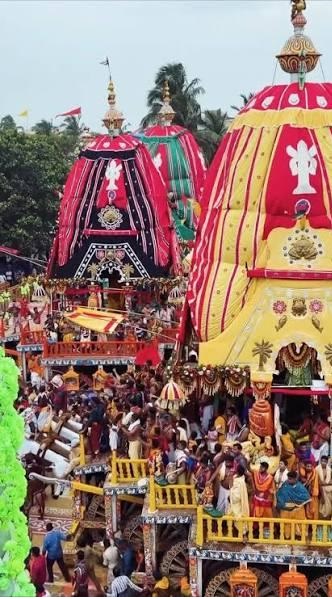
When the child was six months old, Lord Jagannath’s Rathayatra Festival was in procession, and the cart stopped in front of Srila Bhaktivinoda Thakur’s house and would not move for three days.
Following the instructions of Srila Bhaktivinoda Thakur, Bhagavati Devi brought the child before the cart and an offered garland fell from the neck of the Lord, encircling the boy. The crowd was jubilant witnessing Lord Jagannatha’s blessing of the child. This was taken as an unforgettable sign of divine grace by all. His annaprasana was performed on the chariot using Jagannatha-prasada, further sanctifying his mission.
Rath yathra
Vocational inclination:
While an infant, the boy’s vocational inclination was tested. He was given the choice of gold coins or the Srimad Bhagavatam. The child immediately embraced the Srimad Bhagavatam, indicating his future as a preacher. From the very beginning of his appearance, Srila Bhaktisiddhanta Sarasvati Thakur exhibited all the signs of an exalted, eternal associate of the Lord, who had descended in answer to Srila Bhaktivinoda’s prayer for a “ray of Vishnu” to help him spread Lord Chaitanya’s Movement.
Sri Bimala Prasada lived in Jagannatha Puri for ten months. Then he travelled to Bengal and he grew up in his early years in Ranaghata in the District of Nadia, hearing about Krishna from his mother.
Childhood Vow:
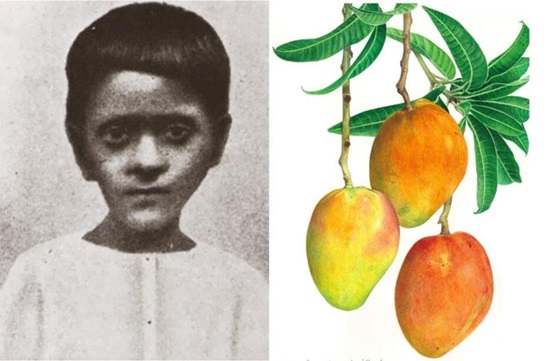
When he was a small boy, perhaps two or three years old, Srila Bhaktivinoda Thakur brought some ripe mangoes from the market. Bimala Prasad took one to eat, saying, “This is mine”.
Srila Bhaktivinoda Thakur got up and said in a grave voice:
“What is this? New fruit has come into the house. It has not been offered to Giridhari [Krishna] and you have taken it first? Remember, new fruit is to be given first to the Lord. Without giving the first share to the Lord, nothing is to be taken”.
The child was very repentant and exclaimed: “Oh, what evil thoughts I have had! Throughout my whole life I shall not eat these again. This is the right punishment for one ruled by greed”.He made the promise and observed it throughout his whole life.
Srila Bhaktivedanta Swami Prabhupada comments on this incident:
Whenever we offered him mango he said, “No, I am an offender. I cannot take mango”. He was thinking that “I have offended [Krishna] in my childhood by taking the mango of the Deity”. So this is the characteristic of the acharya. They teach by their life’s action – one should be so much determined.
Bimal Prasadh (Young Srila Bhaktisiddhanta Sarasvati Thakur)and Mango ( determination)
In 1881, when Bimala Prasad was seven years old, Srila Bhaktivinoda Thakur was constructing a house in Calcutta at Ramabagana, which he called Bhakti Bhavan. During the construction, a Deity of Lord Kurma was unearthed. Srila Bhaktivinoda Thakur instructed his son to begin worship of that Deity.
Objective 3.To explore the spiritual training and guidance Bimala Prasad received from his father Srila Bhaktivinoda Thakur and extraordinary memory, intelligence, and mastery of various subjects.
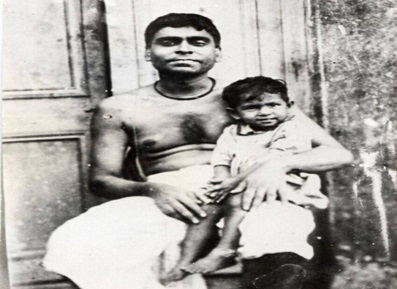
Bimala Prasad and Srila Bhaktivinoda Thakur
From the very beginning, the boy used to hear the preaching of his father with rapt attention. Srila Bhaktivinoda Thakur, as well as his audiences, were amazed to see how a small boy could hear the topics of Krishna bhakti with such total absorption.
By the age of seven he had memorised the entire Bhagavad-gita, and could explain the meaning of every verse. Later, around 1885, he was trained in publishing and proof-reading at Srila Bhaktivinoda Thakur’s printing press where the Thakur’s well-known spiritual journal, the Sajjana-Tosani, was produced.
At the age of eleven, Bimala Prasad toured the various places of Sri Chaitanya Mahaprabhu’s pastimes with his father, where he heard extensive discussions on the Holy Name. The boy had a photographic memory, and whatever he would read once he could later recall with perfect clarity. Even in his later years, he could perfectly quote entire pages of books he had read as a child.
Mastery in Subjects
At age eleven, Bimala Prasada invented a new shorthand method called “Bicanto.” He showed remarkable mastery of Bengali, Sanskrit, mathematics, astrology and scriptures, along with extraordinary intelligence and memory. He studied astrology under Mahesh Chandra Churamani and Pandit Sundar Lal. Impressed by his exceptional scholarship, his teachers gave him the title “Sri Siddhanta Sarasvati” — “Master of Scriptural Conclusions.”
When Srila Sarasvati Thakur was a student in the seventh grade in Srirampur, aged thirteen, Srila Bhaktivinoda Thakur gave him Tulasi-mala chanting beads from Jagannath Puri and instructed him on the chanting of the Hare Krishna mantra as well as Sri Nrsimha mantra.
Spiritual Association
Srila Bhaktisiddhanta Sarasvati Thakur regularly attended his father’s Visva-Vaisnava Raj-Sabha, attentively hearing discussions on Bhakti-rasamrta Sindhu. From childhood, he preferred spiritual association and deeply studied Vaishnava literature. He published works on astrology and became renowned for his powerful debates on religion, philosophy and astrology. As a teenager, he founded the August Assembly, whose members vowed lifelong celibacy.
Sanskrit College and Work in Tripura (1892–1905)
In 1892, Srila Sarasvati Thakur joined Sanskrit College, where he studied philosophy, the Vedas and Sanskrit literature. In 1897, he established the Saraswat Chatuspathi, teaching and publishing works on astronomy, astrology and mathematics. Though offered a chair in astronomy at the University of Calcutta, he declined it to focus on spiritual life. He served the royal family of Tripura from 1895 to 1905 and later dedicated himself fully to spreading the teachings of Sri Chaitanya Mahaprabhu.
AUSTERITIES, BHAJAN AND INITIATION
Objective 4.To explore his dedicated service to Srila Bhaktivinoda Thakur, especially in Puri and at Bhakti Kuthi and his association with Srila Gaurakisora Das Babaji
Bhajan-kutir :
In 1898, Srila Sarasvati Thakur met Srila Gaurakisora Das Babaji at Godruma and desired to become his disciple. In 1898, aged around twenty-four, Srila Sarasvati Thakur visited different places of pilgrimage such as Kasi, Prayag, and Gaya. At Kasi (Benares), he had an extensive discussion with Ram Misra Shastri about the Ramanuja sampradaya. During this period the renunciate nature of his devotional life became very apparent.
As early as 1897 he was observing the four months of chaturmasya with great austerity and devotion. He would eat only boiled food (habisyanna) which he cooked himself, and sleep on the floor without pillows or bedding. In 1899 he wrote various articles to preach Vaisnavism in a magazine called Nivedan, published in Calcutta.
In March of 1898, Srila Sarasvati Thakur had gone to Remuna with his father Srikanth Bhakthivinodha Thakura to see the Deity of Ksirachora Gopinath (Gopinath who stole the ksira, or sweet-rice pudding, for his devotee Sri Madhavendra Puri). Then he went to Puri via Bhuvaneswar. Srila Sarasvati Thakur became very attached to the holy city of Puri. His great desire was to help his father to establish a math (temple) in front of the samadhi of Srila Haridas Thakur by the sea. He rendered dedicated service to Srila Bhaktivinoda Thakura during this time.
Srila Bhaktisiddhanta Sarasvati takes Initiation from Gaurakisora Das Babaji:
In 1900, Bimala Prasad received initiation from Srila Gaurakisora Das Babaji and was given the name Varsabhanavi Devi Dayita Das. At the request of Srila Jagannath Das Babaji, he composed the Sri Navadvipa Panjika, an astrological almanac recording important Vaishnava festivals and the appearance and disappearance days of the Lord’s incarnations and Vaishnava saints.
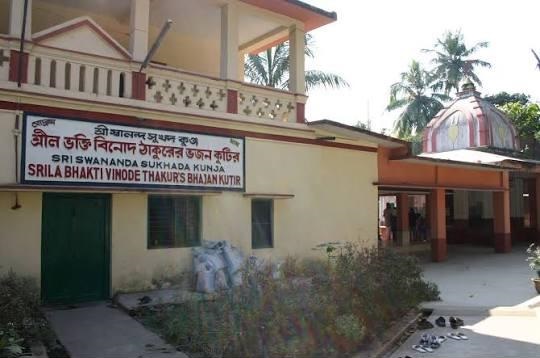
In 1902 Srila Bhaktivinoda Thakur started to build a bhajan-kutir called Bhakti Kuthi near the samadhi of Srila Haridas Thakur.Srila Sarasvati Thakur regularly used to read and explain the Caitanya-caritamrta to the audience in Bhakti Kuthi, in the presence of Srila Bhaktivinoda Thakur. During this period Sarasvati Thakur labored to collect material for Vaisnava Manjusa, a Vaisnava encyclopedia.
MAYAPUR DHAMA 1905-1910
Objective 5. To explore Srila Bhaktisiddhanta Sarasvati Thakur’s extraordinary vow of chanting one billion Holy Names, his life of intense austerity, and the significance of his accepting sannyasa in 1918.
Vow and Austerities
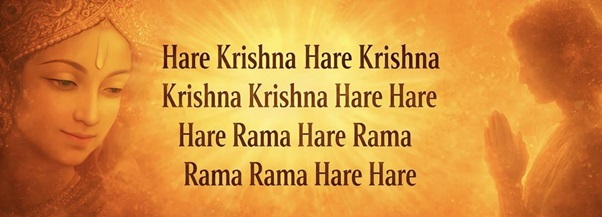
In 1905, at the age of 31, Srila Bhaktisiddhanta Sarasvati Thakur vowed to chant 300,000 Holy Names (192 rounds) daily and completed one billion names of Radha and Krishna over nearly ten years. He lived in Mayapur with severe austerity, eating and sleeping very little while constantly chanting, studying and preaching Krishna bhakti. His renunciation was praised by Srila Gaurakisora Das Babaji as comparable to that of Srila Rupa and Raghunatha Das Goswamis. From 1905, he also began giving public discourses on Chaitanya Vaishnavism.

Sannyasa of Bhaktisiddhanta Sarasvati:
In the year 1918, a few years after Srila Gaura Kishor Das Babaji had wrapped up his earthly pastimes, Srila Bhaktisiddhanta Sarasvati Thakura, at the age of. 44, accepted his sannyasa initiation from a picture of Srila Gaura Kishor Das Babaji maharaja (his spiritual master), at the house of Chandrasekhara Acharya.
Though accepting sannyasa from the spiritual master’s picture was not as per any prevalent standards, the situation, in this case, was unique. Neither was Sarasvati Thakura’s spiritual master physically present nor did he have any other godbrother. Srila Bhaktisiddhanta decided that the time for widespread preaching had finally arrived.
Humble Practice of Addressing His Disciples as “Prabhu”
Objective 6. To explore Srila Bhaktisiddhanta Sarasvati Thakur’s humility and respect for his disciples through his practice of addressing them as “Prabhu.”
Śrīla Bhaktisiddhānta Sarasvatī Ṭhākura addressed his disciples as “prabhu” (meaning master or controller) to show deep humility and respect. He viewed his followers not as subordinates, but as respectable servants of God who were helping fulfill the mission of . Reasons for the Practice
- Extreme Humility: He considered himself a servant of his disciples rather than their master.
- Scriptural Precedent: Great spiritual masters in history, like Nārada addressing Vyāsadeva, also treated their disciples with high honor.
- Empowering Followers: He aimed to train preachers to carry on the spiritual message, famously noting that he did not just create followers, but future spiritual guides.
- Godbrother Respect: Disciples learned to address each other as “prabhu”, reinforcing equality and mutual honor within the community.
Brahmanas vs. Vaishnavas
In 1911, Srila Bhaktisiddhanta Sarasvati Thakur strongly opposed the belief that spiritual qualification depended on birth. At the Balighai conference, he presented Brahmana o Vaishnava, establishing through scripture that devotion and spiritual qualification, rather than hereditary caste, determine a true Vaishnava’s position. His powerful arguments challenged caste-based practices and became an important foundation for his Gaudiya Math mission
Letter from Srila Bhaktivinoda Thakur:
Objective 7.To examine Srila Bhaktivinoda Thakur’s special instructions to Srila Bhaktisiddhanta Sarasvati Thakur for preserving and spreading pure Vaishnavism.
Srila Bhaktivinoda Thakur was very concerned that pure Vaisnavism was being overshadowed by many other wrong concepts and also by imitators. He felt that Srila Sarasvati Thakur was the most qualified person to preach pure Vaisnavism, having more enthusiasm, courage, knowledge and spiritual purity than anyone else. Therefore, Thakur Bhaktivinoda wrote him a letter:
“Sarasvati!
People of this world who are proud of their own aristocratic birth cannot attain real aristocracy. Therefore they attack the pure Vaisnavas, saying, “They have taken birth in low class families because of their sins.” Thus they commit offenses. The solution to this problem is to establish the order of Daivi-Varnasrama Dharma – something you have started doing. You should know that to be the real service to the Vaisnavas. Because pure devotional conclusions are not being preached, all kinds of superstitions and bad concepts are being called “devotion” by such pseudo-sampradayas as sahajiya and atibari. Please always crush these anti-devotional concepts by preaching pure devotional conclusions and by setting an example through your personal conduct”.
“Please make great effort so you can start the parikrama [circumambulation] of Sridam Navadwip as soon as possible. It is by those actions that everyone in this world will receive Krishna-bhakti [devotional love for the Lord]. Please try very hard to make sure that the service to Sri Mayapur will become a permanent thing and will become brighter and brighter every day. The real service to Sri Mayapur can be done by acquiring printing presses, distributing devotional books, and preaching congregational chanting (not reclusive bhajan). Please do not neglect to serve Sri Mayapur or to preach for the sake of your own reclusive bhajan”.
“When I am not present any more, please take great care to serve Sri Mayapur Dham
which is so dear to you. This is my special instruction to you. People who are like animals can never attain devotion; therefore, never take their suggestions. But don’t let them know this, directly or indirectly. I had a special desire to preach the significance of such books as Srimad Bhagavatam, Sat Sandarbha, and Vedanta Darsan. You have to accept that responsibility. Sri Mayapur will prosper if you establish an educational institution there. Never make any effort to collect knowledge or money for your own enjoyment. Only to serve the Lord will you collect these things. Never engage in bad association, either for money or for some self-interest”.
Apart from teaching Krishna bhakti and leading congregational chanting, he also started collecting facts about the four Vaisnava sampradayas [disciplic successions]. He started writing and publishing articles about various Vaisnava acharyas in Sajjan Tosani.
Establishing the Authenticity of the Gaura Mantra in 1911:
Objective 8.To examine how Srila Bhaktisiddhanta Sarasvati Thakur used scriptures to establish the glory of the Gaura Mantra and Sri Chaitanya Mahaprabhu.
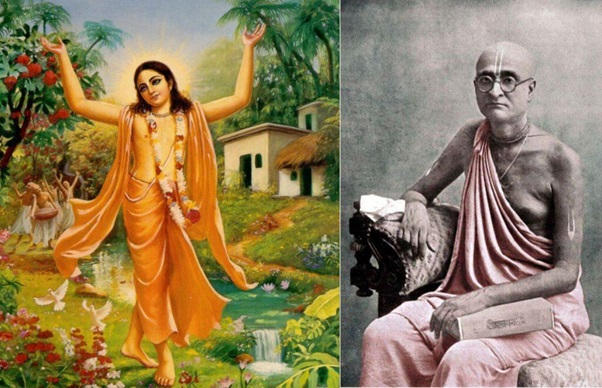
Sri Chaithanya Mahaprabhu and
Srila Bhaktisiddhanta Sarasvati
In that same year, at a meeting attended by many devotees and scholars of religion, Srila Bhaktisiddhanta Sarasvati established the truth that the Gaura Mantra is eternal and should be chanted by all devotees.
Srila Bhaktisiddhanta Sarasvati based his conclusions on the evidence of many scriptures, such as the Chaitanyopanisad from the Atharva Veda, as well as other Upanisads and Puranas. Thus he crushed the theory that the name Gaura is not an eternal name of the Supreme Lord, and that Sri Chaitanya Mahaprabhu was not an incarnation of the Supreme Lord. Srila Bhaktisiddhanta Sarasvati was not aware that his Gurudeva, Srila Gaurakisora Das Babaji, was also present in the audience and greatly pleased to hear his conclusions.
Due, in large measure, to Bhaktisiddhanta Sarasvati’s strong preaching on this point throughout his life, the Deity form of Sri Chaitanya Mahaprabhu is now worshipped and accepted all over India as the eternal form of the Lord, and many thousands have received the Gaura mantra with great faith and for eternal benefit.
His Divine Grace A.C. Bhaktivedanta Swami Prabhupada commented on Srila Bhaktisiddhanta Sarasvati’s strong preaching against the caste Gosvamis and Smarta brahmans:
“My Guru Maharaja’s contribution is that he defeated the caste Gosvamis. He defeated this brahmanism. He did it the same way as Chaitanya Mahaprabhu did. As Chaitanya Mahaprabhu said:
kiba vipra, kiba nyasi, sudra kene naya, yei krishna tattva-vetta, sei ‘guru’ haya:
“There is no consideration whether one is a sannyasi, a brahmana, a sudra, or a grhastha. No. Anyone who knows the science of Krishna, he is all right, he is Gosvami and he is brahman.”
Srila Prabhupada praised Srila Bhaktisiddhanta Sarasvati Thakur for his fearless preaching brought severe opposition and even threats to his life, yet he never compromised with false teachings. Because of his vast scriptural knowledge and ability to speak on any subject.
Preaching and Publications (1912–1915) and divine vision
Objective 9.To explore Srila Bhaktisiddhanta Sarasvati Thakur’s preaching and pilgrimage activities for spreading Krishna bhakti.
In 1912, Srila Bhaktisiddhanta Sarasvati Thakur attended the Kasim Bazar Religious Conference, where he strongly upheld pure devotion. He also travelled to holy places associated with Sri Chaitanya Mahaprabhu, continuously preaching Krishna bhakti.
In 1913, he established the Bhagavat Yantralaya printing press and published important Vaishnava scriptures, including Sri Chaitanya-charitamrta with his Anubhasya commentary. After Srila Bhaktivinoda Thakur’s disappearance in 1914, he continued his father’s publishing mission, edited Sajjana Tosani, and published many of his father’s unpublished works.
On November 17, 1915, Srila Gaurakisora Das Babaji Maharaja disappeared. Despite opposition from some babajis, Srila Bhaktisiddhanta Sarasvati, as his disciple, firmly defended the importance of genuine purity and renunciation and arranged his Gurudeva’s samadhi at Navadvipa. In 1932, due to the changing course of the Ganga, his sacred remains were transferred to Sri Chaitanya Math, Mayapur.
After the disappearance of Srila Bhaktivinoda Thakur and Srila Gaurakisora Das Babaji, Srila Bhaktisiddhanta Sarasvati felt deeply discouraged about how to continue their mission. In a divine vision, Sri Gaursundar, the Six Goswamis and his spiritual predecessors appeared and assured him of their constant help. They instructed him to fearlessly preach Sri Chaitanya Mahaprabhu’s message, the Holy Name and pure devotional service throughout the world.
SRILA PRABHUPADA MEETS BHAKTISIDDHANTA SARASVATI THAKUR
Objective 10.To understand how Srila Bhaktisiddhanta Sarasvati Thakur inspired Srila Prabhupada to preach Krishna consciousness in English throughout the world.
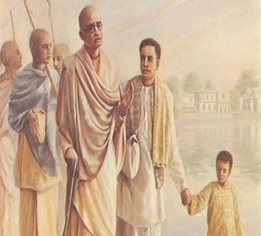
In 1922, Srila Prabhupada met Bhaktisiddhanta Sarasvati Thakur for the first time and was mesmerized by his spiritual potency. This meeting took place at Ultadanga Junction Road which is now a newly acquired property of ISKCON KOLKATA. It was here, where Bhaktisiddhanta Sarasvati Thakur had instructed Srila Prabhupada to spread Krishna Consciousness in the English language to the English-speaking people of the world. That which was impossible even to think at that time! Although he had very few meetings with Srila Prabhupada, he never failed to instruct him personally to preach Krishna Consciousness to the west.
In 1933, he told Srila Prabhupada, “Rather I would prefer to take out the marbles and stone and sell it and publish some books.” Srila Prabhupada has been carrying on the legacy of his spiritual master to distribute books and print them whenever he had money. He passed on this legacy to his disciples and other members of the movement, so that the sound of the Brihat Mridanga would reach far and wide.
Writing to His Spiritual Master
In December 1936, Srila Bhaktisiddhanta Sarasvati Thakura was residing in Jagannath Puri. Feeling eager to serve, Abhay ( Srila bhakthy Vedanta Prabhupada)wrote a humble letter asking:
“Is there any particular service I can do?”
The Historic Reply
Bhaktisiddhanta Sarasvati Thakura replied:
“I am fully confident that you can explain in English our thoughts and arguments to the people who are not conversant with the languages of other people.”
He instructed Abhay to preach Lord Chaitanya’s teachings in English for the benefit of the world. Upon receiving the letter, Abhay immediately understood that this was the mission of his life. The instruction confirmed what his guru had already told him during their first meeting in 1922.
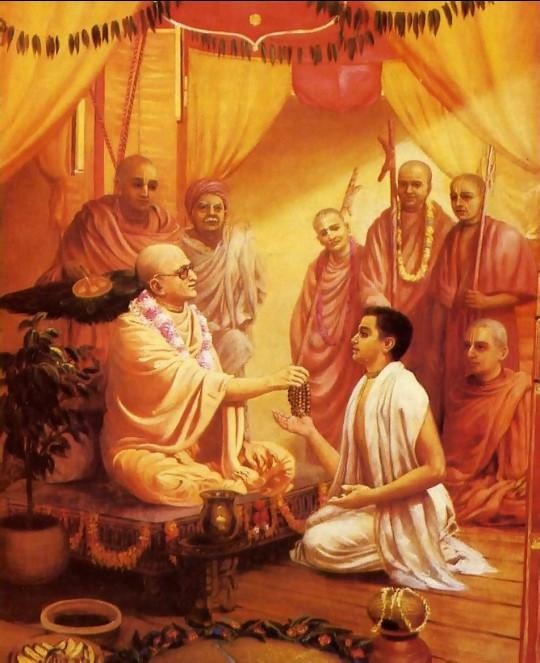
Srila Bhaktisiddhanta Sarasvati Thakur
initiating as GuruMaharaj to Srila bhakthy Vedanta Prabhupadha.
Objective 11.To understand how Srila Prabhupada fulfilled his spiritual master’s mission by spreading Lord Chaitanya Mahaprabhu’s Nama-sankirtana movement throughout the world.
Remembering Bhaktisiddhanta Sarasvati Thakur’s Mission
In 1933 he was determined to spread this message of Krishna Consciousness to the western world. Bhaktisiddhanta Thakur sent his disciples to England to preach and open up Gaudiya Maths in the West, but not being able to convince the Westerners to take up spiritual life, they returned to India fairly unsuccessful. Fortunately for all of us he had one disciple who was a great success, Srila Prabhupada.
His Divine Grace A.C. Bhaktivedanta Swami Prabhupada carried out his Guru Maharaja’s order and has spread Lord Caitanya’s Nama-sankirtana movement (ISKCON) to every corner of the globe. Srila Prabhupada always remained in humble circumstances, preparing himself for the mission that would not only fulfill Srila Bhaktisiddhanta Sarasvati Thakura’s order and wish but would fulfill the desire of all the great Vaisnavas in our lineage and gain the praise and amazement of other sampradayas, religionists and scholars alike.

Contributions and Achievements
Objective 12.To explore his role as the “Simha Guru”, known for his powerful scriptural knowledge and preaching.
Srila Bhaktisiddhanta Sarasvati Thakur fearlessly opposed casteism, sahajiya philosophy, Mayavada and atheism, while promoting unity among the four Vaishnava sampradayas (Brahma, Rudra, Kumara, and Sri sampradayas).Renowned for his powerful scriptural debates, he became known as “Simha Guru” (Lion Guru).
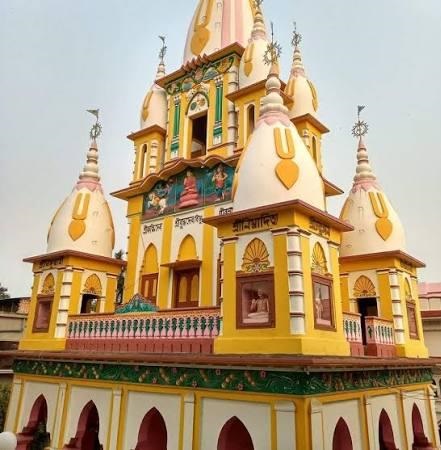
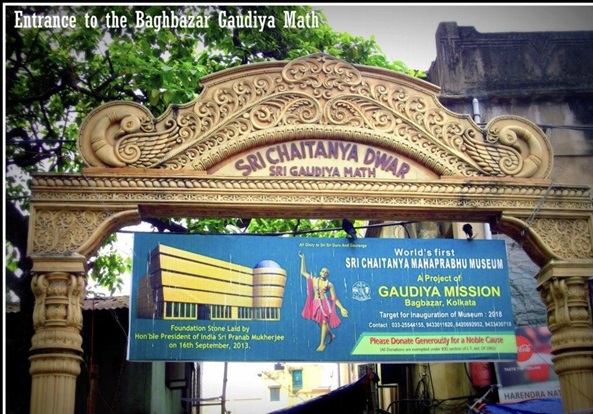
He established 64 Mutts ,( Gaudiya mutts) including 17 in Navadvipa Mandala and centres abroad( Burma,England,Germany) . He operated several printing presses, published thousands of books, newspapers and spiritual magazines, and organised Navadvipa Mandala and Vraja Mandala Parikramas. A brilliant scholar of scriptures and many subjects, he was regarded as a “living encyclopedia.”He was decorated with all the 26 qualities of a pure devotee.
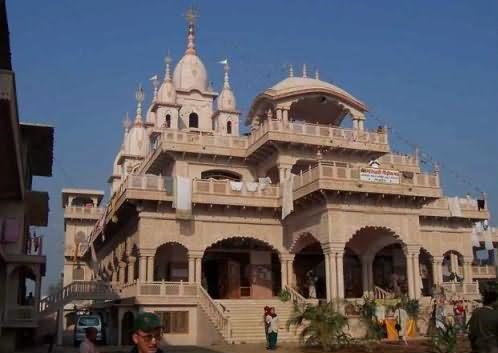
Sri Sri Giridhari Gaudiya mutt Brindhavan
Sri Devanandha Gaudiya mutt Navadivipa
Revolutionary Acharya
Objective 13.To understand how Srila Bhaktisiddhanta Sarasvati Thakur used modern facilities to spread Krishna consciousness and became known as “Prabhupada.”
Srila Bhaktisiddhanta Sarasvati was a revolutionary acharya who used modern facilities such as motor cars, motorboats and radio and sent disciples overseas to spread Lord Chaitanya’s message. Following yukta-vairagya, he engaged modern facilities fully in the service of Sri Krishna and the preaching of Krishna consciousness.
On being asked about his spiritual master, Srila A.C Bhaktivedanta Swami Prabhupada had once exclaimed. What can I say? He was a Vaikuntha Man!’. He also Known as Srila Bhaktisiddhanta Sarasvati Prabhupada by his disciples .
The Title Prabhupāda: Out of deep reverence, his own leading students addressed him as Prabhupāda (“the feet of the master/prabhu”). This same respectful term was later used by disciples for .
Original Works by Srila Bhakthisiddhanta sarasvati:
Objective 14.To explore the important Vaishnava and astronomy books written, edited, and published by Srila Bhaktisiddhanta Sarasvati Thakur.
- Prahlāda-caritra (The Life and Deeds of Prahlāda) five chapters in verse, 1886 (it is most probably lost)
- Baṅge Sāmājikatā: varna o dharmagata samāja (Sociality in Bengal: Varna and Dharmic Society), 1899
- Brāhmaṇa o vaiṣṇavera tāratamya-viśayaka siddhānta (Comparative Conclusions Concerning Brāhmanas and Vaisnavas), 1911, revised and enlarged in 1934
- Bhaktibhāvana-pañjikā, Navadvīpa-pañjikā (1914) (The Bhaktibhavana Almanac, The Navadvīpa Almanac) with dates for religious festivals and for ritually important events
- Vaiṣṇava-mañjusā-samāhṛti (A basket of collected definitions about Vaishnavism), Vaishnava encyclopedia in four volumes, 1922–1925
- A Few Words on Vedānta, 1932
- Rai Rāmānanda, 1932 (English)
- Relative Worlds, 1932
- The Vedānta: Its Morphology and Ontology, 1932
Books on Astronomy(jyotisa)
(Published between 1896 and 1914)
- Ārya-siddhānta by (sixth century), co-edited by K. Dutt
- Bhauma-siddhānta, mathematical calculations compared to those of Western astronomy, co-edited by K. Dutt
- Translation of Jyotiṣa-tattvam by Raghunandana
Bhaṭṭācārya
- Ravicandrasāyanaspaṣṭha, annotations by Bhaṭṭotpala (tenth century); mathematical calculations compared to those of Western astronomy
- Sūrya-siddhānta, Purva and Uttara sections; translation from to Bengali and annotations by Bhaktisiddhānta.
Srila Bhakisiddhantha Sarasvati Thakur’s instructions
Objective 15.To learn about Srila Bhaktisiddhanta Sarasvati Thakur’s final days and his valuable instructions for spiritual perfection.
He stayed in Puri in his old age for some days. There he lectured for some days at the place known as “Goverdhana” in Puri, and before and after his talk he would recite prayers praising Goverdhana Hill and requesting shelter in some corner there. Just a week before Srila Bhaktisiddhantha Sarasvati Goswami Thakur left this world, on the morning of Dec 23, 1936, he gave some special instructions to his disciples. These are of interest to any one who desires spiritual perfection. They are as follows:
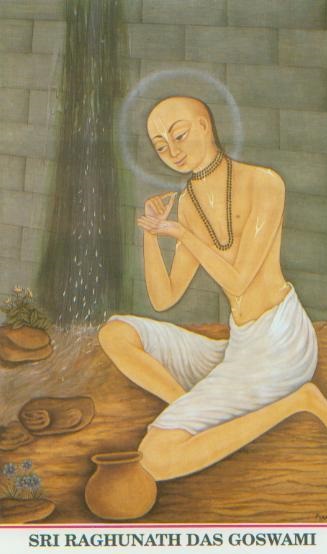
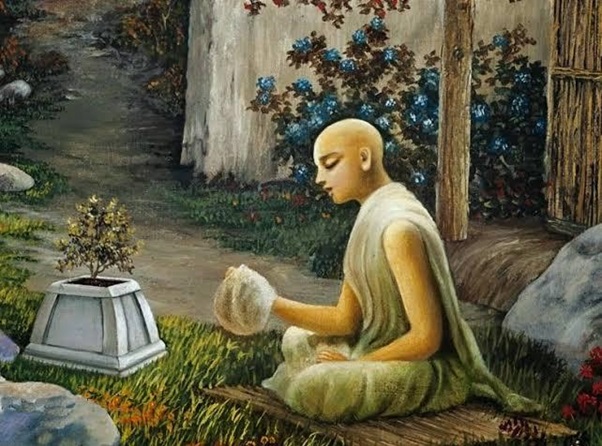
Sri Rupa Goswami
1. All of you please preach the message of Rupa and Raghunath with great enthusiasm. The ultimate object of our desires is to become specks of dust at the lotus feet of the followers of Rupa Goswami
2. All of you remain united in submission to the Lords’ form as the repository of devotion, seeking to satisfy the transcendental senses of the one, non-dual supreme consciousness. Make your way through this impermanent, transitory life in whatever way you can, keeping the goal of worshipping the Lord foremost in your minds. Don’t abandon this goal, even in the face of hundreds of dangers, insults or persecutions.
3. Don’t loose your spirit if you see that the majority of people cannot accept the principle of selfless service to the supreme lord.
4. Our true being and identity is to be the dust at the lotus feet of Sri Rupa Goswami, life after life.
5. In the material world, we continuously come into contact with difficulties. There is no need for us to be bewildered by these difficulties, nor should it be our objective to remove them. Rather we should think of what will be left to be attained after all these obstacles are removed, We must learn about our eternal life while we are still in this world. Our only real obligation is to go beyond duality and to enter that realm of eternal fulfillment.
6. In this world, no person should be a special object of attraction or aversion. All arrangements we make here last only for moments. Our only unavoidable necessity is to seek out the ultimate goal of life.
7. Work together with a single purpose-to win the qualifications to serve the original repository of love for Krishna, Srimati Radharam.
8. May the current of ideas propagated by Rupa Goswami flow throughout the world.
9. May we never under any circumstances become indifferent to the seven tongued sacrificial flame of the holy name. If our attraction to the holy name continually increases, we will achieve all perfection.
10. Remain exclusively faithful to the followers of Rupa Goswami and preach Rupa and Raghunath’s teachings enthusiastically and fearlessly.
DISAPPEARANCE PASTIMES
Objective 16.To appreciate his deep attachment to Sri Chaitanya Mahaprabhu and the teachings of Srila Rupa Goswami until the end of his earthly pastimes.
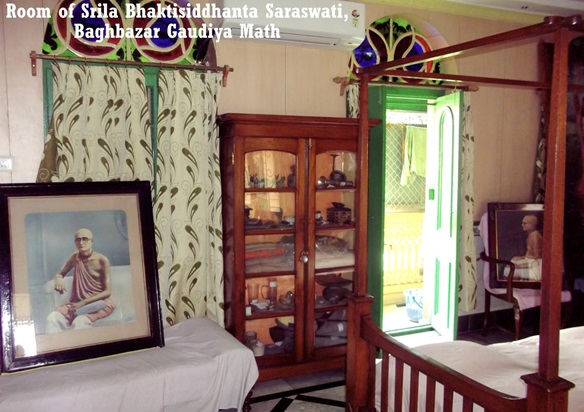
On January 1st, 1937, at about 5.30 AM, Srila Bhaktisiddhanta Sarasvati Thakura manifested his disappearance from this world and entered into the eternal pastimes of the Lord. He spent his final days at the Baghbazar Gaudiya Math. The day before he passed away, he had instructed his dear disciple Sripada B.R. Sridhara Maharaja to sing Sri Rupa Manjari pada and another disciple, Sri Navin Vidyalankar, to recite the siksastakam (instructions of Chaitanya Mahaprabhu). His transcendental body was worshipped and carried by road to Mayapur. A huge crowd of people had gathered while his body was being taken away. He was subsequently placed into samadhi at Chaitanya Math, the place where he had once executed his severe austerities.
Legacy
Objective 17.To recognize how Srila Prabhupada (disciple of Srila Bhakthi Siddananta sarasvati )carried forward his spiritual master’s mission through ISKCON.
In 1966, Srila Bhakthy siddhanta sarasvati’s disciple Srila Prabhupadha founded in New York City the (ISKCON).Based on Gaudiya Math teachings and practices, ISKCON contributed to the global spread of Gaudiya Vaishnavism. The Gaudiya Math movement includes more than forty independent institutions, hundreds of centres and more than 500,000 practitioners worldwide
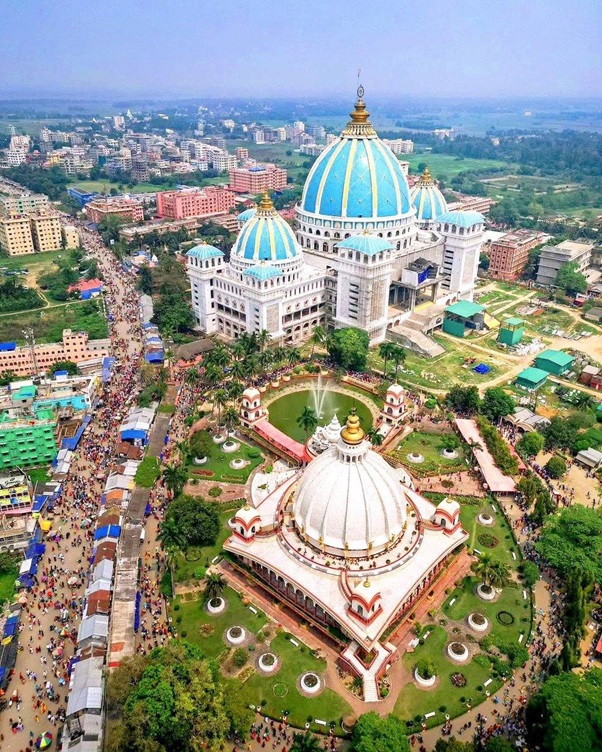
ISKCON Mayapur.