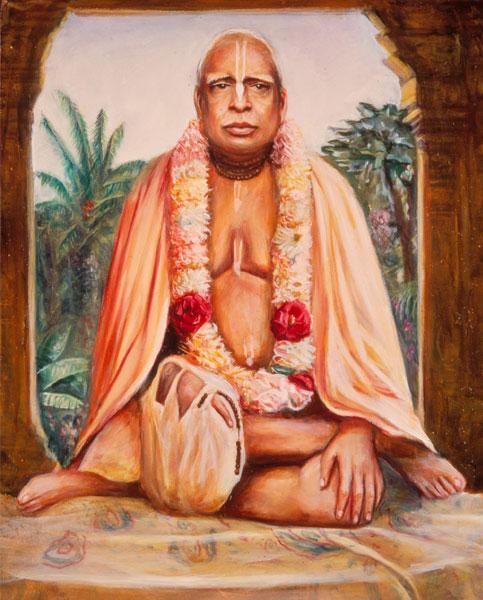
Srila Bhaktivinoda Thakur —The seventh Gosvami
Objectives
Objective 1: To learn about Srila Bhaktivinoda Thakur and his important contributions to the Gaudiya Vaishnava tradition.
Objective 2: To understand the early life, education, and spiritual inclination of Srila Bhaktivinoda Thakur.
Objective 3: To learn how Srila Bhaktivinoda Thakur balanced family life, government service, and spiritual practices.
Objective 4: To understand Srila Bhaktivinoda Thakur’s role in reviving and preaching the pure teachings of Sri Chaitanya Mahaprabhu.
Objective 5: To learn how Srila Bhaktivinoda Thakur discovered and re-established Sri Yogapith, the birthplace of Sri Chaitanya Mahaprabhu.
Objective 6: To understand Srila Bhaktivinoda Thakur’s contribution through Nama Hatta, writings, and preaching.
Objective 7: To appreciate Srila Bhaktivinoda Thakur’s role in preparing Srila Bhaktisiddhanta Sarasvati Thakur and strengthening the future preaching mission.
Srila Bhaktivinoda Pranamam
namo bhaktivinodaya saccidananda namine
gaura sakti svarupaya rupanuga varaya te
Meaning:
I offer my respectful obeisances unto Saccidananda Bhaktivinoda, the transcendental energy of Lord Chaitanya Mahaprabhu and a revered follower of Srila Rupa Goswami.
Objective 1: .To learn about Srila Bhaktivinoda Thakur and his important contributions to the Gaudiya Vaishnava tradition.
Introduction
Srila Saccidananda Bhaktivinoda Thakur, sometimes called the Seventh Goswami, made an invaluable contribution to the Brahma-Madhva-Gaudiya Sampradaya. At a time when the pure teachings of Sri Chaitanya Mahaprabhu had become obscured and Vaishnavism had been misrepresented by unauthorized sects, he worked tirelessly to revive and establish pure devotional service.
He was a respected scholar and magistrate with knowledge of English, Bengali, Hindi, Oriya and Sanskrit. Through his writings, preaching and publication of Vaishnava literature, he played a major role in restoring the teachings of Sri Chaitanya Mahaprabhu.Srila Bhaktivinoda Thakura in krishna-lila is Kamalaman-manjari.
Objective 2: To understand the early life, education and spiritual inclination of Srila Bhaktivinoda Thakur.
Birth and Early Life
Srila Bhaktivinoda Thakur, originally named Kedarnath Datta, was born on 2 September 1838 in Birnagar in the Nadia district. His parents were Sri Ananda Chandra Datta and Jagat Mohini Devi.
From childhood, Kedarnath was intelligent, inquisitive and spiritually inclined. He loved listening to stories from the Ramayana, Mahabharata and the pastimes of Lord Krishna and Lord Rama. At the age of ten, two important questions occupied his mind: “What is this world?” , “Who are we?” This spiritual inquiry continued throughout his life.
Education and Youth
Kedarnath received Bengali and English education and later studied at Calcutta University. He became known for his intelligence, philosophical knowledge, debating ability and oratory.
Although many intellectuals of that period were influenced by the Brahmo Samaj, Kedarnath maintained his understanding of the Supreme Lord as a personal being with whom one could have a loving relationship.
Objective 3: To learn how Srila Bhaktivinoda Thakur balanced family life, government service and spiritual practices.
Family Life and Government Service
After the death of his father, the family’s financial condition became difficult. He experienced several personal hardships, including the deaths of close family members and his first wife, Sayamani Devi.
He later married Srimati Bhagavati Devi. Bhaktivinoda Thakur worked in different government positions and eventually served as a Deputy Magistrate and Deputy Collector. Despite his demanding family and professional responsibilities, he continued his spiritual practices, study of scriptures, writing and preaching.
An Ideal Grihastha Acharya
Bhaktivinoda Thakur demonstrated that serious spiritual life can be practised even while carrying major family and professional responsibilities. His disciplined daily routine included:
- Chanting japa
- Studying scriptures
- Writing spiritual books
- Performing government duties
- Correspondence
- Translating Sanskrit scriptures into Bengali
- Taking simple prasadam
Srila Prabhupada described Bhaktivinoda Thakur as an ideal guru and acharya. Although he was a householder with wife and children and served as a responsible magistrate, he maintained a very high standard of devotional life.
Objective 4: To understand Srila Bhaktivinoda Thakur’s role in reviving and preaching the pure teachings of Sri Chaitanya Mahaprabhu.
Spiritual Awakening
While serving as Deputy Magistrate in Dinajpur, Bhaktivinoda Thakur associated with elevated Vaishnavas and deeply studied Srimad Bhagavatam, Sri Chaitanya Charitamrita and other scriptures explaining Krishna-tattva. Through these studies, his devotion to Sri Chaitanya Mahaprabhu became firmly established.
He composed Sac-Cid-Ananda-Premalankara and gave an important discourse explaining that true spirituality is above sectarian conflict. This later became the famous work: The Bhagavat: Its Philosophy, Its Ethics and Its Theology.
Service in Jagannath Puri
After being transferred to Puri, Bhaktivinoda Thakur visited sacred places associated with Sri Chaitanya Mahaprabhu and His associates. He associated with exalted Vaishnavas such as Gaura Kishor Das Babaji and Svarupa Das Babaji and studied important Vaishnava scriptures.
Every day he would sit near the Jagannath Temple and recite Srimad Bhagavatam. He also spent time discussing Krishna-katha at sacred places such as Tota Gopinath, Haridas Thakur’s Samadhi and Gambhira.
Chastisement of Bisak Sen
While in Puri, Bhaktivinoda Thakur confronted an impostor named Bisak Sen, who claimed to be an incarnation of Mahavishnu and used mystic powers to mislead people.
As a magistrate, Bhaktivinoda Thakur was given responsibility for the case. He fearlessly arrested Bisak Sen and conducted the trial despite facing severe difficulties and personal illness. Eventually, Bisak Sen was sentenced to imprisonment. This incident demonstrated Bhaktivinoda Thakur’s courage and determination in protecting genuine religious principles from deception.
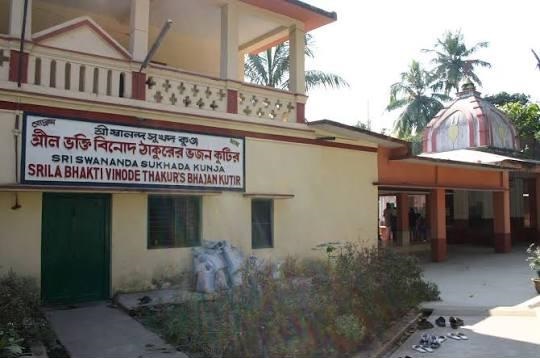
Bhajan-Kutir (Bhakti Kuthi)
In 1902 Srila Bhaktivinoda Thakur started to build a bhajan-kutir called Bhakti Kuthi near the samadhi of Srila Haridas Thakur.Srila Sarasvati Thakur regularly used to read and explain the Caitanya-caritamrta to the audience in Bhakti Kuthi, in the presence of Srila Bhaktivinoda Thakur. During this period Sarasvati Thakur labored to collect material for Vaisnava Manjusa, a Vaisnava encyclopedia.
Travels and Preaching
Bhaktivinoda Thakur travelled widely for pilgrimage and preaching. He visited Vrindavan, Radha-kunda, Govardhan, Mathura, Prayag, Ayodhya and Benares. During his visit to Vrindavan, he met Srila Jagannatha Das Babaji Maharaja. Through his preaching, writing and publication of Vaishnava literature, Bhaktivinoda Thakur worked tirelessly to restore the pure teachings of Sri Chaitanya Mahaprabhu.
Objective 5: To learn how Srila Bhaktivinoda Thakur discovered and re-established Sri Yogapith, the birthplace of Sri Chaitanya Mahaprabhu.
Discovery of Sri Yogapith
At the age of 49, Bhaktivinoda Thakur considered retiring from government service and moving to Vrindavan to perform bhajana. Sri Chaitanya Mahaprabhu appeared to him in a dream and indicated that he first had important service to perform in Navadvipa. Bhaktivinoda Thakur eventually became Deputy Magistrate of Krishnanagar and began carefully investigating the actual birthplace of Sri Chaitanya Mahaprabhu.
One day, while chanting the Holy Name on a rooftop, he saw an extraordinary effulgence coming from the Mayapur area. He studied old manuscripts, authorized scriptures and ancient maps and consulted elderly residents of the area. Through this careful investigation, he concluded that the place was the lost birthplace of Sri Chaitanya Mahaprabhu — Sri Yogapith in Mayapur.
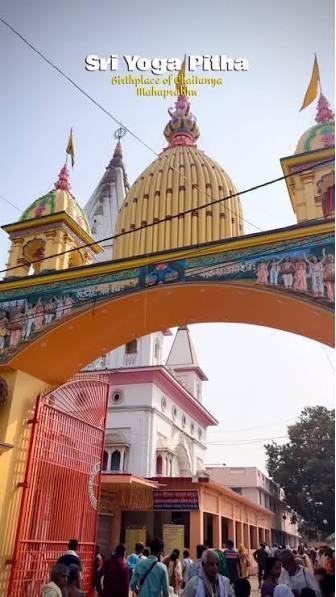
Birthplace of Sri Chaitanya Mahaprabhu —
Sri Yogapith in Mayapur.
Jagannatha Das Babaji Confirms Yogapith
Bhaktivinoda Thakur requested his siksha-guru, Srila Jagannatha Das Babaji Maharaja, to confirm the site. Jagannatha Das Babaji was extremely old and normally had to be carried in a basket because he could not walk or see properly. When he was brought to Yogapith, however, he suddenly leapt from his basket and began dancing in ecstatic love of Gauranga, declaring:
“Ei to Nimai Janmabhoomi!”
– “This is the birthplace of Nimai!”. His ecstatic response confirmed Bhaktivinoda Thakur’s findings.
In 1893, Bhaktivinoda Thakur re-established the ancient site of Yogapith. He honoured Jagannatha Das Babaji as “Vaishnava Sarvabhauma” — the Commander-in-Chief of the Vaishnavas.
Objective 6: To understand Srila Bhaktivinoda Thakur’s contribution through Nama Hatta, writings and preaching.
Establishment of Nama Hatta
In 1891, Bhaktivinoda Thakur stayed at Surabhi Kunja in Godrumadvipa, where he established the Nama Hatta — “the marketplace of the Holy Name.” He established more than 500 Nama Hatta sangas to spread Harinama and Krishna consciousness. Despite his great achievements, Bhaktivinoda Thakur humbly described himself as the “sweeper of the marketplace.” Nama Hatta demonstrated how devotees could spread Krishna consciousness while maintaining their family and professional responsibilities.
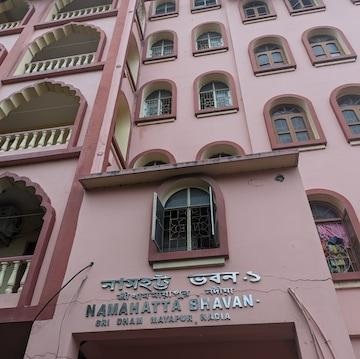
Nama Hatta— Mayapur
Contribution to the Gaudiya Vaishnava Sampradaya
Bhaktivinoda Thakur played a major role in reviving and re-establishing the pure teachings and mission of Sri Chaitanya Mahaprabhu. His major contributions included:
- Rediscovering and re-establishing Sri Yogapith
- Establishing the Nama Hatta movement
- Writing and publishing Vaishnava literature
- Preaching pure devotional service
- Presenting Gaudiya Vaishnava philosophy clearly
- Demonstrating an ideal life of devotion while maintaining family and professional responsibilities
His work laid an important foundation for the later expansion of the Gaudiya Vaishnava movement.
- Nama hatta ,Provide regular opportunities to associate with devotees even if they live far from temples
- Support advancement in spiritual life for householders, even as they are busy with work and family
- Serve as expansions of temples to reach out and include all
- Connect aspirants to Harinam initiations
- Avail welcoming places for those who have received spritual books and other various newcomers
- Preaching facilities without taking funds from temple collection
- Facilitate practice for preachers, including young people and women
Objective 7: To appreciate Srila Bhaktivinoda Thakur’s role in preparing Srila Bhaktisiddhanta Sarasvati Thakur and strengthening the future preaching mission.
Srila Bhaktisiddhanta Sarasvati Thakur
Bhaktivinoda Thakur carefully trained his son Bimala Prasad Datta, later known as Srila Bhaktisiddhanta Sarasvati Thakur, by giving him appropriate spiritual teachings and instructions. Srila Bhaktisiddhanta Sarasvati Thakur later became a revolutionary acharya and founder of the Gaudiya Math, carrying forward the mission revived by Srila Bhaktivinoda Thakur.
Śrīla Bhaktivinoda Ṭhākura manobhista to Śrīla Bhaktisiddhānta Sarasvatī Ṭhākura
In 1914, just a few weeks before passing away, Śrīla Bhaktivinoda Ṭhākura had expressed his mano-‘bhīṣṭa to Śrī Siddhānta Sarasvatī, instructing him to establish daiva-varṇāśrama, preach śuddha-bhakti, develop Śrīdhāma Māyāpur, and publish Vaiṣṇava writings:
Worldly people who are proud of their aristocratic birth cannot attain to actual aristocracy. Therefore they attack pure Vaiṣṇavas, claiming that they have taken birth in low-class families because of their sins. Thus they commit offenses. The means to rectify this situation is to institute daiva-varṇāśrama-dharma. You have started to do that. Know it to be real service to Vaiṣṇavas.
Due to lack of śuddha-bhakti-siddhānta pracāra, all manner of womanish bad theories and instructions are being called devotion by pseudo-sampradāyas such as sahajiyā and ativāḍī. Always crush these anti-devotional conceptions by bhakti-siddhānta pracāra and proper ācāra. Try to begin the parikramā of Śrīdhāma Navadvīpa as soon as possible. Thereby everyone in the universe can receive Kṛṣṇa-bhakti. Diligently endeavor to ensure that service to Śrī Māyāpur becomes permanently established and more resplendent each day. Genuine service to Śrī Māyāpur is not nirjana-bhajana, but to establish a printing press and to propagate devotional books and Nāma-haṭṭa. Do not for your own sake undertake nirjana-bhajana and thus impede preaching and service to Śrī Māyāpur.
When I am no longer present, take care to serve your dear Śrī Māyāpur-dhāma. This is my special instruction to you. People who are like animals can never attain devotion; never accept their advice. But do not let them know this, either directly or indirectly.
I had a special desire to propagate the importance of such books as Śrīmad-Bhāgavatam, Ṣaṭ-sandarbha, and Vedānta-darśana. Now you must assume that responsibility. Śrī Māyāpur will prosper if you inaugurate an educational institution there. Never try to amass knowledge or money for your own sense gratification; they should be acquired only for Kṛṣṇa’s service. Never take bad association, either for money or any personal interest.
In Prabhupada Saraswati Thakura (p. 18) these instructions are presented as having been given in a letter by Śrila Bhaktivinoda Thakura, but in a missive of 1 April 1926 (Patrāvali 2, Page 50-52) Śrī Siddhanta Sarasvati stated that they were imparted verbally. (“Sri Bhaktisiddhanta Vaibhava” Volume One by HH Bhakti Vikasa Swami, Chapter ‘Early Days of the Mission’, Page 63-65)
Bhaktivinoda Thakur’s Prediction
Bhaktivinoda Thakur envisioned a future when people from countries such as England, France, Russia, Germany and America would chant the Holy Names with mrdangas and karatalas in their streets and join Bengali devotees in Lord Chaitanya’s sankirtana movement. He also predicted that a personality would appear who would spread the teachings of Sri Chaitanya Mahaprabhu throughout the world.
Final Pastimes
During his later years, Bhaktivinoda Thakur increasingly absorbed himself in meditation upon the eternal pastimes of the Lord. On 23 June 1914, he concluded his earthly pastimes at Bhakti Bhavan in Kolkata and entered the eternal pastimes of the Lord. His remains were later placed in samadhi at Svananda Sukhada Kunja
Srila Bhaktivinoda Thakur, known as the Seventh Goswami, was one of the great acharyas who revived the pure teachings of Sri Chaitanya Mahaprabhu. Although he was a householder, father, scholar and government magistrate, he maintained a disciplined spiritual life centred on Harinama, scriptural study, writing and preaching.
His discovery and re-establishment of Sri Yogapith, establishment of Nama Hatta, writings and publication of Vaishnava literature, preaching activities and training of Srila Bhaktisiddhanta Sarasvati Thakur laid an important foundation for the future worldwide spread of the Gaudiya Vaishnava movement.
His life teaches us that family responsibilities, professional duties and spiritual life can all be harmoniously engaged in the service of Sri Chaitanya Mahaprabhu.