
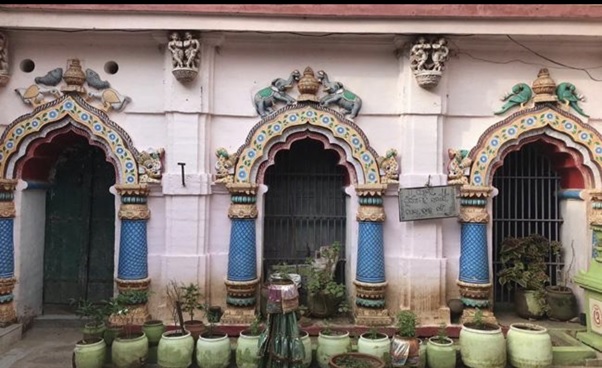
Present Ramanuja Kota Math (Present)
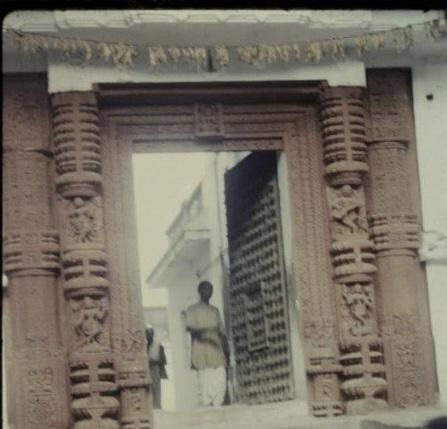
Ramanuja Kota Math (Emar Math) (in older times)
Objectives
Objective 1: To understand the historical origin and establishment of Ramanuja Kota Math (Emar Math) by Ramanuja during his pilgrimage to Puri.
Objective 2: To highlight the legacy of selfless charity and social service associated with Ramanuja Kota Math in Odisha’s history.
Objective 3: To appreciate the continuous contribution of Ramanuja Kota Math in preserving centuries-old temple traditions and rituals associated with Sri Jagannath worship.
Objective 4: To recognize the spiritual significance of Bala Bhoga as a commemorative offering connected with this divine pastime.
Objective 5: To analyze the temple reforms introduced by Acharya Ramanuja, including the Sri Mahalakshmi Temple, Utsava Vigrahas, Garuda Stambha, the Math, and the organization of festivals such as Dolotsava, Chandan Yatra, and Rasa Utsava.
Objective 6: To understand the significance of the Utsava Vigrahas of Lord Jagannath worshipped together with Ubhaya Nayikas, Sri Devi and Bhu Devi.
Objective 7: To locate the Math geographically and appreciate its strategic position near the Jagannath Temple in Puri.</p
Introduction
Objective 1: TTo understand the historical origin and establishment of Ramanuja Kota Math (Emar Math) by Ramanuja during his pilgrimage to Puri.
Ramanuja Kota Math, also popularly known as Emar Math, is a historic 12th-century, 800-year-old monastery located directly in front of the Lion’s Gate (Singhadwara), in the south-eastern (Agneya Kona) corner of the Jagannath Temple, outside the main Prakara near Kalikadevi Sahi of the Jagannath Temple in Puri, Odisha.
Established by the great Vaishnava saint Acharya Ramanujar himself during his pilgrimage to Odisha in the 12th century, he gifted the monastery to his cousin and devoted disciple, Govinda, who was known by the Tamil name Embar, from which the name “Emar” is derived.
This was one of the biggest and largest Maths in Puri. In recent years, during the Odisha Government beautification and archaeological excavation drives, portions of the Matha have undergone extensive changes, though the institution and its historical legacy remain deeply woven into the daily rituals of the nearby Sri Mandira.
It serves as one of the most prominent centres of the Sri Vaishnava Sampradaya in the state.
Significance
Objective2.To highlight the legacy of selfless charity and social service associated with Ramanuja Kota Math in Odisha’s history.
Historical Charity: The Matha is remembered in local history for its compassionate service during the devastating Odisha Famine of 1866, known as the “Na Anka Durbhikshya”. During this severe drought and famine under British rule, the Matha generously opened its overflowing granaries and provided food to the impoverished and starving people.
Objective 3 : To appreciate the continuous contribution of Ramanuja Kota Math in preserving centuries-old temple traditions and rituals associated with Sri Jagannath worship.
Service to Lord Jagannath
This Matha performs the following services to Lord Jagannath, Lord Balarama, Lord Subhadra Devi, and other deities of Sri Mandira, Puri.

Lord Jagganath with Chandrika and chausara.
1. ‘Chandrika ‘and’Chausara’ made of flowers for the Badasinghar besha of the Lords.
The Chausara: A multi-layered garland made of flowers and strung with tulasi that hangs gracefully below the deities arms.
The Chandrika: A floral crown or forehead ornament placed above the deities’ faces.
Chandrika (a forehead or headpiece) and Chausara (a floral necklace) are exquisite, hand-crafted floral ornaments worn by Lord Jagannath, Lord Balabhadra, and Devi Subhadra during their nightly Badasinghar Besha (bedtime attire)
2. ‘Mala’ and’Chula’ for the ‘nabanka’ ritual (also known as Phula Melana) ritual, which occurs on the eve of Makara Sankranti.
Mala: Refers to massive floral garlands, frequently made with vibrant marigolds. Before they are offered to the deities, the garlands are ceremoniously carried in a 4.5-time circumambulation (Parikrama) around the Ratna Simhasana (the jeweled altar) and throughout the entire Srimandira.
Chula: This is a distinct conical head ornament that crowns the deities. During Nabanka Besha, the Chula is meticulously handcrafted and decorated using fresh marigolds, Tulasi leaves, and other traditional flowers.
3. The math offers ‘Pana bhog ‘during the Chandan Yatra.Pana Bhoga refers to a sacred, cooling sweet drink offered to Lord Jagannath during the summer festival of Chandan Yatra
4. The math ‘Chakata bhog’ during the ‘anasara’ period .Chakata bhog’ is a special, uncooked herbal and fruit offering served to the deities during the 15-day anasara (quarantine) period at the Jagannath Temple in Puri. It is prepared using sprouted green gram (muga), sprouted chickpeas (chana), ripe banana, mango, and jackfruit.
5. The math offers ‘bala bhog’ during the month of Kartika.
The specific offering, often called Koudiya Khai, is a mixture of parched paddy flakes, roasted wheat, flax seeds, peas, thinly sliced coconut, ginger powder, together with a touch of camphor and pepper.
The offering begins on the eleventh day of the bright fortnight of Aswin (Ashwija Shukla Ekadashi) and continues every day until Kartika Purnima.
Objective 4: To recognize the spiritual significance of Bala Bhoga as a commemorative offering connected with this divine pastime.</p
Story behind the Bala Bhoga
During this month, there is a special offering to Lord Jagannatha known as “Bala Bhoga”. The meaning of “Bala” is hair. The legend says, once the Gajapati Maharaja (King)of Puri found a string of hair in the garland that adorned Lord Jaganntha. The king was taken aback and inquisitively asked the servitor Taliccha Mahapatrawho happened to be in charge of garlanding Lord about the hair in the garland. The servitor hesitantly replied the king that the hair belonged to Lord Jaganntha. The Gajapati Maharaja was so amused with the answer that, he went on to the extent of checking it on the Lord’s head. Upon seeing some strings of hair, the king started pulling it to verify if it was original or not. To his utter surprise, blood drops started dripping from the Lord’s head.Seeing this the king got back to his senses and apologized the Lord and the servitor for the grave mistake that he committed.
Objective 5: To analyze the temple reforms introduced by Acharya Ramanujar, including the Sri Mahalakshmi Temple , Urcharvars,Garuda stamba, Math and organization of festivals such as Dolotsava, Chandan Yatra, and Rasa Utsava.
Formation History of the Math
Ramanuja in Purushottama Kshetra, Puri
As per the instructions of Sri Ranganatha Swami of Srirangam, Acharya Ramanujar introduced temple reforms and Pancharatra Agama-based worship rituals. He came to Jagannatha Puri and stayed at Ramanuja Kota in Puri. With his influence, the then King Chodaganga Deva offered him land in front of the Jagannatha Temple to build his Matha. He stayed there for some time. One of his disciples was named Embar. Acharya Ramanujar established the Embara Matha in front of the Jagannatha Temple. He also established the Mahalakshmi Temple inside the Jagannatha Temple.
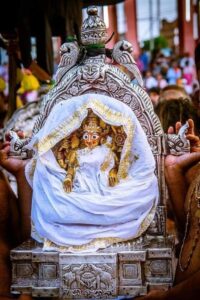
Urchavar Sri Mahalakshmi, Sri Mandir Puri.
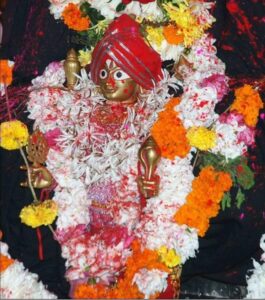
Urchavar Dolo Govinda
He is Dolo-Govinda. He is one of the two utsava idols of jagannatha swami. Another one is Madana-Mohana (below).
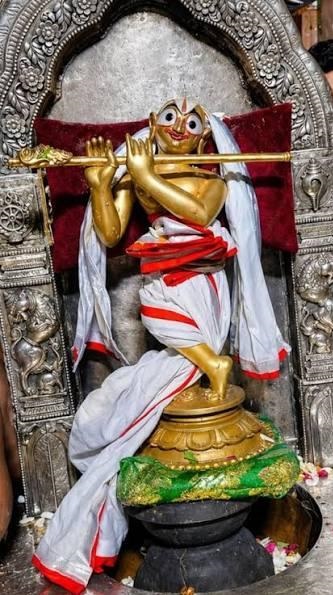
Urchavar Madhana Mohana
Acharya Ramanujar ,furthur wanted to established the worship of Jagannatha, Baladeva, Subhadra moola-vigraha as per vaishnava aagamas. Shakta aagamas were used in those days (administered by Puri peetha Shankaracharya) and is continued till date. The priests in the service of moola vigraha declined to accept this change as it would have meant arrival of vaishnava priests and they loosing their exclusive rights to carry out worship of Jagannatha. Acharya Ramanujar invited them for debate next morning.
The King too was favoring Acharya Ramanujar . The priests gathered in front of jagannatha and did unconditional sharanagati. Jagannatha mahaprabhu called Garuda and Acharya Ramanujar was transferred to Sri Kurmam (in Andhra Pradesha) while he was in dreams. He accepted it as the will of God and established Vaishnava puja paddhati in Sri Kurmam.
Garuda Stambha
Garuda Stambha is a unique feature of aagama based temples. Usually don’t see such features in temples of north India. That’s the influence of Acharya Ramanujar .
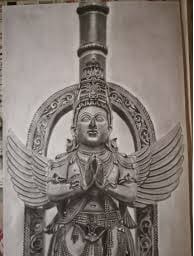
Garuda stamba
Objective 6: To understand the significance of the Utsava Vigrahas of Lord Jagannath worshiped together with Ubhaya Nayikas, Sri Devi and Bhu Devi.
Utsava vigraha of Jagannatha swami along with ubhaya naayikas.
The presence of Utsava murtis, ubhaya naayikas (Sri devi and Bhu devi) and they having Sri Vaishnava urdhva Pundra and various utsavas signifies the influence of Ramanujar in the temple.
Utsava murtis are used in various utsavas like vasantotsava, dolotsava, kalyaanotsava etc. Both the utsava vigrahas are with Ubhaya naayikas: Sri devi and Bhu devi. Both enjoys various utsavas in the temple..

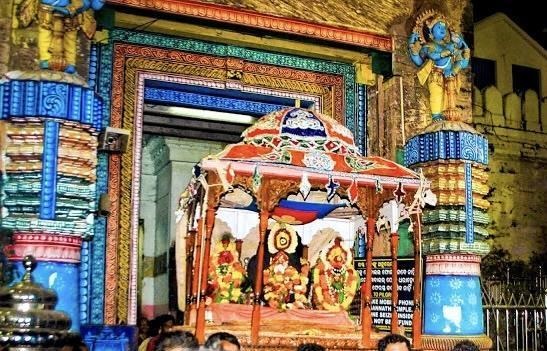
Madana-mohana with Sri devi (right) and Bhu devi (left) Urchavars during ustavas.
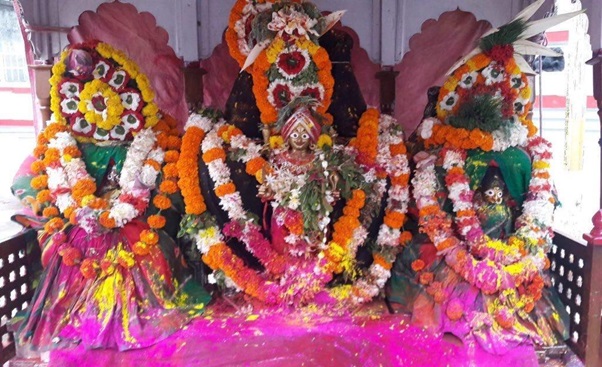
Dolo-Govinda with Sri devi and Bhu devi urchavars at utsav.
Objective 7: To locate the Math geographically and appreciate its strategic position near the Jagannath Temple in Puri.
Location
The math is situated on Swargadwar Road in Balisahi, a few steps away from the Lord Jagannath Temple in Puri, Odisha.
