
Objectives
Objective 1.To understand the spiritual significance of Sona Kua (Golden Well) and its role in the annual worship of Lord Jagannath.
Objective 2.To learn the significance of Snāna Yātrā using water from sona Kua and how Lord Jagannath mercifully gives public darśana during His annual bathing festival.
Objective 3.To understand the scriptural origin of Snāna Yātrā as described in the Skanda Purāṇa and special Alankara.
Objective 4.To understand the significance of Anasara, the services performed during this period, and the celebration of Netrotsava before Ratha Yātrā.
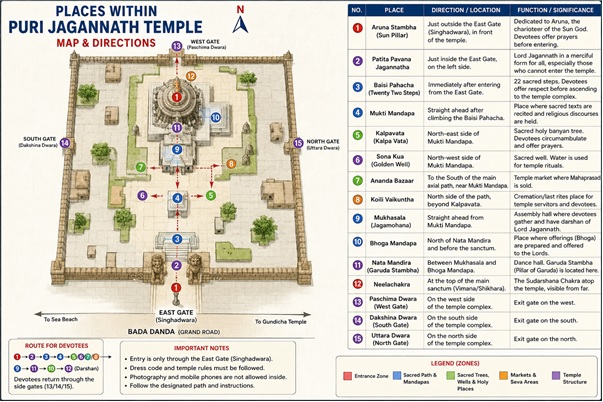
Map of Sri Mandir (lord Jagannāth temple) Puri.
Introduction
Objective 1.To understand the spiritual significance of Sona Kua (Golden Well) and its role in the annual worship of Lord Jagannath.
Sona Kua (also called Suna Kupa or the Golden Well) is a sacred and historic well located near the northern gate (Hasti Dvara) inside the famous Jagannath Temple complex in Puri, Odisha
This Sona Kua or Golden well water is used once in a year. On this auspicious day, the Suaras and Mahasuaras go in a ceremonial procession to fetch 108 pots of water from the Golden well (called ‘Sona Kua’ in local language).
Snana Yatra Deities bathing ceremony
Objective 2.To learn the significance of Snāna Yātrā using water from sona Kua and how Lord Jagannath mercifully gives public darśana during His annual bathing festival.
Snana Yatra is a sacred Hindu bathing festival celebrating the symbolic appearance day of Lord Jagannath. Held on the full moon day (Purnima) of the month of Jyeshtha, the deities of Lord Jagannath, Lord Balabhadra, and Devi Subhadra are bathed with 108 pots of fragrant water at Snana Bedi platform of the Jagannath Temple Puri .Priests bring the deities out to the raised Snana Bedi platform for a grand public bath.
Deities at bathing platform (snana bedi) at Anandh bazaar .Sri Mandir Puri.
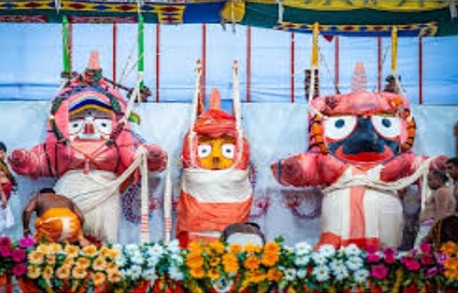
Snana Bedi
This bathing platform is situated to the north-east of Ananda Bazar and besides the outer wall of the temple (called Meghanada Pacheri in local language). The length and breadth of this bathing platform is 76 feet. It is at such a height that the devotees standing outside the temple also get a clear view of the Deities.
Water from Sona kua
The holy water is drawn from Sona Kua once a year. During the entire process all of them cover their mouths with a piece of cloth so as not to contaminate it even with their breath.
Then all the pots filled with water are preserved in the Bhoga Mandap. Then the priests purify the water with Haladi (turmeric), Java (whole rice), Sandal (Chandan), flowers and perfumes. The filled and purified water pots were then carried from Bhoga Mandap to the bathing platform by the Suaras in a long single line queue. This ritual is called ‘Jalabhisheka’, consists of two words ‘Jala’ and ‘Abhisheka’. In the local language ‘Jala’ means water and ‘Abhishek’ means Bath. This abhiseka is accompanied by chanting of vedic mantras by the priests, kirtans and blowing of conch shells.
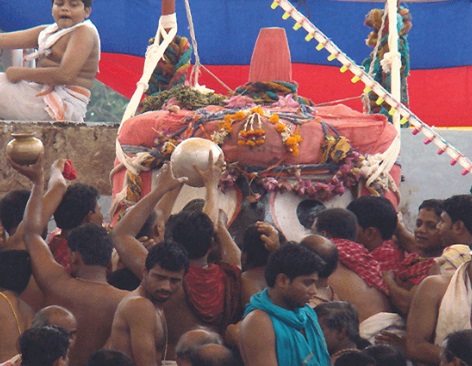
Jalabhishek of deities using holy water from sona kua-Snana yatra at Snana Bedi.
Scriptural reference of Snana Yatra
Objective 3.To understand the scriptural origin of Snāna Yātrā as described in the Skanda Purāṇa and special Alankara.
According to Skanda Purana when King Indra Dyumna installed the wooden deities (Daru Brahmam) he arranged this bathing ceremony.On the previous day of Snana Yatra the images of Lord Jagannath, Lord Balabhadra and Goddess Subhadra along with the image of Sudarshana are ceremonially brought out from the inner sanctum of the main temple in a procession (called ‘Pahandi’ in local language) to the Snana Mandapa (Bathing pandal).
Unique Alankara
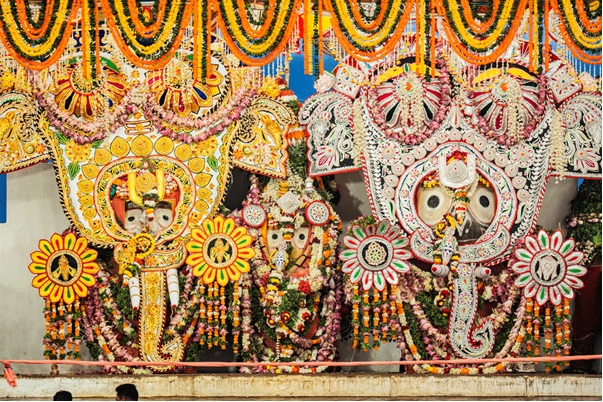
‘Hati Vesha’
At evening, after the bath ritual, the Deities assume the special elephant form which is otherwise known as ‘Hati Vesha’. Lord Jagannatha and Lord Balaram dressed like elephant, and Goddess Subhadra wears a lotus flower vesha.
Anasara:
Objective 4.To understand the significance of Anasara, the services performed during this period, and the celebration of Netrotsava before Ratha Yātrā.
After Snana Yatra, the deities are supposed to fall ill (fever) and do not return to their pedestal. The Deities are kept on a special sick room called the ‘Anasara Ghar’ inside the temple. They stay away from the public view for a period of 15 days before Rath Yatra festival .This period is known as ‘Anasara’. During Anasara the Deities offered only fruits and water mixed with cheese and Dasamula medicines to cure from fever.Designated temple servitors (Daitapatis) treat the deities using natural herbal medicines, oils like Phuluri Tela, and special diets. During all these days the daily rites of the temple remain suspended.
Patta Paintings: Instead of regular darshan, three sacred Pattachitra paintings representing the deities are displayed for devotees to worship inside the temple.
Alarnath Pilgrimage: Many devotees travel to the Alarnath Temple in Brahmagiri (about 23 km from Puri) for darshan during these 15 days, believing the Lord manifests there while resting.
Conclusion of Anasara— Netrotsava: Due to the sacred bath with 108 pitchers of water, the colours painted on the images fade out. The Daitas repaint the images with new colors and on the 16th day the Deities appear in their new forms after colouration become ready for the public view. The festival of the first appearance of the Lord Jagannath to his devotees after repaint and Anasarsa period is called ‘Netrotsava’ (festival for the eyes) or ‘Nava Yauvanotsava’ (festival of the ever-new youth).
