
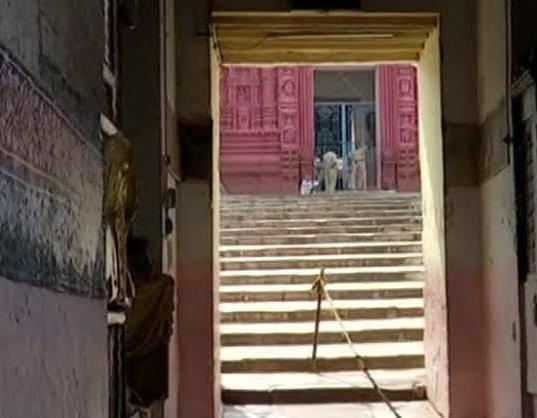
Baisi Pahacha
Objectives
Objective 1.To identify the meaning, location, and significance of the Baisi Pahacha (Twenty-Two Steps) in the Jagannath Temple.
Objective 2.To examine the symbolic journey of climbing the Baisi Pahacha as a path from worldly illusion to surrender, divine realization, and liberation (moksha).
Objective 3. To identify the sacred shrines and deities associated with the Baisi Pahacha, and to explore the significance of the ancestral rites performed there in the Jagannath tradition.
Objective 4.To identify the traditional names of the twenty-two steps, dimensions and appreciate their significance in the Jagannath Temple tradition.
Objective 5.To explore the spiritual meaning of partaking in Mahaprasad at stair as an act of devotion and participation in divine grace.
Introduction
Objective 1.To identify the meaning, location, and significance of the Baisi Pahacha (Twenty-Two Steps) in the Jagannath Temple.
Baisi Pahacha is a combination of two words ‘Baisi’ and ‘Pahacha’. In Odia language ‘Baisi’ means ’22’ and ‘Pahacha’ means ‘Steps’, so ‘Baisi Pahacha’ means ’22 Steps’. These 22 steps are found at the ‘Singha Dwara’, the Lion’s gate of Lord Jagannath temple, Puri. After entering the Lions’ gate of the temple, devotees have to climb these 22 holy steps to reach the second inner gate (known as Baisi Pahacha Gumuta), after passing the second gate they will reach the courtyard from where they can get into the main temple to see the Lord Jagannath.
Baisi Pahacha (twenty-two steps) are the holy steps and the devotees need to cross these steps to take the Darshan of the Lord Jagannath and receive blessings from the deities. In Jagannath Sanskruti Loka Katha, different Purans, Shastras, and the opinions of different Scholars are very positive about Baisi Pahacha. These twenty-two steps are a path to Darshan of Darubramha.
The following 22 letters of the Odia Mantra need to be recited while climbing the Baisi Pahacha as per Jagannath Sanskruti. “Srikrushna Govind Hare Murare He Nath Narayan Basudev”.
At first glance, these steps seem ordinary. But for a devotee, these steps are the bridge between this material world and the eternal world.
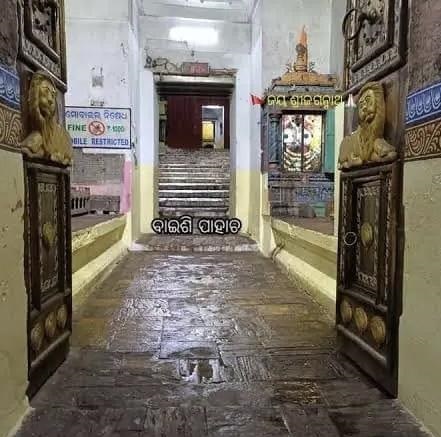
Baisi Pahacha view form Singa Dwar (Sri Mandhir entrance)
The Spiritual Significance of 22
Objective 2.To examine the symbolic journey of climbing the Baisi Pahacha as a path from worldly illusion to surrender, divine realization, and liberation (moksha).
The number 22 is not a random architectural choice; it is deeply symbolic. According to Jagannath culture and certain tantric traditions, the human soul is said to carry 22 kinds of internal impurities (doshas) that prevent liberation. Each stair, then, is not just a stone slab—it’s a chance to purify, to rise, and to realise.
Devotees usually touch these 22 steps in hand while climbing them and also allow their children to slowly roll over these steps from the top to the bottom in expectation of spiritual bliss. Pilgrims get a sense of fulfilment after putting a flake of dust from the surface of these 22 steps on their forehead. Historical records or scriptures do not provide an exact construction date, but legends attribute its creation to King Bhanudev.
Climbing each of the Stairs: A Metaphor for Life’s Journey
As one climbs the Baisi Pahacha, it’s not just a physical ascent but a spiritual pilgrimage within:
● The first few steps represent the chaos and illusions (Maya) of worldly life—desires, ego, greed.
● The middle steps bring challenges, introspection, and the weight of karma—making you question, reflect, and repent.
● The last few stairs represent surrender, awareness, and the shedding of all that binds you.
● Finally, you stand at the threshold of divinity—where karma dissolves, and moksha awaits.
Notable Features
Objective 3. To identify the sacred shrines and deities associated with the Baisi Pahacha, and to explore the significance of the ancestral rites performed there in the Jagannath tradition.
On the southern side of the Baisi Pahacha, include the revered Shivalinga named KASHI BISWANATHA, as well as idols of Ramachandra, Nrusingha and Ganesha.
Various holy activities and sacred rituals and ceremonies are performed on these 22 steps throughout the year, out of those ‘Shraddha’ rituals is the most important one. Shraddha is the annual Pinda Daana ritual of Hindus, a ritual in which food is offered to the ancestors, and is usually performed on both sides of these 22 steps. There is a small stone on the 7th step known as ‘Pitru Shila’. Devotees offer Anna Mahaprasad, the holy rice of the temple that has been offered to Lord Jagannath, to this stone for feeding their ancestors to liberate their departed
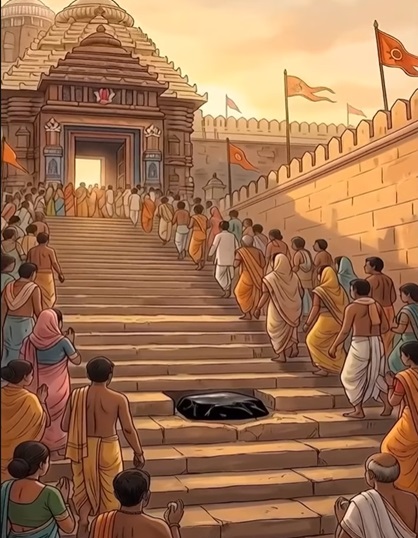
Another ritual known as ‘Bada badua Daka’ (call the elders) is performed on these steps on the day of Deepavali. Devotees burn kaunria kathis (a bundle of a particular kind of sticks which easily catch fire) on these steps on Deepavali day to light up the path of their ancestral souls.
On the Chaturdashi tithi of the dark fortnight in the month of Margashira (December), Madana Mohan, the representative deity of Shree Jagannath, performs Pinda dana Niti (a ritualistic offering) on these steps to honour his ancestors, namely Nanda and Yashoda, Devaki and Vasudeva, and Kaushalya and Dasharatha. Madan Mohana also Offers pinda dana on this Baisi Pahacha at Gundicha Temple since King Indradyumna and queen gundicha were childless.
Size & Structure of twenty-two steps
Objective 4.To identify the traditional names of the twenty-two steps, dimensions and appreciate their significance in the Jagannath Temple tradition.
The steps’ dimensions vary; the width of the middle 15 steps varies from 5 feet 10.5 inches to 6 feet 3 inches in width and the rise is 6 inches to 7 inches in height.
The size and structure of Baisi Pahacha are described by different historians and Pandits from time to time. These Pahachas (steps) have been reconstructed or repaired many times for which the actual size and number of Pahacha (steps) differ. As per Puranic view these 22 steps but currently 18 steps are directly visible but after including two steps towards Ananda Bazar it is 20 and two steps 21 & 22 are towards Rosasala or Roseigruha (Kitchen).
22 steps/names associated with the Jagannath Temple
1. Bata
2. Kurma Bedha
3. Megha
4. Rosha Bedha (or Roshabedha)
5. Daya Bedha
6. Ratna
7. Retika
8. Rohita
9. Krodha
10. Batamala
11. Prasarita
12. Vrata
13. Mangala
14. Shata
15. Rakta
16. Saradiyana
17. Aparaṇa
18. Nabadha
19. Rohisha
20. Rama
21. Ugra
22. Shobhita
The Stair where Mahaprasad is shared
Objective 5.To explore the spiritual meaning of partaking in Mahaprasad at stair as an act of devotion and participation in divine grace.
One of the 22 stairs (22nd stair) is especially sacred—this is where the Mahaprasad, the divine food of Jagannath, is shared in Ananda Bazar, this is not just distribution; it’s participation in divinity. Food touched by the Lord is placed on one of these stairs, and devotees partake in it as a form of blessing, not just nourishment.
The Path of Surrender:
According to ancient Odia scriptures and temple priests:
“Jebe prabesha kariba Baisi Pahacha re, sei dina karma chhadi moksha paiba re.”
Meaning:
The day you enter through these 22 stairs with a surrender mood in your heart, is the day you leave karma behind and reach liberation.
