
Objectives
Jagannath Puri

There is a saying that “The Lord takes bath in Badari Dhama; He puts on His Dress in Dwarka Dhama; He eats in Jagannatha Puri; and the Lord goes to sleep in Rameshvara.”
Introduction
Objective 1: To provide an overview of Jagannath Puri, its spiritual significance, historical background, and its importance as a Vaishnava pilgrimage center.
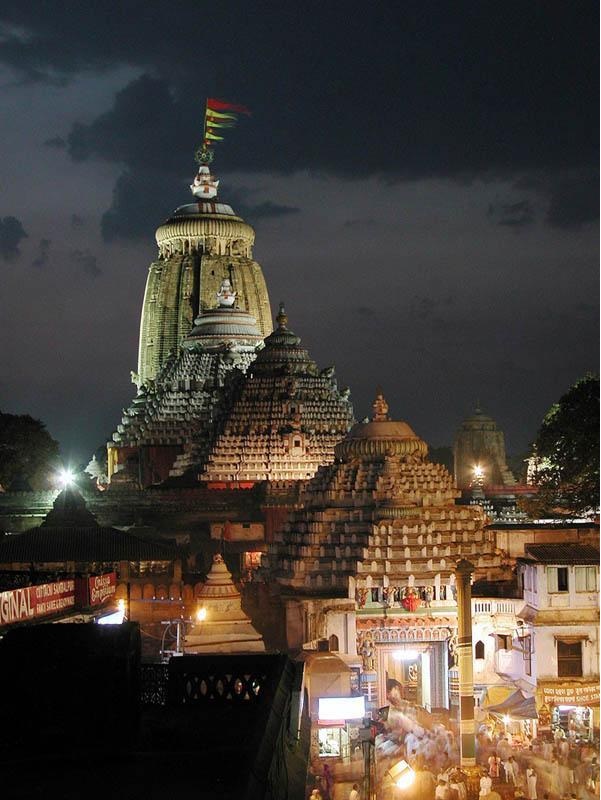
The city of Puri is also called Jagannatha Puri, Neelacala, Sri Ksetra or Puri-on-the-Sea. It is considered equal to Vrindavana (the Birthplace of Lord Krishna) and Navadvipa (the Birthplace of Lord Chaitanya Mahaprabhu). It is one of the most sacred Vaishnava holy places. It has been a holy place of pilgrimage for devout Hindus since ancient times.
Sri Devi or Laksmi is the svarupa-shakti of Lord. That tract of land which is influenced by the Sri-Shakti is thus known as Sri Kshetra.
Jagannatha Puri is situated on the bank of Bay of Bengal in East-Indian in the tropical state of Orissa, about 310 miles south of Calcutta. Utkal is another name of Orissa. Orissa was also known as Udradesa.
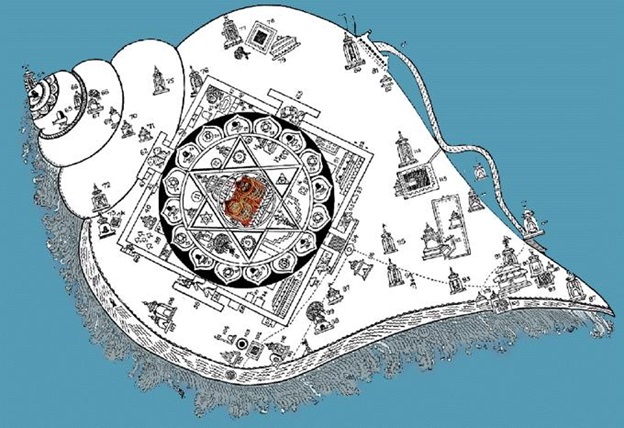
The city is shaped like the shape of a Conchshell and bears the spiritual significance of Jagannath Puri being the abode of the Godhead, Vishnu, who carries a Conchshell as part of his eternal paraphernalia. In the center of the Conchshell, there is a portion of raised ground called Nilgiri or “the blue hill.” On the crest of Nilgiri stands an imposing temple complex dedicated to Vishnu as Jagannath, “the Maintainer of the Universe.” In Sanskrit jagat means the universe, and natha means the maintainer.
For thousands of years, great sages and other exalted persons have traveled to Puri on pilgrimage. Lord Chaitanya Mahaprabhu chose to reside here for the last eighteen years of His existence on earth.
Jagannatha Temple History
Objective 2: To describe the history, architecture, and unique features of the Jagannath Temple, including its construction,.
Jagannatha means The “Lord of The Universe”. It is said that the present temple was built by King Chodaganga Deva (1078-1150 A.D) and completed by his descendant Anangabhima Deva(A.D. 1170 to 1194), 4th successor to the Ganga dynasty.
The Ganga dynasty ruled Orissa from 1078 to 1434 A.D. and established Vaishnava Culture in Puri. Many saints and seers paid their visit to Puri. In course of time Saint Ramanuja (1056-1136 A.D.) the advocate of Visishta-advaita philosophy, saints like Nimbarka, Vishnu Swami and Madhvacharya paid their visit to Puri and established their monasteries. The great poet Jayadeva Gosvami of Orissa in the 12th century, composed the famous work Gita Govindam, dedicated to Lord Jagannath as Krishna Madhava.
The main temple structure is 65 meters (214ft.) high and is built on high ground, which makes it look even larger than what it is. The temple complex has 10.7 acres and is surrounded by 2 rectangular walls.
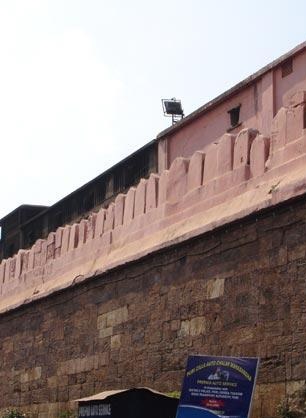
The outer surrounding is called Meghananda Prachira (665 × 640 feet). The walls are 6 meters (20 feet) high. The Inner wall is called Kurmabedha (420×315 feet). The walls are said to be built during the15th or 16th century.

Jagannatha Temple has the largest kitchen in the world and feeds thousands of Devotees every day. Prasadam for 100,000 people is prepared daily and the kitchen can prepare Prasadam for up to 250,000 people on a festival day. There are 36 traditional communities who render a specific hereditary service to the deities. The temple has as many as 6,000 priests (Pandas).
Story of Lord Jagannath’s Appearance
Objective 3: To illustrate the divine origin and manifestation of Lord Jagannath as a merciful form of the Supreme Lord.
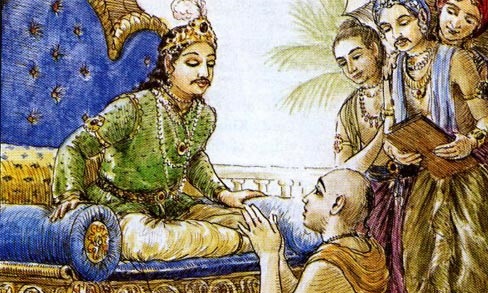
Story of the Appearance of Lord Jagannatha and the Origin of Ratha-yatra
The Ratha-yatra festival, celebrated annually at Jagannatha Puri in India, commemorates the grand chariot procession of Lord Jagannatha, along with His brother Balarama and sister Subhadra. This sacred festival is deeply rooted in Vedic history and is connected to the divine appearance of Lord Jagannatha in His unique wooden Deity form. The story behind this manifestation reveals profound spiritual truths, divine arrangements, and the mercy of the Lord toward His devotees.
King Indradyumna’s Desire to See the Lord
King Indradyumna was a devout follower of Lord Vishnu and longed to see Him face to face. One day, by divine arrangement, a traveling devotee visited the King’s court and spoke about a mysterious form of Lord Vishnu known as Neela-madhava. Hearing about this form filled the King with deep enthusiasm and eagerness. Determined to find the Lord, he sent many learned brahmanas in different directions to locate Neela-madhava.
However, all the brahmanas returned unsuccessful except one named Vidyapati. His journey would become the turning point in revealing the Lord’s hidden presence.
Discovery of Neela-madhava
After wandering through many regions, Vidyapati reached a tribal area inhabited by the Sabara community. There he stayed at the house of a tribal chief named Vishvasu. Vishvasu’s daughter Lalita served Vidyapati with great care and hospitality, and eventually, Vidyapati married her.
During his stay, Vidyapati noticed something unusual. Vishvasu would leave every night and return the next day with a divine fragrance of sandalwood, camphor, and musk. Curious, Vidyapati asked Lalita about this behavior. She revealed that her father secretly worshipped Lord Neela-madhava in a hidden location.
Although Lalita had been instructed not to disclose this secret, she shared it with her husband. Filled with eagerness, Vidyapati requested Vishvasu to take him to see the Deity. After repeated requests, Vishvasu agreed but blindfolded Vidyapati to keep the location secret. Cleverly, Lalita tied mustard seeds in Vidyapati’s cloth, and as he walked, he dropped them to mark the path.
When Vidyapati finally saw the Deity of Neela-madhava, he was overwhelmed by divine beauty and devotion. He danced in ecstasy and offered heartfelt prayers. This moment revealed that the Lord appears in the Deity form (arca-vigraha) to accept the service and devotion of His devotees.
The Miracle of Liberation
While waiting near the Deity, Vidyapati witnessed an extraordinary event. A crow accidentally fell into a nearby lake and died, but immediately it assumed a four-armed spiritual form and ascended to the spiritual world. Witnessing this, Vidyapati himself was inspired to jump into the lake, but a divine voice stopped him, instructing him to inform King Indradyumna instead.
This incident emphasized the sanctity of the place and the Lord’s power to grant liberation even to simple creatures.
The Lord’s Desire for Royal Worship
During worship, the Lord spoke to Vishvasu, expressing His desire to receive grand royal worship from King Indradyumna instead of the simple forest offerings. Vishvasu felt distressed at the thought of losing his personal service and temporarily detained Vidyapati. However, he eventually released him.
Vidyapati returned to the King and shared the entire account. Overjoyed, King Indradyumna set out with a large group to bring the Lord back.
Disappearance of Neela-madhava and Divine Instruction
Following the mustard plants that had grown from the seeds dropped earlier, the King reached the location. However, the Deity of Neela-madhava had disappeared. In frustration, the King arrested Vishvasu, but a divine voice instructed him to release the tribal devotee.
The voice further directed the King to construct a temple on Neela Hill, where the Lord would appear in a wooden form known as Daaru-brahman (the Absolute Truth manifested in wood).
Construction of the Temple
King Indradyumna began the grand construction of the temple at Puri. The temple was magnificent, extending deep below the earth and rising high above it, adorned with golden decorations, a pinnacle, and a sacred disc.
The King then desired Lord Brahma to consecrate the temple and traveled to Brahmaloka for this purpose. However, during his long absence, the temple became buried under sand due to its proximity to the sea.
Later, another king named Gala-madhava uncovered the temple and claimed credit for its construction. When Indradyumna returned, a dispute arose. A wise crow who had witnessed the entire history confirmed that Indradyumna was the true builder. As a result, Gala-madhava was instructed to live outside the temple grounds.
Divine Nature of Jagannatha Puri
Lord Brahma explained that the holy place of Puri (Sri Kshetra) is not an ordinary location but is manifested by the Lord’s internal spiritual energy. He also declared that simply seeing the temple flag and offering obeisances grants liberation.
Despite all efforts, King Indradyumna still had not seen the Lord, which caused him great despair. He decided to give up his life through fasting.
Appearance of Daaru-brahman
In a dream, the Lord instructed the King that He would appear as a wooden log floating in the sea at a place called Bankimuhan. The King found this sacred log marked with divine symbols. However, despite using great force and many helpers, it could not be moved.
Again, the Lord appeared in a dream, instructing the King to bring Vishvasu and Vidyapati and place a golden chariot before the log. When this was done with devotion and chanting, the log was easily moved, demonstrating that divine service succeeds through devotion rather than force.
Carving of the Deities
Many skilled artisans attempted to carve the Deities but failed, as their tools broke. Finally, the Lord Himself appeared in disguise as an old sculptor and agreed to carve the Deities under one condition: he must work in seclusion for 21 days without interruption.
The King agreed, but after 14 days, hearing no sound from inside, he became anxious. Against advice, he opened the door prematurely. Inside, he found that the sculptor had disappeared and three Deities—Jagannatha, Balarama, and Subhadra—had manifested, but Their limbs were incomplete.
The minister explained that the sculptor was the Lord Himself, and due to the King breaking his promise, the forms appeared in this unfinished state.
Significance of the Deity Form
Distressed, the King again decided to give up his life, but the Lord appeared to him in a dream and reassured him. The Lord explained that His form without complete limbs is intentional and represents transcendental reality beyond material limitations.
Though appearing without hands and legs, the Lord accepts offerings, hears prayers, and blesses devotees. This form upholds the Vedic truth that the Supreme Lord operates beyond material senses.
The Lord also assured that devotees with pure love will see Him in His original beautiful form.
Establishment of Worship Traditions
The Lord established specific roles for different families:
Vishvasu’s descendants would serve as personal attendants (dayitas).
Vidyapati’s brahmana lineage would perform Deity worship.
Descendants from his tribal wife would cook offerings (suyaras).
This arrangement symbolizes unity beyond social divisions in devotional service.
King’s Final Requests
King Indradyumna made two important requests: The temple doors should remain open most of the time so that everyone can have darshan.
The Lord should be continuously offered food throughout the day.
He also requested to have no descendants, ensuring that no one would claim ownership of the temple. The Lord granted all his wishes.
Spiritual Significance
The story concludes by emphasizing that simply seeing the Deity of Lord Jagannatha grants liberation. The Lord appears in this accessible form to uplift all beings, regardless of their qualification.
The Ratha-yatra festival symbolizes the Lord coming out of the temple to bless everyone, allowing all people to have His darshan. It represents divine mercy, inclusiveness, and the Lord’s desire to connect with every soul.
