
Objectives:
Objective 2: To describe in detail about Gundicā Mārjana.
Objective 4: To explain the design and structure of the temple, built in the Kalinga style.
Objective 5: To highlight the Gundicha temple’s role in Rath Yatra and its place in local tradition.
Objective1: To explain the history of Gundicha Temple and its connection with King Indradyumna and Queen Gundicha.
Historical Background
Long ago, there was a great king named Indradyumna. He is the same king who is believed to have built the famous Jagannath Temple in Puri. His wife, Queen Gundicha, was a deeply devoted woman who had a heartfelt wish. She wanted a quiet and special place where Lord Jagannath could visit and rest during the annual festival. Out of love and respect for his queen, King Indradyumna had this temple built. The name Gundică comes from the name of Queen Gundică.
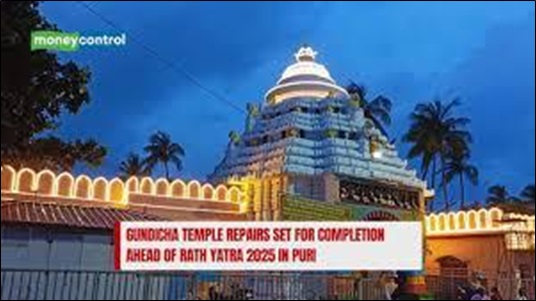
Mahārāja Indradyumna had performed 1000 Horse-Sacrifices at this place. This place was earlier known as ‘Mahāvedi’ and deities of Lord Jagannatha, Baladeva and Subhadra were carved here from the blocks of wood. Therefore this is the appearance place of Lord Jagannatha. Gaudiya Vaisnavas call this place as ‘Sundarācala’ because it appears as beautiful as Vendāvana. There are many coconut trees which enhance the beauty of this place. There are two gates to this temple. Western gate is known as Simha Dwāra and eastern gate is known as ‘Nāka Canā’ from which Lord Jagannātha comes out at the time of return Ratha-yātrā. The temple is surrounded by a huge 20 feet tall massive stone wall. The dome of Gundica Temple is 75 feet high from the ground level; Ratna Simhāsana (Jeweled Throne where Lord Jagannatha sits) is 16 feet long and 4 feet tall. There are many names to this temple viz. Mahāvedī, Yajñamandapa, Janmasthala, Nrsimha Kşetra, Ādapamandira etc. It is known as Ādapamandira because Lord Jagannatha has ten different incarnations.
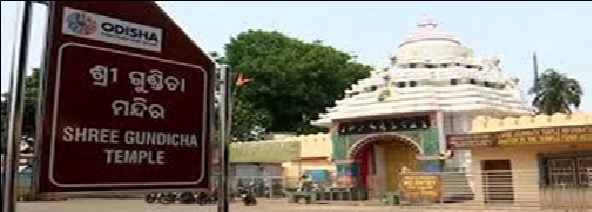
During Ratha-yātrā when Jagannātha, Baladeva and Subhadrā come to Gundică temple, They stay there for seven days and accept worship. No other vigrahas are kept in this temple for the rest of the days. Lord’s bhoga is cooked in a special kitchen at this place It is said that one who takes darśana of Lord Jagannatha in this temple obtains the benefit of taking darśana 10 times in Śrī Jagannatha Temple.
The bhoga cooked for Lord Jagannatha during these days is not offered to Vimalādevi as in Sri Mandira. Therefore it is called as ‘ādapa bhoga’. Here Lord Jagannatha wears Daśāvatara dresses on different days.
Objective 2: To describe in detail about Gundicā Mārjana.
The Pastime of Gundicā Temple Cleaning (Gundicā Mārjana)
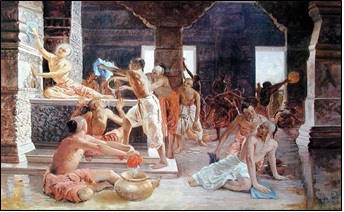
One day before the grand Ratha-yātrā festival is the day of Gundica Mārjana.Śrī Caitanya Mahāprabhu accompanied by his associates, affectionately seeked permission from the temple authorities to personally wash and cleanse the Gundicā temple. The superintendent based on King’s special order joyfully obliged, supplying hundreds of new brooms and waterpots for the service. Early the next morning, the Lord anointed His close associates with fragrant sandalwood pulp, handed each a broom, and personally led the massive cleaning operation. Together, hundreds of ecstatic devotees swept every corner, building, and ceiling of the temple complex while enthusiastically chanting the holy names of Kṛṣṇa and Hari. Mahāprabhu worked with the vigor of a hundred men, gathering piles of straw, sand, and dust in His own cloth to discard outside—a collection far larger than anyone else’s. After a meticulous second sweeping to catch the finest dust, a massive washing began with water carried continuously from the nearby lake and well. The Lord personally mopped the main temple and polished the Deity’s simhāsana (throne) with His own garments, gently correcting and encouraging the devotees along the way. Even when a Bengali Vaiṣṇava broke etiquette by drinking the water washed from His feet, Mahāprabhu used the moment to lovingly establish strict religious principles through His associate Svarūpa Dāmodara. By the end of the day, after a playful threat of “sweet-rice fines” for anyone lagging behind, the entire Gundicā temple was left perfectly spotless and pure. Thus Śrī Caitanya Mahāprabhu performed the pastime of cleaning of Gundică Temple (Śrī Caitanya Caritāmṛta, Madhya, 12.71-135).
Likewise our heart is the sitting place of the Lord and unless it is not free from the material contaminations like envy, crookedness, lust, desire for name, fame worship or even desire of liberation, the Lord will not reside there. This is the essence of Gundica Temple Pastime.
Objective3: To describe where the temple stands and how it connects to the Grand Road and Jagannath Temple.
Location and Surroundings
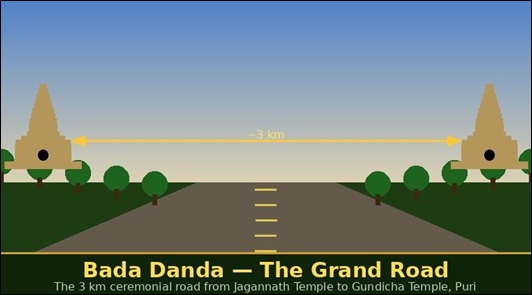
Gundicha Temple is located in the holy city of Puri, in the state of Odisha. It sits at the far end of the Grand Road, locally known as Bada Danda. This wide ceremonial road connects the Jagannath Temple to Gundicha Temple, and the distance between the two is about three kilometres.
The area around the temple is quite different from the busy Jagannath Temple area. Here, you will find open gardens and green spaces that give the place a calm and peaceful feel. It is a good spot for quiet prayer and reflection. Many visitors say they feel more relaxed here than anywhere else in Puri.
During Rath Yatra, the Grand Road comes alive with energy. People line up on both sides of the road to watch the grand procession of the chariots. Visitors come from all over India and from many other countries to take part in this beautiful event. The sight of the decorated chariots moving slowly down the wide road is something people never forget.
Objective 4: To explain the design and structure of the temple, built in the Kalinga style.
Architectural Features
Gundicha Temple is built in the Kalinga style, which is the traditional way of building temples in Odisha. The temple does not have heavy carvings or fancy decorations like some other famous temples. Instead, it has a simple and clean look that feels peaceful and welcoming.
The main shrine is called the Vimana. This is where the deities of Lord Jagannath, Balabhadra, and Subhadra are placed during Rath Yatra. It is the most sacred spot in the entire temple. In front of the Vimana is the Jagamohana, a hall where devotees gather to pray and take part in rituals.
There are also extra halls called Mandapas, which are used for religious ceremonies and for managing the large crowds that visit during the festival. The whole temple complex is surrounded by a garden, making it one of the few temples in the region where you can sit quietly in nature while feeling spiritually connected.
Objective 5: To highlight the Gundicha temple’s role in Rath Yatra and its place in local tradition.
Religious and Cultural Importance
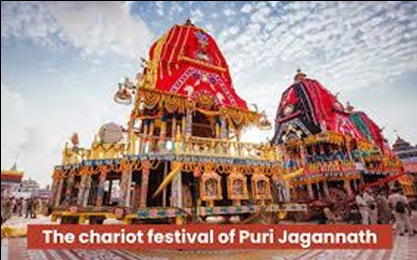
Over the centuries, this temple became the heart of one of India’s greatest festivals — the Rath Yatra. Every year, the deities of Lord Jagannath, his brother Balabhadra, and his sister Subhadra are placed on large, beautifully decorated wooden chariots. Thousands of devotees pull these chariots by rope through the streets of Puri, all the way to the Gundicha Temple.
When the deities arrive after their chariot journey, they stay at the temple for about seven days. During this time, devotees from all walks of life visit to offer prayers and receive blessings. The atmosphere is full of devotional songs, rituals, and a deep sense of spiritual joy.
After seven days, the deities make their return journey back to the Jagannath Temple. This is called Bahuda Yatra. Just like the original journey, it is celebrated with great happiness. Devotees pull the chariots once again, singing and celebrating all the way.
Many devotees believe that this journey is Lord Jagannath’s visit to his aunt’s home. This simple and loving idea makes the festival feel very personal. It is not just a religious ritual — it is like a family visit, full of warmth and emotion. That belief is what makes this temple so dear to the hearts of so many people.
Beyond religion, Rath Yatra also brings people together. Traditional music, handmade decorations, and community celebrations make it a rich cultural event. People of all ages and backgrounds join in, and the spirit of unity is truly special during this time.
Present Condition and Management
Today, the Gundicha Temple is looked after jointly by temple authorities and the Archaeological Survey of India. The complex is kept clean and well-maintained throughout the year. The gardens are cared for regularly, which helps preserve the peaceful atmosphere that visitors love.
During Rath Yatra, special teams are put in place to manage the large crowds. Security, sanitation, and crowd control are all carefully arranged so that everyone — whether old or young — can have a safe and comfortable experience.
Gundicha Temple is much more than an old stone building. It is a place where history, devotion, and community all come together. For hundreds of years, it has been the destination of one of the world’s largest religious gatherings. Its simple beauty, peaceful gardens, and deep spiritual meaning make it a truly special place.
Whether you are a devotee seeking blessings, a history lover exploring Odisha’s past, or simply someone looking for a quiet and meaningful place to visit — Gundicha Temple welcomes everyone. It stands as a proud symbol of faith, culture, and unity in the heart of Puri.
Route Details
- Starting Point: Jagannath Temple (Main temple in Puri)
- Route Path: Bada Danda (Grand Road) – a wide ceremonial road
- Distance: Approximately 3 km
- Ending Point: Gundicha Temple
- Travel Time: Around 10-15 minutes by vehicle, or 30-40 minutes on foot.
