
Objectives:
Objective 5: To explain about the importance of Swargadwar.
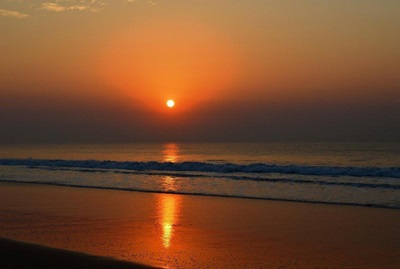
1. Location and Spiritual Significance
Objective 1 : To help the reader understand the geographical location, spiritual significance, and meaning of the name Swargadwar.
Swargadwar Beach is located in Puri, in the state of Odisha, India, along the coast of the Bay of Bengal.
It lies approximately 2 km from the Jagannath Temple and is part of the sacred region known as Purushottama Kshetra.
The word Swargadwar comes from two Sanskrit words:
Swarga – Heaven
Dwara – Gateway
‘Swargadwāra’ means the “Gateway to Heaven”. Brahma and other demigods entered from this place to Śrī Kşetra upon the request of King Indradyumna in order to install the deity of Lord Jagannatha.
To ascertain this location, a stone pillar is erected at this place which is known as ‘Swarga Dwara Sakşî’ or ‘Witness of gateway to heaven’. Earlier this place was a large tract of land but now-a-days only a small portion of land which is nothing but a cremation ground is known as Swargadwära.
It is said that the person whose death-rites are performed here attains heaven.
On every Amāvāsyā day, Lord Jagannatha in His ŚrīNārāyaņa Form take bath in Mahodadhī near Swargadwāra.
SWARGADWARA AND INDRA -THE KING OF HEAVEN
Once there was a severe drought in Orissa province and people were suffering for the want of water.
One day, King Indra happened to visit Puri to take darśana of Lord Jagannatha.
After taking darśana of Lord Jagannatha, he came to Ananda Bazar in the premises of the temple.
As he was disguised as an ordinary earthly man, no one could recognize him as Indra.
He purchased various types of Prasāda and without paying for it, he began to walk away.
As the prasāda seller saw king Indra walking away without paying money, he chased him and asked him to pay for Prasāda.
But Indra turned a deaf ear to him and kept walking.
Finally Indra reached near sea. The prasāda seller kept on chasing him for money.
When king Indra reached near sea shore, he turned back and said to the prasāda seller, “Did you not recognize me? I am Indra, the king of heaven. You have pleased me by giving this Jagannatha Mahāprasāda. Why do you ask me little money for this. I can give you much more than that. Please ask me a boon you desire.”
Prasāda seller became very astonished and said, “I have heard that Indra is the god of rain. If you are really Indra, then please pour rains on the province of Orissa.”
Indra said, “So be it!”
Then arrived an effulgent chariot from heaven and upon mounting’ on that chariot Indra retunred to the heaven.
Before returning from the sea shore, the Prasāda seller marked the spot with a stick wherefrom Indra ascended to the heaven.
When the prasāda seller returned to the temple he wanted to test the boon given by Indra that whether he can shower rains wherever he wanted.
He said, “O Indra, You have granted me a boon that you will shower rain wherever I wanted. Please fulfil my desire.”
As soon as he said this, it started raining in the area of Ananda Bazar. There was no rain elsewhere.
Prasāda seller began to dance with great joy.
Rain water started to flow towards the road through Lion gate.
The prasāda seller revealed the secret to everyone.
He also told all the people about the location from where Indra ascended to the heaven.
This news reached to the king of Orissa.
He called that prasāda seller and asked him about the boon he had recieved from Indra.
In order to verify him, king ordered the prasāda seller to ask Indra to shower rains in the courtyard of the kings palace.
Prasāda seller prayed Indra and in a short time, it began to rain in the courtyard of the kings palace.
When he requested Indra to stop the rain, it stopped raining.
King became very pleased and he named the prasāda seller as Meghamālia Suar.
Megha means clouds and Mäli means garland.
He adored him by a special turban and an precious earring.
In the memory of this incidence, king arranged a special type of bhoga for the pleasure of Lord Jagannatha which is called as ‘Suar Pitha’.
Thereafter king went to see the location where Indra ascended to heaven and named that place as ‘Swargadwāra’.
2. Historical Importance
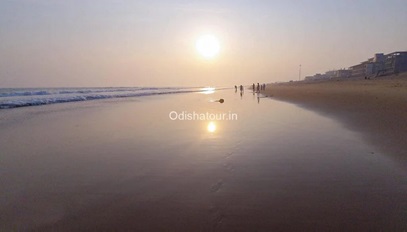
Objective 2: To explain the spiritual and historical relevance of Swargadwar, especially its connection with liberation (moksha) and the Jagannath tradition.
Swargadwar has been an important spiritual site for centuries due to its connection with the Jagannath Temple.
Sacred Cremation Ground:
Swargadwar is one of the most sacred cremation grounds in India.
It is believed that people cremated here attain liberation (moksha) through the mercy of Lord Jagannath.
Jagannath Tradition:
Traditional belief states that sacred logs called Brahmadaru used to carve the deities of Jagannath, Balabhadra and Subhadra appeared near this beach.
3. Devotees Associated With The Place
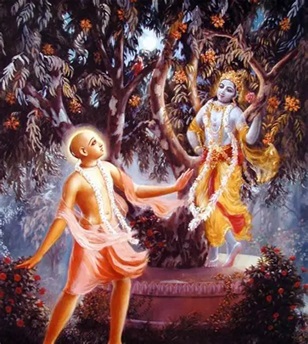
Sri Chaitanya Mahaprabhu
Objective 3: To highlight the association of great devotees like Sri Chaitanya Mahaprabhu and inspire devotion through their presence and practices.
Sri Chaitanya Mahaprabhu stayed in Jagannath Puri for many years and regularly visited the sea near Swargadwar.
Devotees believe he performed ecstatic kirtans and devotional meditation here while remembering Lord Jagannath.
4. Leelas / Pastimes
Objective 4: To educate readers about the divine and sacred process behind the manifestation of Jagannath deities.
1. Mahaprabhu’s Ocean Bathing
Sri Chaitanya Mahaprabhu used to bathe in the ocean near Swargadwar and chant the holy names.
2. Sacred Ocean (Mahodadhi)
The ocean in Puri is traditionally called Mahodadhi and devotees consider bathing here spiritually purifying.
3. Arrival of Brahmadaru
According to traditional belief, divine logs used to carve the Jagannath deities appeared near this beach.
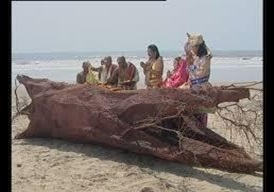
· Divine Selection: The sacred neem trees (Daru) from which the idols are carved are identified in a dream by the Daitapati priests.
· Signatures on the Wood: The trees must possess specific divine signs, such as the Shankha (conch), Chakra (wheel), Gada (club), and Padma (lotus) on the bark.
· The Journey: Once identified, the logs are brought in a massive procession from their location to the temple’s “Koili Baikuntha”. The wood for each deity (Jagannath, Balabhadra, Subhadra, and Sudarshan) is collected from different locations—often different villages—following a strict traditional protocol.
· Arrival Rituals: The arrival is marked by intense devotion, with thousands of followers chanting and singing, and the path is often treated with reverence as the “Daru” is considered to be the Lord himself (Daru Brahma).
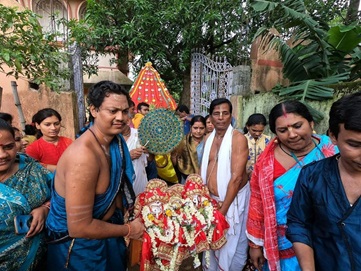
· The “Secret” Substance: After the new idols are carved, the “Brahma Padartha” (the core sacred essence or soul) is transferred from the old idols to the new ones in a secret midnight ceremony by priests with closed eyes.
5. Importance
Objective 5: To explain about the importance of Swargadwar.
Swargadwar Cremation Ground:
A sacred cremation area where many Hindus perform the final rites of their relatives.
Mahodadhi Sea:
Devotees take holy bath and offer prayers to the sea considered sacred due to the presence of Lord Jagannath.
6. Presiding Deities
Objective 6: To identify the main deities associated with the place and connect the site to Jagannath worship.
Although Swargadwar is a beach, the presiding deities of the area are the Jagannath Temple deities:
Lord Jagannath
Lord Balabhadra
Devi Subhadra
Nearby Temples:
Smasana Kali Temple
Bhutanath Shiva Temple
7. Scriptural Reference
Objective 7 : To provide scriptural authenticity and strengthen faith by linking the place to sacred texts.
The sacredness of Puri (Purushottama Kshetra) is elaborately described in the Purushottama Mahatmya section of the Skanda Purana, where it is glorified as a divine abode of Lord Vishnu, along with the sanctity of the Mahodadhi (sea) and various pilgrimage sites.
8. How To Reach
By Air:
Nearest Airport – Biju Patnaik International Airport, Bhubaneswar (approx. 60 km).
By Train:
Nearest Railway Station – Puri Railway Station (about 2–3 km from Swargadwar).
By Road:
Puri is well connected by road to Bhubaneswar, Konark and Cuttack.
Darshan / Visit Timing:
The beach can be visited throughout the day. Sunrise and sunset are considered the best times.
