
Objectives:
Objective 1: To know about the location of Dāna Ghati.
Objective 2: To understand the symbolic position of Dāna Ghati on Govardhan Hill.
Objective 3: To learn about Sri Kṛishna’s pastime with the gopīs at Dāna Ghati.
Objective 4: To highlight the Spiritual Significance of Dāna Ghati.
Location and Symbolic Position Dāna Ghati is the starting point of the 21-kilometer Govardhana Parikramā, a sacred pilgrimage cherished by devotees across the world. Some Parikramā pilgrims begin their journey here, remembering Sri Krishna’s transcendental pastime of lifting Govardhan Hill to protect the Vrajavāsīs from the wrath of Indra. The main temple at Dāna Ghati is open 24 hours and is visited daily by thousands of devotees. Although the Dānī Rāya Temple, believed to have been originally built by Vajranābha (Sri Krishna’s great-grandson), is currently inactive in terms of worship, it still stands atop Govardhan Hill as a sacred reminder of these divine events. Objective 2: To understand the symbolic position of Dāna Ghati on Govardhan Hill. Govardhan Hill is said to be shaped like a peacock, with Dāna Ghati located at the narrow stretch symbolizing the neck of the peacock. The pass here historically served as a crossing point for the gopīs, making it an ideal stage for the dāna-keli (tax pastime) to unfold. A Place of Divine Humor and Devotion Dāna Ghati, meaning “the place of taxation,” is one of the most revered sites in Govardhan, located on the sacred Govardhan Parikrama route. It marks the spot where Śrī Kṛṣṇa, in His mischievous and loving mood, engaged in a unique pastime—demanding butter, yogurt, and milk products as “tax” from the gopīs of Vṛndāvana. The gopīs, led by Lalitā and Viśākhā, were carrying their dairy goods across Govardhan Hill to offer them at a yajña (sacrifice) near Govinda Kuṇḍa. Śrī Kṛṣṇa, accompanied by His intimate friends like Śrīdāmā, Sudāmā, and the humorous Madhumaṅgala, blocked their path and demanded a toll. When the gopīs refused, a loving and humorous exchange ensued. Eventually, the gopīs “surrendered” a little of everything they carried, recognizing Kṛṣṇa as the true King of Vraja. This delightful episode is elaborately described by Śrīla Rūpa Gosvāmī in his poetic masterpiece Dāna-keli-kaumudī, revealing deep devotional moods (rasa) through the play of loving exchanges (prema-vilāsa) between the Lord and His eternal associates.
Spiritual Significance In the Words of Śrīla Prabhupāda “Kṛṣṇa is never satisfied by opulence. He is satisfied by the devotion of the devotee.” In Dāna Ghati, we see this devotion in its purest and sweetest form—full of humor, love, and complete surrender. How to Reach Dāna Ghati Dāna Ghati is located along the road that leads from Mathurā to Barsānā, passing through Govardhan town. Pilgrims often begin their parikramā from here. The Lakṣmī-Nārāyaṇa Temple is on the same road that eventually climbs over Govardhan Hill.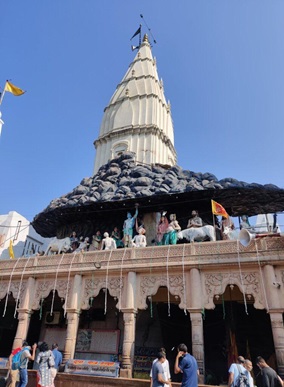 Dāna Ghati Temple: Entry to Parikramā
Objective 1: To know about the location of Dāna Ghati.
Objective 3: To learn about Sri Kṛishna’s pastime with the gopīs at Dāna Ghati. 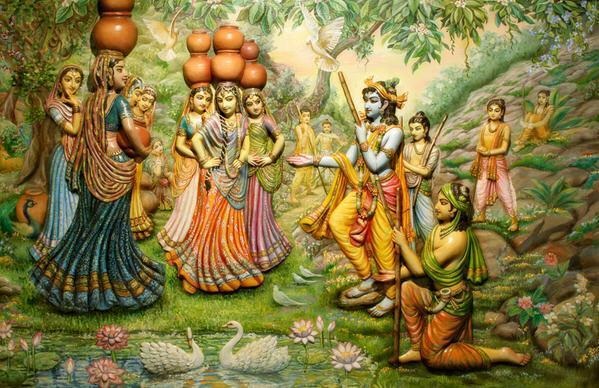
Objective 4: To highlight the Spiritual Significance of Dāna Ghati.
— Lecture, Vṛndāvana, 1972
