
Objectives :
Objective 1: To know the location and religious importance of Garh Ganesh Temple.
Objective 2: To understand the history and establishment of the temple.
Objective 3. To describe the unique features of the deity in Garh Ganesh Temple.
Objective 4. To understand the architectural and structural elements of the temple.
Objective 1: To know the location and religious importance of Garh Ganesh Temple.
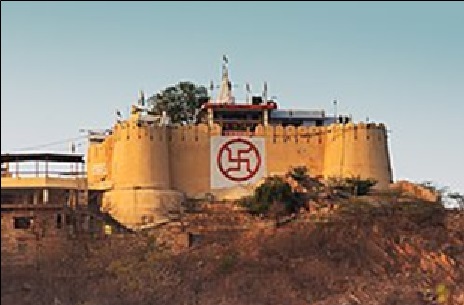
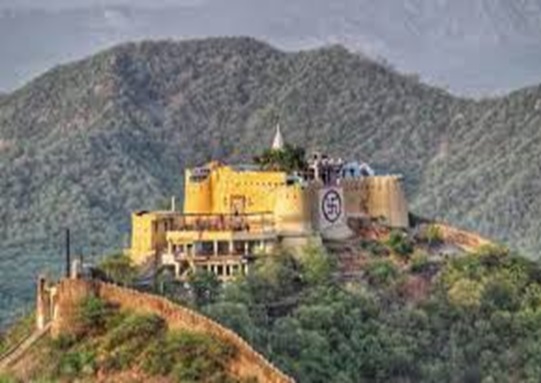
Garh Ganesh Temple is located on the Aravalli hills near Jaipur, Rajasthan, India. It is dedicated to Lord Ganesha and is known for its unique deity, which does not feature a trunk – an uncommon representation of the deity. The temple is one of the prominent religious sites in Jaipur, attracting a significant number of devotees, particularly during Ganesh Chaturthi.
Objective 2: To understand the history and establishment of the temple.
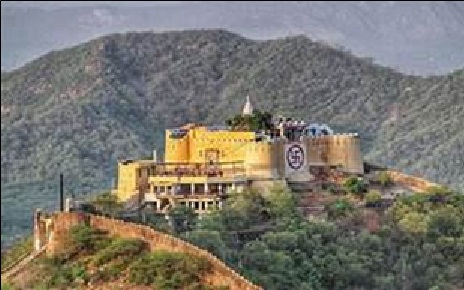
The temple was built in the 18th century by Maharaja Sawai Jai Singh II, the founder of Jaipur. The establishment of the temple is associated with the completion of an Ashvamedha Yagya, a Vedic ritual. The temple’s location on a hilltop, at an elevation of approximately 500 feet, provides a panoramic view of the surrounding area. To reach the temple, devotees ascend 365 steps, which are symbolic of the days of the year. The ascent is considered a spiritual journey, and many pilgrims see it as a form of devotion to Lord Ganesha.
Objective 3: To describe the unique features of the deity in Garh Ganesh Temple.
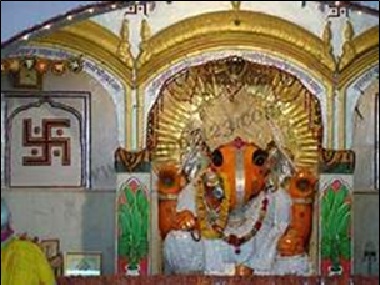
The Garh Ganesh Temple is distinguished by the deity of Ganesha, by the absence of a trunk. This representation of Lord Ganesha is rare, as most depictions feature a trunk. According to local tradition, the deity was sculpted in this unique form to reflect the deity’s power and divine presence in a different way.
Objective 4: To understand the architectural and structural elements of the temple
The temple is located at a height of 500 feet above sea level, on the Aravalli hills, offering a sweeping view of the surrounding area. The 365 steps that lead to the temple are a significant feature of the temple complex, both symbolically representing the 365 days of the year and serving as a physical challenge for pilgrims. The temple structure follows the Nagara style of architecture, which is common in North India. This style typically includes tall, spire-like structures, as well as intricate carvings and decorations.
