
Objectives:
Objective1: To understand the transcendental pastime of Radharani at Piyala-sarovara (Pili Pokhara).
Objective2: To know the reason behind the lake’s yellow color and its spiritual significance.
Objective3: To highlight the affectionate exchange between Mother Yashoda and Radharani.
Objective4: To describe the geographical and cultural setting of Pili Pokhara.
Objective5: To learn scriptural references glorifying this lila and sacred place
Objective1: To understand the transcendental pastime of Radharani at Piyala-sarovara (Pili Pokhara)
Feeling honored but modest, Radharani returned toward Barsana. On the way, seeing Her yellow-colored hands, She became embarrassed, thinking what Her parents and villagers might presume. Not wanting to give such an impression, She quickly reached a nearby lake and washed off the turmeric.
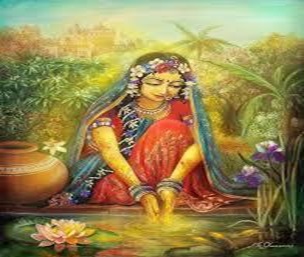
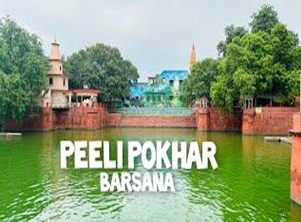
Miraculously, the water of the lake turned bright yellow as soon as Radha washed Her hands. Thus, the lake became renowned as Pili Pokhara (meaning yellow pond) or Piyala-sarovara.
Objective2: To know the reason behind the lake’s yellow color and its spiritual significance
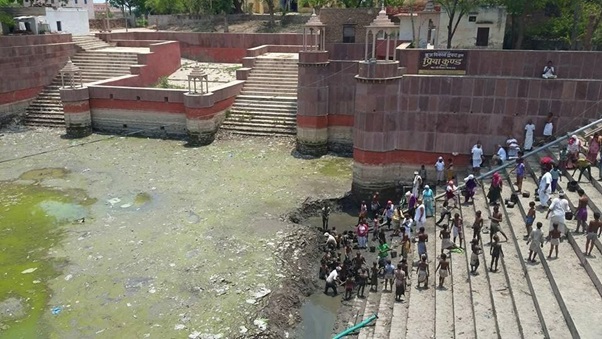
The yellow colour of the lake is considered a divine transformation, bearing testimony to Radharani’s shy nature and divine qualities. Pilgrims regard this lake with reverence, considering it spiritually potent due to the touch of Radharani’s sacred hands.
It is believed that even today, the waters retain the mystical yellow hue during certain seasons—an eternal remembrance of this sweet pastime. The lake is located around 500 meters north of Shriji Mandir, and devotees often walk here as a sacred parikrama.
Objective3: To highlight the affectionate exchange between Mother Yashoda and Radharani
This lila glorifies the motherly affection of Yashoda towards Radharani. Though not yet married to Krishna, Yashoda’s genuine love made her naturally accept Radha as her daughter-in-law. This divine exchange reflects the deep familial bonds among the residents of Vraja, where every interaction is filled with transcendental affection.
Objective4: To describe the geographical and cultural setting of Pili Pokhara
Names: Also known as Piyala-kunda (because of Piyala trees nearby) and Pilu Khora (due to Pilu trees whose fruits Radha and Krishna enjoyed together).
Location: 500 meters north of Shriji Mandir, Barsana.
இயற்கை அழகு: Natural beauty: Surrounded by sacred trees like pilu and piyala, the area is serene and lush, offering a perfect setting for meditating on Radha-Krishna’s lilas.
Objective5: To learn scriptural references glorifying this lila and sacred place
While this specific pastime is rooted in the oral and literary traditions of Vraja and not directly found in major shastra like the Srimad-Bhagavatam, it is mentioned in Bhakti-ratnakara and supported by Vraja Mandala Parikrama commentaries by ISKCON devotees.
Reference from Bhakti-ratnakara (quoted in VMP_RSDB):
“On the northern side of Banukhora is Piyala-sarovara where Radha and Krishna performed various sports… on the pretext of picking pilu fruits, They enjoyed each other’s company, hence it became known as Pilu Khora.”
Related Verse (Chaitanya Charitamrita, Madhya-lila 23.68):
devī kṛṣṇa-mayī proktā rādhikā para-devatā
sarva-lakṣmī-mayī sarva kāntiḥ sammohinī parā
Translation: “Radhika is known as Krishna-mayi, for She is filled with Krishna’s presence. She is the supreme goddess, embodiment of all Lakshmis, the source of all beauty, and the ultimate enchantress—even of Krishna.”
This verse underlines Radharani’s exalted position, explaining why Her touch sanctifies the very water of the pond and why the event of washing Her hands leaves a permanent divine mark on earth.
