
Objectives:
Objective 1: To know the location and spiritual significance of Keshi Ghat in Vrindavan.
Objective 2: To understand the divine pastime of Krishna killing the demon Keshi.
Objective 3: To know why Krishna is called Keśava after this pastime.
Objective 4: To understand why it is named Keshi ghat.
Objective 6: To learn the symbolic meaning of Keshi as representing pride and ego.
Objective 7: To describe the role of Madhumaṅgala in the sub-pastime and its devotional sweetness.
Objective 9: To learn the prescribed devotional practices and prayers associated with Keshi Ghat.
Objective 10: To describe the architectural and cultural features of Lakṣmī Raṇī Kuñja at the ghat.
Objective 11: To describe the glories of Keshi ghat.
Objective 12: To understand the importance of Keshi Ghat on the Vraja Maṇḍala Parikrama route.
Objective 1: To know the location and spiritual significance of Keshi Ghat in Vrindavan.
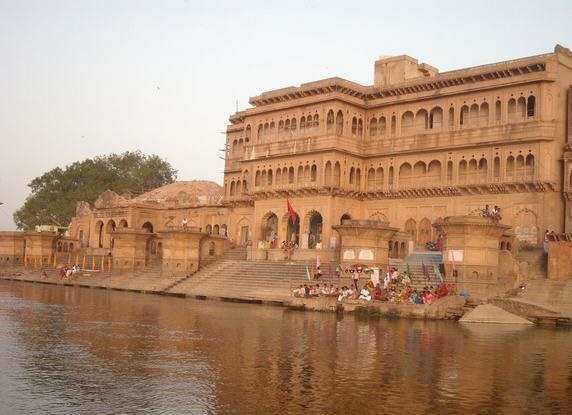
Situated along the serene banks of the Yamuna River in Vrindavan, slightly east of Cira Ghat, Keshi Ghat is among the most spiritually powerful and picturesque ghats in all of Vraja. Graced by ornate Rajasthani-style architecture and the distant view of the towering Madan Mohan Temple, this ghat is not only a visual delight but also a site of deep transcendental significance.
According to the scriptures and ācāryas, anyone who touches, bathes in, sees, or even smells the waters of the Yamuna at this ghat is greatly purified. It is a sacred place where Krishna’s victory over the demon Keshi eternally resonates.
Objective 2: To understand the divine pastime of Krishna killing the demon Keshi.
The Divine Pastime: Krishna Slays the Horse-Demon Keshi:
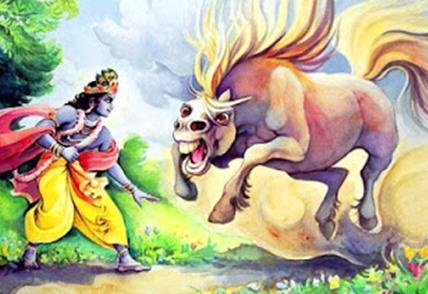
Desperate to eliminate Krishna, the tyrant Kaṁsa dispatched the mystic demon Keshi, who assumed the form of a monstrous, fiery horse. His terrifying speed caused tremors on the earth, and his neighing echoed through the skies.
“The demon Keshi was like a whirlwind, galloping so fast that his hooves seemed to split the earth. His neighing filled the skies and shook the clouds.” — Śrīmad-Bhāgavatam 10.3710.37
The Encounter
One day, as Krishna played joyfully with His cowherd friends, including Madhumaṇgala, Keshi galloped into the forest. Mistaking Madhumaṇgala—who was dressed like Krishna for fun—as his target, Keshi charged. Frightened, Madhumaṇgala screamed for help.
Krishna immediately intervened. With divine calm, He caught Keshi’s legs and flung him a great distance. Enraged, Keshi charged again, this time with his mouth wide open, ready to devour Krishna. Krishna smiled and inserted His lotus hand into the demon’s mouth.
Keshi’s throat felt as if it were being seared by a red-hot iron. Krishna’s hand expanded, breaking Keshi’s teeth, suffocating him, and finally splitting his body from within.
“The Supreme Lord expanded His arm within Keshi’s body, suffocating him completely. When Keshi died, the demigods glorified the Lord with showers of flowers.” — Śrīmad-Bhāgavatam 10.37.8
Objective 3: To know why Krishna is called Keśava after this pastime.
As a result of this victory, Devarṣi Nārada appeared and declared:
“Because You have slain the fierce demon Keshi, henceforth You will be known throughout the worlds as KeŚva.” — Harivaṅśā Purāṇa, Vishnu-parva 24
Krishna is therefore called Keśava – name of victory and protection, reminding devotees that Krishna removes obstacles and demons—both external and internal.
Objective 4: To understand why it is named Keshi ghat
After killing Keshi, Krishna’s hand was soiled by contact with the demon’s vile mouth. Krishna came to this very spot on the Yamuna to wash His hand, and ever since, it has been known as Keshi Ghat. Bathing here is said to cleanse one of material pride and sins.
Objective 5: To know the significance of bathing, offering piṇḍa, and performing deep-dāna at this sacred site.
Adi-Varāha Purāṇa states:
“Bathing at Keshi Tirtha is a hundred times more purifying than bathing in the Ganges.”
Vrindavan Mahimāmṛta (VM 386) adds:
“Offering piṇḍa to forefathers at Keshi Ghat gives the same merit as doing so at Gayā.”
Even when the Yamuna recedes, pilgrims still bow at the dusty steps, touch the ghat’s stones to their heads, and feel deeply purified.
Objective 6: To learn the symbolic meaning of Keshi as representing pride and ego.
Symbolism: Keshi Represents Pride
The horse-demon Keshi symbolizes the anartha (contamination) of false ego and pride, especially spiritual pride. His mouth—the source of boasting—was the point of Krishna’s divine intervention.
“Proud people boast with their tongue. Krishna silences this pride by entering through the very source of it — the mouth.” — ISKCON Vraja-vāsī commentary
Just as Krishna shattered Keshi’s arrogance, He enters our hearts to destroy our vanity, ego, and pride in knowledge or service.
Objective 7: To describe the role of Madhumaṅgala in the sub-pastime and its devotional sweetness.
A lighthearted episode enhances the sweetness of this place: Krishna once gave His flute, yellow cloth, and peacock feather to Madhumaṇgala, who strutted about pretending to be Krishna. At that moment, Keshi arrived. Seeing Madhumaṇgala dressed like Krishna, he charged furiously.
Terrified, Madhumaṇgala cried out. Krishna immediately protected His friend and slew Keshi. Afterward, Madhumaṇgala returned the borrowed items and exclaimed:
“Forget the laḍḍūs—my life is worth thousands of them!”
The cowherd boys laughed, adding humor and charm to this otherwise intense līlā.
Objective 8: To understand the teachings of Rūpa Gosvāmī regarding the transformative power of darśana at Keshi Ghat.
In Bhakti-rasāmṛta-sindhu, Śrīla Rūpa Gosvāmī warns:
“If you wish to remain attached to your wife, children, and worldly life, never go to Keshi Ghat, even by mistake. There, Govindajī stands in His threefold-bending form, enchanting all who see Him. Once seen, one never returns to worldly entanglement.”
This verse underscores the transformative power of darśana at Keshi Ghat, where Krishna draws the heart away from illusion and into divine absorption.
Objective 9: To learn the prescribed devotional practices and prayers associated with Keshi Ghat.
Suggested Prayers at Keshi Ghat:
“O KeŚva, just as You destroyed the demonic pride of Keshi, kindly destroy my pride, vanity, and false ego. Let me become the servant of Your servants.”
Activities for Devotees:
யமுனை நீரில் ஸ்நானம் செய்யுதல் அல்லது தலையில் சிறிது நீர் தெளித்தல்
● Bathe or sprinkle Yamuna water on the head
● Chant japa or perform kīrtana
● Offer flowers (pushpa) or ghee lamps during Kārtika
● Sit in silence and reflect on Krishna’s mercy and protection
Best Time to Visit:
During brahma-muhūrta (early morning)
On Govardhan Pūrṇimā, Kārtika Paurnimā, or Ekādaśī
Objective 10: To describe the architectural and cultural features of Lakṣmī Raṇī Kuñja at the ghat..
Lakṣmī Raṇī Kuñja Palace, built by the Bharatpur royalty, adorns the ghat with arches, courtyards, and pillars.
Hidden alcoves under the palace house Hanumān deities smeared with sindhūr.
Pilgrims walk the stone path, take three dips in Yamuna, or simply absorb the mood.
The ghat becomes especially vibrant during Kārtika with thousands offering deep-dāna (lamps).
Objective 11: To describe the glories of Keshi ghat.
Keśi Ghat is where Krishna bathed after killing the fierce demon Keshi.
It signifies the destruction of pride, purification by Yamuna, and entry into Krishna’s loving pastimes.
The name KeŚva originates here, as Krishna was glorified for His victory.
“By remembering the Lord’s activities at Keshi Ghat, one becomes free from false pride and gains eligibility for eternal service.” — ISKCON Vraja Maṇḍala Parikrama Booklet
Objective 12: To understand the importance of Keshi Ghat on the Vraja Maṇḍala Parikrama route .
East of Cira Ghat, along the Yamuna River. It is a primary stop on the Vraja Maṇḍala Parikrama pilgrimage route and is revered as the place of Krishna’s purification and victory over pride.
