
The Banyan Tree where Śrī Kṛṣṇa played His flute
Objectives:
Objective 3: To highlight the renunciation of the gopīs who left everything for Krishna’s pleasure.
Objective 1: To understand the spiritual significance of Vamshi Vata as the site of Lord Krishna’s rāsa-līlā with the gopīs of Vṛndāvana.
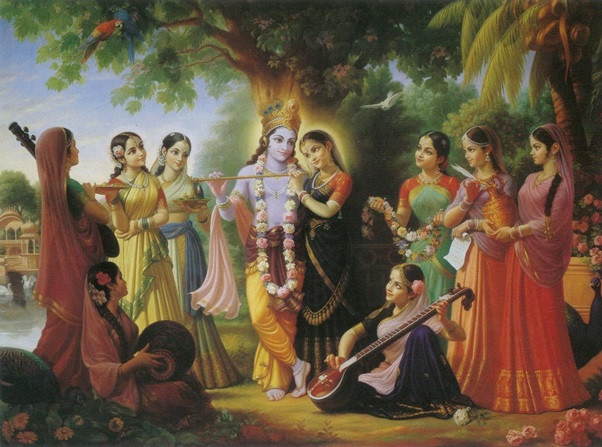
Krishna as Gopinath, the Lord of the gopis, performed the rāsa-lila with the gopis of Vrindavan.
The ‘vamsi’ means flute and ‘vata’ means a banyan tree. This is the place where Krishna as Gopinath, the Lord of the Gopis, played his flute to call all the Gopis of Vrindavan to perform the rasa dance. Gopis exhibited supreme renunciation by leaving their homes and security to please Krishna. While risking their good names and chastity, they followed Krishna’s music fearlessly, solely to please Krishna.
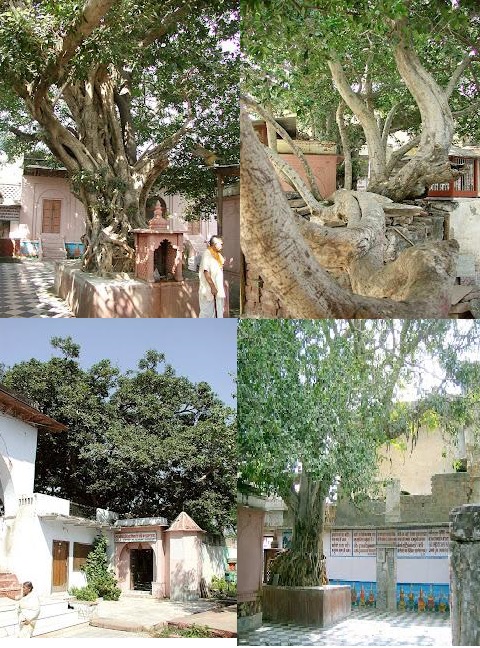
Only great souls who have surrendered their hearts to Krishna can understand the divine significance of this most perfect and pure manifestation of God’s love. In Vamsi Vata, one can see the offshoot of the original banyan tree that grew here during Krishna’s pastimes, as well as a simhasana and rasa-mandala honouring the rasa-lila.
Objective 2: To know the meaning of “Vamshi” (flute) and “Vata” (banyan tree) in the context of Krishna’s pastimes.
Krishna has a variety of flutes which He plays in order to attract the hearts of His devotees. Based on the length and the number of holes in the flute it is called Vamshi, Venu or Murali. Vata is the Sanskrit word for a Banyan Tree. So Vamshi Vata is the celebrated Banyan Tree in Vrindavan where Krishna plays His Vamshi to attract the heart of His devotees especially the Vraja Gopis. This is the place where Krishna as Gopinath, the Lord of the Gopis, performs the Rasa dance with the Gopis of Vrindavan.
Objective 3: To highlight the renunciation of the gopīs who left everything for Krishna’s pleasure.
Renunciation of Gopis:
When Lord Shyamsundar played on His Vamshi in the fifth note, at this place on the full moon night of the Sharad season the ambrosial nectar of the sound vibration of Krishna’s flute filled the entire atmosphere. When this nectar entered into the ears of the Vraja Gopis, it penetrated their loving hearts. Charmed by the sweetness of Krishna’s love, they exhibited the perfection and essence of renunciation held supreme in the Gaudiya Vasihnava Siddhanta. For the pleasure of Krishna they at once left their home and all of their security. Some of them were milking cows but on hearing the music of Krishna’s flute they left the pots under the cow’s udders and immediately ran to Vamshi Vata tree to meet Krishna. Some were feeding their baby children. Renouncing even the attachment towards their children the Gopis left their children behind for the pleasure of Krishna. In the dead of the night they were fearlessly following the music of Krishna’s flute in a dangerous forest because they had complete faith that if they please Krishna their lives would become perfect. They were willing to risk their good names and their chastity even at the risk of never being allowed to return home again. The Gopis only ambition was to lay themselves at the feet of Krishna, completely at His disposal, willing to mould according to His desire for His pleasure.
Objective 4: To describe the divine attraction of Krishna’s flute and its impact on the hearts of the devotees.
Qualification to approach Rasa Lila:
All the fortunate Gopis came to this holy place of Vamshi Vata and here the Rasa Lila began. The most perfect and pure of all manifestations of God’s pastimes is the Rasa Lila. It is so elevated in nature that only great souls like Shukadev Goswami, Rupa Goswami, Sanatana Goswami, Shri Chaitanya Mahaprabhu, Shri Ramananda Raya who have given up everything of this world and placed their hearts in the service of Krishna exclusively can truly understand the divine significance of Rasa Lila.
Objective 5: To learn about the history and evolution of the Vamshi Vata tree from Krishna’s time to its restoration by Śrī Mādhupandit.
At Vamsi Vata one can see the offshoot of the original banyana tree that was growing here during Krishna’s pastimes as well as a simhasana and rasa-mandala commemorating the rasa-lila that took place here.
Śrī Kṛṣṇa’s great-grandson Śrī Vajranābha Mahārāja planted a tree here in remembrance of this place of rāsa, but after some time, the Yamunā flooded that place.
More recently, five hundred and fifty years ago, Śrī Mādhupāṇḍita, a disciple of Śrī Gadādhara Paṇḍita, took one of its branches and planted it here, and that branch transformed into a vast tree.
Śrī Mādhupāṇḍita found the deity Śrī Gopīnātha here while engaged in bhajana. There are four very small temples in each of the four corners of the quadrangular wall of Vaṁśīvaṭa. The deities of Śrī Rāmānujācārya, Śrī Madhvācārya, Śrī Viṣṇusvāmī, and Śrī Nimbārkācārya were established within them.
Nowadays, some other deities have replaced them. Gauḍīya Vaiṣṇavas used to serve here, but then Brahmacārījī, the spiritual guide of a king of Gwalior, bought this place. Since then, it has been in the care of the Nimbārka sampradāya.
Objective 6: To understand the elevated position of rāsa-līlā and why only surrendered souls can realize its divine essence.
This is the place where the Youthful Couple Śrī Rādhā-Kṛṣṇa, together with the sakhīs, performed their pastimes of rāsa, as described in Śrīmad-Bhāgavatam, the pure and faultless scriptural authority. To bestow the result of the Kātyāyanī-pūjā upon the young, unmarried gopīs, rasika-bihārī Śrī Kṛṣṇa granted them a boon.
To fulfill this boon, He played a sweet tune on His flute on a full moon night. Hearing the wonderful flute-song, the gopīs, intoxicated in prema, came here.
Śrīmad-Bhāgavatam (10.29.4) describes this as follows:
niśamya gītāṁ tad anaṅga-vardhanaṁ
vraja-striyaḥ kṛṣṇa-gṛhīta-mānasāḥ
ājagmur anyonyam alakṣitodyamāḥ
sa yatra kānto java-lola-kuṇḍalāḥ
When the young women of Vṛndāvana heard Kṛṣṇa’s flute-song, which arouses romantic feelings, their minds were captivated by the Lord. They went to where their lover waited, each unknown to the others, moving so quickly that their earrings swung back and forth.
On the pretext of correcting the gopīs’ transgression of righteous conduct, rasikendra-śekhara Śrī Kṛṣṇa gave His surrendered gopīs many reasons why they should return home to serve their husbands, but the clever gopīs easily refuted all His arguments. Kṛṣṇa’s autumnal rāsa (śāradīya-rāsa) with countless gopīs took place here. One Kṛṣṇa danced between two gopīs, or one gopī was dancing between two Kṛṣṇas. In this way, rāsa took place with astonishing dancing and singing.
The other gopīs became proud of their good fortune (saubhāgya-mada), and Śrīmatī Rādhikā entered into a sulky angry mood, māna. Seeing this, rasika-śekhara Śrī Kṛṣṇa disappeared from that place in order to soothe Śrīmatī Rādhikā’s māna and to remove the pride of the other gopīs.
Thereafter, the gopīs, suffering separation from Kṛṣṇa and crying loudly, began to sing the celebrated Gopī-gīta, beginning with:
jayati te ’dhikaṁ janmanā vrajaḥ
śrayata indirā śaśvad atra hi
dayita dṛśyatāṁ dikṣu tāvakās
tvayi dhṛtāsavas tvāṁ vicinvate
Translation (SB 10.31.1):
The gopīs said:
O beloved, Your birth in the land of Vraja has made it exceedingly glorious, and thus Indirā, the goddess of fortune, always resides here. It is only for Your sake that we, Your devoted servants, maintain our lives. We have been searching everywhere for You, so please show Yourself to us.
Hearing their singing, Śrī Kṛṣṇa again appeared, and at this place He expressed His gratitude to the gopīs in sweet words:
“You have performed an extraordinary deed: you have given up everything for Me. For this sacrifice, I am eternally indebted to you and can never repay you.”
The Bhakti-ratnākara says:
“Please see the wonderfully beautiful Vamśī Vaṭa on the bank of the Yamunā. The shade of the Vamśī Vaṭa tree removes the distress of the world. Lord Gopīnātha eternally enjoys His pastimes here. His attractive dress enchants the world, and His movements are flawless as the sound of His flute attracts the gopīs.”
In the Caitanya-caritāmṛta, it is said:
“Lord Gopīnātha, who originated the transcendental mellow of the rāsa dance, stands on the shore in Vamśī Vaṭa and attracts the attention of the cowherd damsels with the sound of His celebrated flute. May they all confer upon us their benediction.”
Objective 7: To highlight the prayers of great ācāryas offered at Vamshi Vata and their relevance in Gaudiya tradition.
Prayer: Under this Vamshi Vata tree many great Acharyas have offered their prayers and Bhajans to the lotus feet of Shri Shri Radha and Krishna. Speaking on the transcendental nature of this place.This place is certainly beyond the farthest reaches of a conditioned soul’s power of understanding and realizations. But if one offers ones sincere and humble prayers to Guru and Vaishnavas petitioning them to carry those prayers through disciplic succession to Shri Shri Radha and Krishna then the Lord will be pleased and with His pleasure His grace will descend. And one day by the mercy of the Lord, we can also gain entrance into this mood of pure renunciation of the Gopis. So we should earnestly pray here at the lotus feet of the great Vaishnavas who are the servants of the Gopis of Vrindavan that we could also exclusively dedicate our body, our mind, our words and our very life at all risk at all cost for the pleasure of Shri Shri Radha and Krishna.
GLORIES
Vraja Riti Cintamani says ‘Although the entire shore-line of the Yamuna shines with love of Krsna, I think the area of Vamsivata, not only shines, but actually dances in ecstatic love’(VRC)./span>
Since this is the place where rāsa-līlā was performed, it is the crest jewel among all places of pastimes.
PRAYERS
May Gopinathaji, who attracts all the gopis with the song of His flute, and who has begun the most melodious rasa dance on the bank of the Yamuna in Vamsivata, be merciful to us’ (CC Madhya 1.5v.).
