
The Divine Appearance of Srimati Radharani at Raval Dham
Objectives:
Objective1: To know the geographical location and spiritual identity of Raval Dham.
Objective2: To understand the divine appearance pastime of Srimati Radharani at Raval.
Objective3: To describe the miraculous events surrounding Radharani’s birth.
Objective4: To highlight the first meeting of Srimati Radharani and Lord Krishna.
Objective5: To highlight the miraculous presence of a rootless Karil (Ker fruit) tree
Objective6: To recognize the ongoing spiritual significance of Raval Dham in Vraja.
Objective7: To know the connection of Sri Chaitanya Mahaprabhu with Raval Dham.
Objective8: To appreciate scriptural glorifications of Raval Dham from Vaishnava texts.
Objective1: To know the geographical location and spiritual identity of Raval Dham
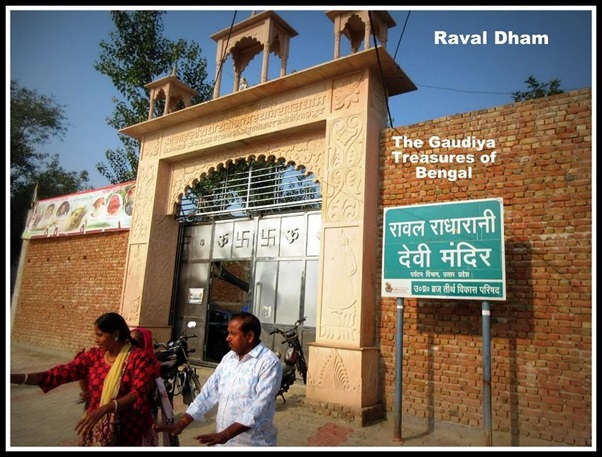
Raval Dham, historically known as Mukharvali, is a tranquil village about 5 miles southeast of Mathura, situated near the sacred banks of the Yamuna River. It lies within Ravalavana, one of the twelve upavanas (sub-forests) of Vrindavan Dhama.
This is the appearance of Srimati Radharani, the eternal consort of Lord Krishna and the topmost object of devotion for Gaudiya Vaishnavas.
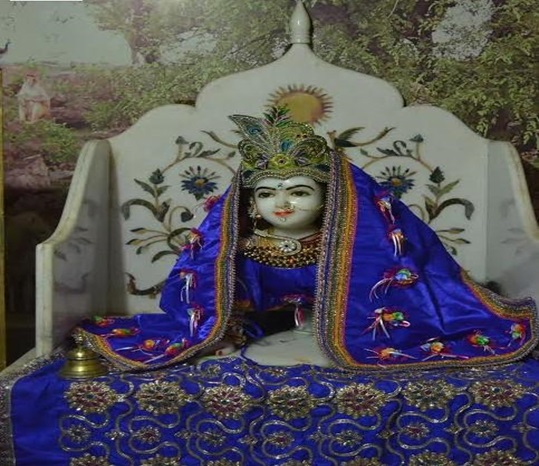
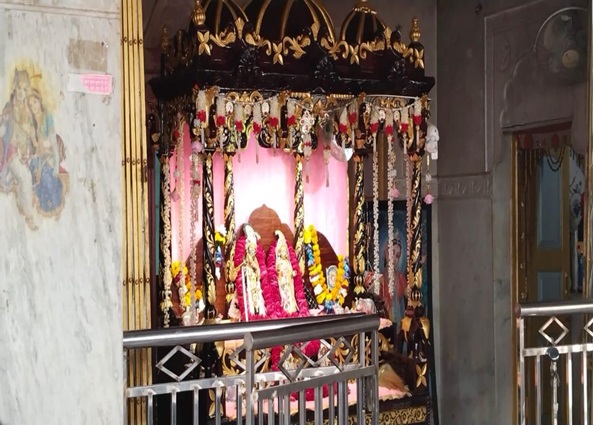
Raval is located along the Vraja Mandala Parikrama route and is home to the Larily-Lala Mandira, where charming deities of Radha and Krishna are worshipped. The names “Larily” (sweet girl) and “Lala” (darling boy) reflect the divine forms of the deities here.
Objective2: To understand the divine appearance pastime of Srimati Radharani at Raval.
Vrishabhanu Maharaja and Queen Kirtida, noble rulers of Vraja and close friends of Nanda and Yashoda, were childless and longed for a daughter.
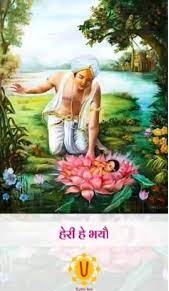
After relocating near the Yamuna River in Raval, Vrishabhanu went for a noon bath and witnessed a miraculous golden lotus floating on the river, radiating light like millions of suns.
Upon the lotus lay a divine baby girl—Srimati Radharani. At that moment, Lord Brahma appeared, identifying the child as the original Goddess of Fortune, the consort of Lord Vishnu, now manifesting as Radharani.
Vrishabhanu gratefully brought the baby home. Queen Kirtida was overwhelmed with bliss, and the village celebrated with festivals, music, and gifts to brahmanas.
Objective3: To describe the miraculous events surrounding Radharani’s birth.
Although extraordinarily beautiful, the divine child did not open Her eyes or speak, leaving her parents concerned.
At that time, Narada Muni arrived and, recognizing Her supreme identity, offered full obeisances and circumambulated Her in awe.
He assured Vrishabhanu and Kirtida of Her divine nature and inspired them to host a celebration so the Vrajavasis could have Her darshana.
Objective4: To highlight the first meeting of Srimati Radharani and Lord Krishna.
During the festival, Nanda Maharaja and Yashoda visited with baby Krishna and Balarama.
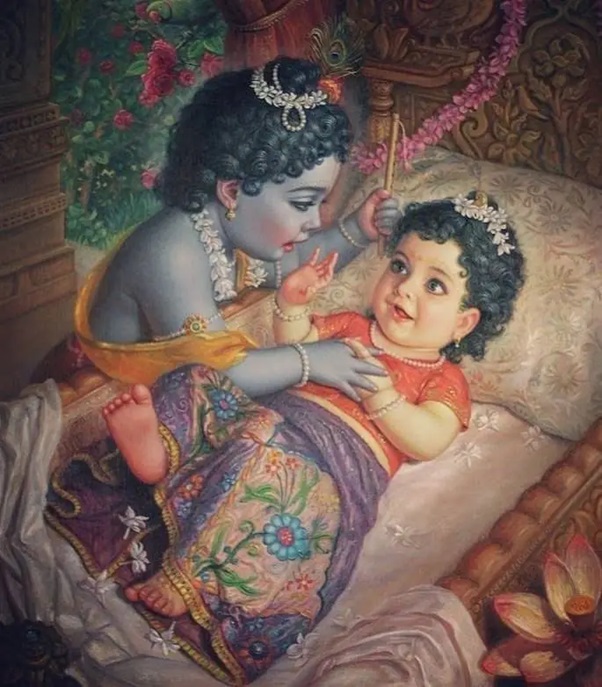
Yashoda expressed concern to Kirtida about the girl’s unopened eyes. As baby Krishna crawled to Her cradle and peered in, Radharani opened Her eyes for the very first time—only to see Her eternal beloved, Shyamsundar.
Her eyes overflowed with tears of love, and She let out a joyful sound, indicating that She could both see and speak. Everyone present understood Her divine nature. This marked the first meeting of Radha and Krishna in this lila
Objective5: To highlight the miraculous presence of a rootless Karil (Ker fruit) tree.
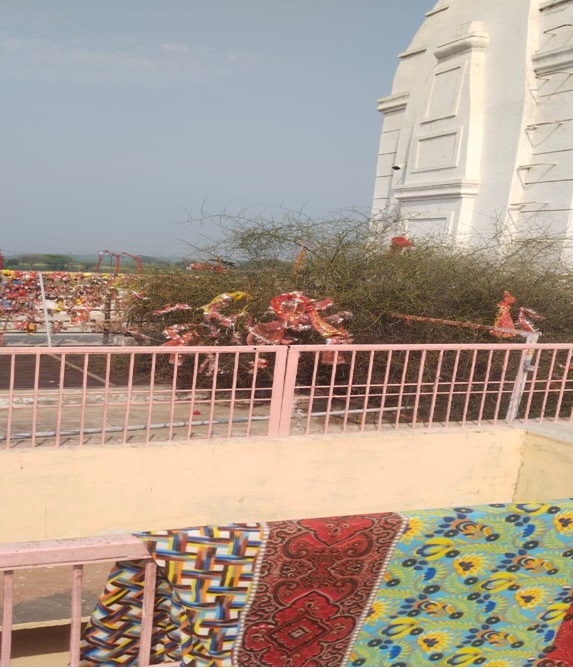
In the sacred village of Raval Dham, birthplace of Shrimati Radharani, lies a divine wonder that continues to amaze devotees and visitors alike – the rootless Karil (Ker fruit) tree.
Unlike ordinary trees that draw life from the soil through their roots, this unique Karil tree stands without roots, yet remains lush and alive. For generations, saints and villagers have regarded it as a symbol of divine presence and eternal energy.
Local tradition says that this miraculous tree thrives only because of the spiritual aura of Raval Dham, sanctified by the eternal pastimes of Radha-Krishna. Its existence defies natural law, serving as a reminder that in places touched by the divine, even nature bends to the will of the Supreme.
For devotees, the tree is not just a botanical marvel – it is a living testimony of faith. Standing before it, one feels the blessings of Shri Radha Rani, who continues to shower grace upon all who come with devotion.
Pilgrims visiting Raval Dham often pause in reverence at the Karil tree, experiencing it as a sacred sign that the divine is ever-present, beyond logic and science.
Objective6: To recognize the ongoing spiritual significance of Raval Dham in Vraja.
Though later Barsana became the primary residence of Vrishabhanu Maharaja and gained prominence, Raval remains deeply sacred.
Devotees believe the Radha-Krishna deities here have been worshipped since the time of Vajranabh, Krishna’s great-grandson—over 5000 years ago.
Raval is still a cherished pilgrimage destination, particularly for those performing Vraja Mandala Parikrama.
Objective7: To know the connection of Sri Chaitanya Mahaprabhu with Raval Dham.
During His Vraja Parikrama, Sri Chaitanya Mahaprabhu visited Raval Dham, as recorded in the Bhakti-ratnakara.
His divine mood touched the hearts of all. People exclaimed:
“This is no ordinary sannyasi—He is Krishna Himself!”
Mahaprabhu was deeply moved by the sanctity of Raval, glorifying the appearance of Srimati Radharani and inspiring bhakti in the hearts of countless pilgrims.
Objective8: To appreciate scriptural glorifications of Raval Dham from Vaishnava texts.
Vraja-vilasa-stava states:
“May I be filled with love for Ravala in Vṛṣabhāṇupura. The precious gem, Śrī Rādhā, appeared there in the mine of Kīrtidā’s womb, which is praised by the demigods, ṛiṣhis, and human beings.”
Rādhā-rasa-sudhā-nidhi exclaims:
“So powerful is the glancing of Her eyes that Krishna’s flute slips, His crown shifts, and He swoons in ecstasy. Alas! Will I ever serve such a divine person as Radharani?”
These verses show the unparalleled position of Raval Dham as the divine birthplace of the embodiment of Bhakti.
