
Objectives :
Objective1: To understand the location and spiritual significance of the Dauji Maharaj Temple
Objective1: To understand the location and spiritual significance of the Dauji Maharaj Temple
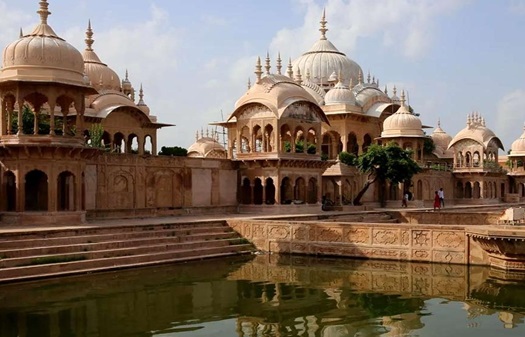
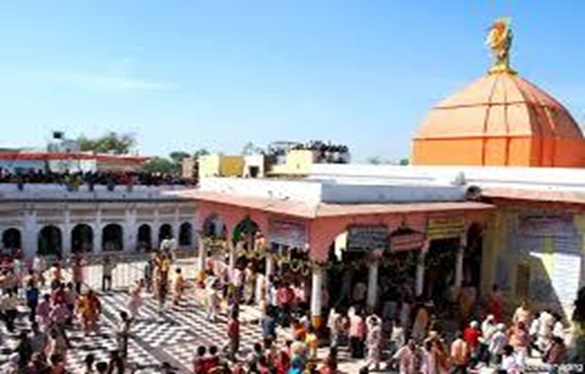
In the holy village of Baldeo, which was earlier called Vidrumavan, there is a beautiful and famous temple in Vraja Mandala. It is the shrine of Śrī Dauji Maharaj, the elder brother of Śrī Krishna. This temple is at the southernmost point of the Vraja Mandala Parikrama path. Devotees honor it as a sacred place where Lord Balarama’s divine presence still blesses everyone.
Objective2: To learn about the deity of Lord Balarama at Dauji Temple—His majestic form, historical rediscovery, and the sacred site of Kṣīrasāgara-kuṇḍa.
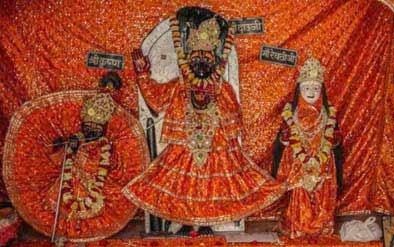
The temple houses the largest and most famous deity of Lord Balarama in all of Vraja, standing nearly seven feet tall, radiating strength, compassion, and divine majesty. In His left hand, He holds a cup of varuni-rasa, symbolizing His playful and transcendental nature. To His side, though partially hidden from view, stands Revati Devi, His eternal consort, visible only from one angle of the altar doorway.
This deity was re-established by Vajranabha, the great-grandson of Krishna, as the presiding deity of the eastern petal of the lotus-like Vraja. Some traditions also associate Him with the southern petal, though that position is often attributed to Lord Varaha at Saukari-Vateshwara.
During the invasions of the Greco-Bactrians, Sakas, and Kushans around 150 BCE, many sacred deities of Vraja were hidden underground to protect them. The deity of Dauji remained concealed for centuries and was not yet rediscovered during the time of Lord Chaitanya or the Six Goswamis.
It was around 1546 CE that the Gaudiya Vaishnava saint Śrī Narāyaṇa Bhaṭṭa Gosvāmī, who had come to Vraja at the age of fourteen, was divinely guided to rediscover the deity. Deeply devoted to Śrīmatī Rādhārāṇī, he also had a special attraction to Lord Balarama, and spent his life in seva-pūjā of Dauji Maharaj. His descendants continue to serve as priests in the Śrījī Temple of Varsānā.
During the re-installation ceremony, the local residents offered milk from a hundred thousand cows into the sacred pit where the deity was found. This site became known as Kṣīrasāgara-kuṇḍa, the “Ocean of Milk,” and is also called Sankarṣaṇa-kuṇḍa, another name of Lord Balarama.
Objective3: To appreciate the sacred surroundings, divine pastimes, and vibrant festivals of Dauji Temple that reflect Lord Balarama’s protective and playful presence
The temple is located to the east of Triveni-kupa, surrounded by thick thorny hīṅsa bushes, which give it a quiet and mysterious feeling. The area still carries the memory of Lord Dauji’s pastimes, especially the time when He showed His original divine form to the cowherd boys while they were herding cows.
Just outside the temple is the peaceful Kṣīrasāgara-kuṇḍa. Devotees come here to bathe, pray, and feel protected by Dauji’s loving grace.
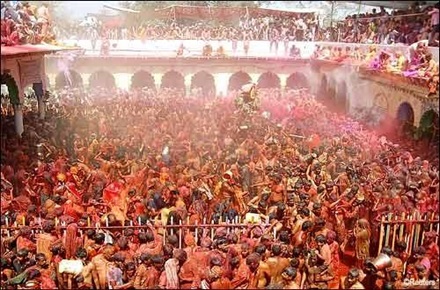
One of the happiest festivals at this temple is Huranga, celebrated right after Holi. In this playful event, women chase men with sticks in a joyful way, remembering the fun pastimes of Radha and Krishna, all watched over by Dauji’s kind presence.
The temple also honors Swami Haridas, a saint whose singing was so pure that even animals came to listen. His famous disciple, Tansen, once brought Emperor Akbar in disguise to hear this divine music. But Swami Haridas stayed focused only on serving Dauji, not caring about fame or praise from the world.
