 Shila Devi Temple The Divine Protector
of Amber Fort’s Royal Legacy
Objectives:
Objective 1: To understand the historical and cultural importance of the Shila Devi Temple.
Objective 2: To know about the architecture and location of the Shila Devi Temple.
Objective 3: To understand the religious and cultural importance of the Shila Devi Temple.
Objective 1: To understand the historical and cultural importance of the Shila Devi Temple.
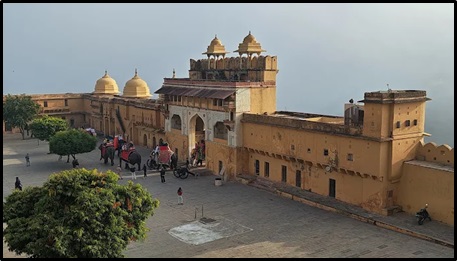
Shila Devi Temple is a historic Hindu temple located inside the Amer Fort in Jaipur, Rajasthan. The temple is dedicated to Goddess Durga in her form as Shila Devi and is one of the prominent Shakti shrines in the region. It was established in 1604 CE by Raja Man Singh I, the general of Mughal Emperor Akbar, who brought the deity from Jessore (present-day Bangladesh) after a military expedition
As per legend, the Goddess appeared in the Maharaja’s dream and instructed him to retrieve her statue, which was floating in the sea near Jessore (now in Bangladesh), and place it in a temple.
Raja Man Singh found the deity from the water in the form of a Shila (Slab), and when it was cleaned and washed, the current deity appeared, hence the name Shila Mata. Interestingly, the temple took ten years to build.
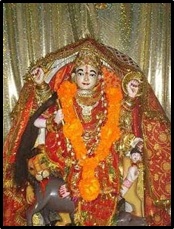
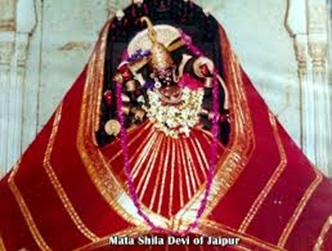
The deity in Shila Devi Temple is of Goddess Kali. Maa Kali is an incarnation of “The Great Divine Mother of Universe” called “Shakti”. The deity of Maa Kali in Shila Devi Temple is made of Stone Slab which is called “Shila” in Hindi. The neck of the deity is tilted one side.
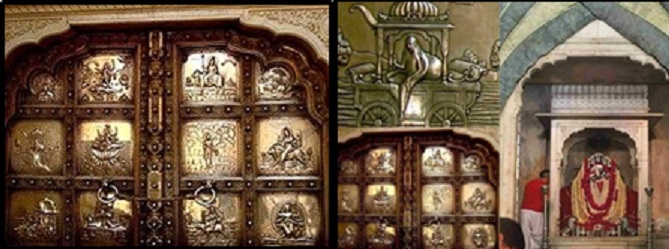
Shila Devi Temple at Amer Fort, with depictions of the Mahavidyas and Navadurgas.
Objective 2: To know about the architecture and location of the Shila Devi Temple.
Architecture and Location
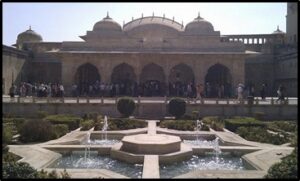
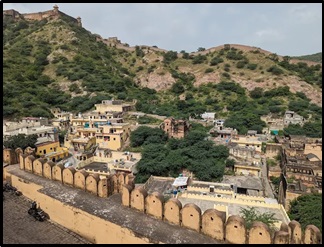
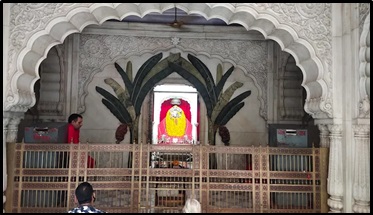
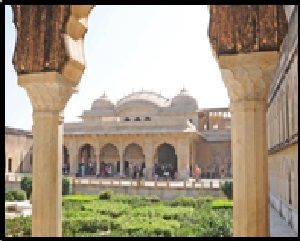
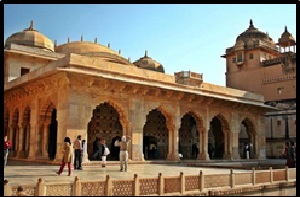
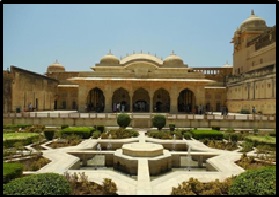
The temple is situated within the premises of the historic Amer Fort and features typical Rajput architecture with intricately carved pillars, a sanctum sanctorum, and a deity made from a black stone slab.
The entrance to the temple is noted by a gorgeous silver door, which is embellished with delicate carvings illustrating different mythological scenes and deities. This door, crafted with extraordinary skill, is a testament to the artistry and craftsmanship of the artisans of that era. The holy place itself is integrated in the standard Rajasthani design, with a sanctum sanctorum (garbhagriha) housing the deity of Shila Devi. The wall surfaces and columns of the holy place are adorned with intricate motifs and patterns, showing the imaginative luster of the period.
The deity is a depiction of the goddess in her fierce form, holding different weapons in her numerous hands. The eyes of the deity are particularly captivating, showing a feeling of divine power and defense. Enthusiasts think that the goddess’s stare is both a resource of blessing and a deterrent to evil pressures.
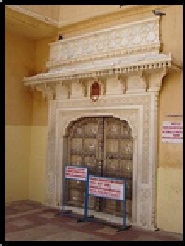 Gateway of Shila Devi Temple
Worship and Festivals
Cultural Significance:
The temple holds immense religious and cultural value for devotees across Rajasthan and Bengal. It is also a major tourist attraction as part of the Amer Fort complex, which is a UNESCO World Heritage Site. Devotees believe that prayers at this temple fulfill wishes, especially during the ritual known as “Sheesh Dikhai”, where the goddess is revealed through a special mirror.
Objective 3: To understand the religious and cultural importance of the Shila Devi Temple.
Importance of the Shila Devi Temple:
This temple’s main gate is made of silver. A gate door covering all of the numerous characters of “Maa Durga” is present at the entry.
Nav Durga, Brahmacharini, Chandraghanta, Kushmanda, Skandamata, Katyani, Kalratri, Maha Gauri, and Siddhidatri are all depicted on the silver gate. Kali, Tara, Chhinnamasta, Tripura Bhairavi, Dhumavati, Baglamukhi, Sri Matangi, Shodashi, Bhuvneshwari, and Kamala Devi are ten famous deity forms painted in modest size on the main gate. A painted giant statue of God Ganesha stands at the temple’s main entry gate.
The influence of the Shila Devi Holy place is also obvious in the method the goddess is revered in the day-to-day life of the people of Jaipur. For several households, Shila Devi is more than just a holy place divine being; she is a personal guardian and protector, whose blessings are invoked throughout vital life occasions such as wedding celebrations, childbirth, and housewarming ceremonies. Shila Devi’s photo is typically found in homes and stores, where she is worshipped daily with prayers and offerings.
The long-lasting tradition of Shila Devi is a testament to the deep spiritual connection that the people of Jaipur and Rajasthan have with their traditions and beliefs. The holy place, with its abundant history and vivid cultural importance, remains to be a sign of faith and dedication, drawing pilgrims and tourists alike to its spiritual districts.
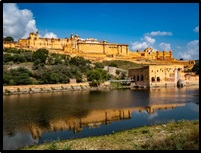
Image Gallery of Shila Devi Temple