Objectives :
Objective 1: To learn about the historical and religious importance of Radha Vinodha Mandir.
Objective 2: To know about the Lokanatha Goswami Birth History.
Objective 3: To learn about the Lokanatha Goswami’s decision to join spiritual path.
Objective 4: To know Lokanatha Goswami’s search for Mahaprabhu.
Objective 5: To understand the history of Lord Radha Vinodha Deity.
Objective 6: To learn about Lokanatha Swami’s Samadhi.
Objective 7: To understand how deity was moved to Jaipur from Rajasthan.
Objective 1: To learn about the historical and religious importance of Radha Vinodha Mandir.
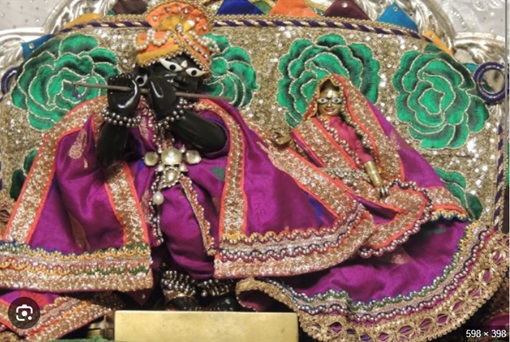
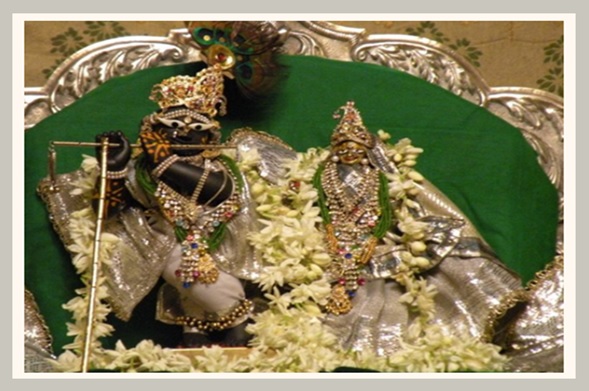
The Radha Vinodha Temple, also known as Vinodilal Temple, is a revered Gaudiya Vaishnavism shrine nestled in the heart of Jaipur, Rajasthan. Located at 295, Tripolia Bazar, Modikhana, Jaipur, Rajasthan 302002, India, this modest yet spiritually significant temple is dedicated to Radha and Krishna, specifically the deity known as Vinodilal. It hosts the Radha Krishna deities personally served by Srila Lokanatha Goswami. The temple has deities served by the most exalted devotees, Srila Lokanatha Goswami, Srila Vishvanatha Chakravarti Thakura and Baladeva Vidyabhushana.
THE RADHA-VINODHA TEMPLE
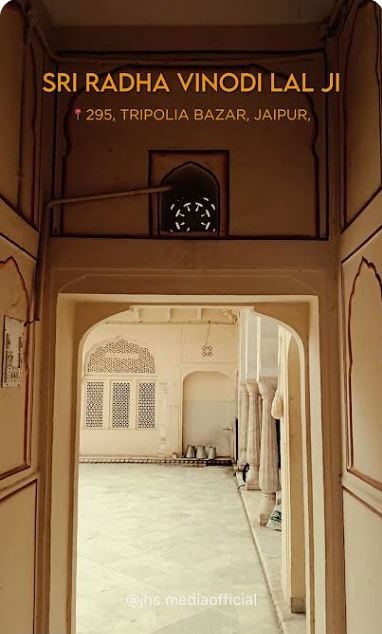
The Radha Vinodha Temple is a small, unassuming structure situated on the first floor of a building on Tripolia Bazar Road. The entrance is discreet, marked by a flight of stairs adjacent to a hose shop at number 295
Despite its modest appearance, the temple is a beacon of spiritual devotion, attracting devotees and pilgrims seeking a serene environment for worship and reflection.
The deity of Vinodilal is approximately 30 cm tall, embodying the divine presence of Lord Krishna. The temple’s rituals include multiple aartis throughout the day: 5:30 AM, 7:00 AM, 11:00 AM, 6:00 PM, and 8:30 PM. Additionally, devotees can have darshan (viewing) of the deity from 4:30 PM to 8:30 PM .
Nearby temples include Radha Damodar Temple, Govind Devji Temple, Radha Gopinath Temple
The temple is located approximately 10 minutes’ walk from the Radha Damodar Temple. From Tripolia Bazar Road, turn left and walk about 50 steps; the temple entrance is a flight of stairs on the left
Objective 2: To know about the Lokanatha Goswami Birth History.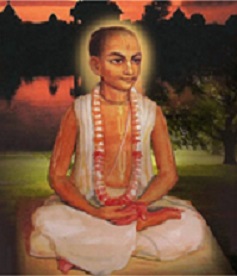
Lokanatha Goswami was one of the most intimate followers of Lord Chaitanya. He took active part in Navadvipa pastimes of Mahaprabhu.
His father’s name was Padmanabha, his mother’s name was Sitadevi, and his only younger brother was Pragalbha. He was a resident of a village named Talakhadi in the district of Yashohara in Bengal. He established a temple named Gokulananda. Shrila Narottama Das Thakura was his only disciple.
A pranam mantra for Lokanatha Goswami has been written by Narottama Dasa Thakura:
srimad-radha-vinodaika seva-sampat-samanvitam
padmanabhatmajam shrimal lokanatha prabhum bhaje
“I worship the lotus feet of Srila Lokanatha Prabhu, the son of Shri Padmanabha. He is a storehouse of single minded service to the lotus feet of Shri Shri Radha Vinoda”.
Objective 3: To learn about the Lokanatha Goswami’s decision to join spiritual path.
From his early childhood, Sri Lokanatha was indifferent to family life.
One day, giving up his mother and father, and leaving his home behind forever, he went to Mayapur in Navadvipa to take darshan of the holy feet of Sri Gauranga. Sri Gauranga Deva embraced Lokanatha Goswami with great affection, and soon he ordered Lokanatha Goswami to quickly go to Vrindavana.
But Lokanatha Goswami could understand by certain symptoms that Sri Chaitanya Mahaprabhu would leave home and take sannyasa within two or three days. Therefore, he was in great anxiety. Sri Chaitanya Mahaprabhu could understand the mind and heart of Lokanatha Goswami and consoled him, saying, “We shall be reunited in Vrindavana”.
Lord Chaitanya instructed Lokanatha and Bhugarbha Goswami, his two close associates, to go to Vrindavan to discover the holy places of the area. Both were reluctant as they didn’t want to leave the association of the Lord. Lord Chaitanya consoled and convinced them to go to Vrindavan. So Lokanatha and Bhugarbha came to Vrindavan from Navadvipa in Bengal.
Objective 4: To know Lokanatha Goswami’s search for Mahaprabhu.
After this, Lokanatha never returned to home life. Rather, afflicted with deep separation from Shri Chaitanya Mahaprabhu, he began wandering from one holy place of pilgrimage to the next. Gradually, after visiting many holy places, he came to Vrindavana Dham.
In the meantime, Shri Chaitanya Mahaprabhu took sannyasa and went to Jagannatha Puri. After staying in Puri for some time, the Lord had a mind to deliver the fallen souls, and so began his tour of South India. Hearing of the Lord’s tour of South India, Shri Lokanatha also went to South India, in search of the Lord.
pilgrimage in South India and again returning to Jagannatha Puri for some time, finally came to Vrindavana. Hearing of this, Lokanatha Goswami quickly went to Vrindavan. Meanwhile, Chaitanya Mahaprabhu had already left for Prayaga-dham. Arriving in Vrindavana and not seeing Mahaprabhu, Lokanatha was heartbroken. He resolved to set everything right by starting out the very next morning for Prayaga, to meet the Lord. That night the Lord came to him in a dream and consoled him, saying, “O Lokanatha, stay in Vrindvana. I have not broken my vow. I have already come to Vrindavana and live there in another form. In this way you shall always maintain my connection”.
A few days later, Shrila Lokanatha Goswami met the most dear followers of Shri Chaitanya Mahaprabhu – Shri Rupa, Shri Sanatana, Shri Gopala Bhatta, Shri Bhugarbha and others. The exchange of divine love between them was wonderful to behold! They were all of one mind, one heart. In the midst of the Goswamis, Shri Lokanatha was the oldest. He was fully absorbed in Krishna prema.
Objective 5: To understand the history of Lord Radha Vinodha Deity.
Shri Lokanatha Goswami wandered throughout all twelve forests of Vrindavan in great ecstasy. In one of the forests there is a village named Umarao. There he stayed for some time on the banks of Kishori-kunda. He had a great desire to establish the worship of the deity and render service to Krishna in that way. Understanding Lokanath’s aspiration to serve, Krishna Himself appeared before him and offered Lokanatha a vigraha, saying, “Worship this Deity here”. This deity’s name is Radha-vinoda. After giving him this beautiful deity, the Lord suddenly disappeared. At this, Lokanatha Goswami became stricken with anxiety.
Seeing him absorbed in worry, Radha-vinoda smiled and said, “Why have you brought me here? I have come here personally just to satisfy your purpose. What do you want from me? I live in the forest here, near the village of Umarao. By this Kishori kunda you see before you, I make my residence. You must now give me something to eat. Quickly”.
Lokanatha Goswami’s joy knew no bounds. He floated in the waves of prema. After this he prepared an offering for the Lord to eat. After offering fine rice on a fresh banana leaf to the deity he experienced great ecstasy. He was stunned by drinking in the nectarine beauty of the Lord.
After this he offered a bed of flowers and made the Lord rest. Sri Lokanatha Goswami made this place his home.
The local villagers and cowherd men wanted to construct a bhajan kutir for him, but he refused to accept it. In order to protect the deity, he prepared a cloth bag which he would keep around his neck at all times. Sri Radha-vinoda became like a jeweled necklace around the neck of Lokanatha Goswami. The cloth bag was his temple. This was Lokanatha Goswami’s practice until the day he disappeared from this earth, and is an example of the strict vairagya he maintained. With great care he always stayed in the association of the Goswamis of Vrindavana.
Objective 6: To learn about Lokanatha Swami’s Samadhi.
Srila Lokanatha Goswami, in his ripe old age, while performing his bhajan in Khadiravana in Khayara Grama, passed away and entered into the eternal unmanifest pastimes of the Lord. At that place is a kunda called Shri Yugala Kunda. On the banks of that kunda, Shrila Lokanatha Goswami entered into samadhi. After Lokanatha’s disappearance the other Vaishnavas continued the service of Radha Vinoda.
Objective 7: To understand how deity was moved to Jaipur From Rajasthan.
In 1650’s Srila Vishwanatha Chakravarti Thakura, the then leader of Gaudiya Sampradaya, assumed the responsibility of serving the deities. He engaged his disciples in building a proper temple for Radha Vinoda. He also established his Radha Gokulananda deities in that temple. The temple is still in Vrindavan.
During 1670 AD, due to Aurangzeb’s attack on Vrindavan, the important Gaudiya deities served by Vaishnava Acharyas (Radha Govindadeva, Radha Vinoda, Radha Damodara, Radha Vrindavanchandra, Radha Gopinatha and Radha Madhava) were moved to Rajasthan. Vishwanatha with help of his disciple Baladeva Vidyabhushana and Rajput king of Jaipur transported the deities to safe places.
In Jaipur, the Vaishnava king Sawai Jai Singh built large temples for the deities.