
Objectives :
Objective 1: To Know primarily about Kalki and Sun Temple
Objective 2: To understand the basic features of Kalki Temple
Objective 3. To know about the Architectural features of Kalki Temple
Objective 4. To know about the Devdutt, the white horse of Kalki
Objective 5. To understand about the historical significance of the Kalki Temple
Objective 6. To know about the other deities present in the temple
Objective 7. To know why is this Sun Temple significant
Objective 8. To know why so much importance has been given to the Sun Temple
Objective 9. To understand the main features of the Sun Temple
Objective 10.To know about the Architectural features of the Sun Temple
Objective 1: To Know primarily about Kalki and Sun Temple
The Kalki Temple and the Sun Temple (Surya Mandir) are two distinct temples located in Jaipur, Rajasthan. The Kalki Temple is dedicated to Lord Kalki, an avatar of Krishna, and is believed to be the only temple in the world specifically for him. The Sun Temple, also known as Surya Mandir, is dedicated to the Sun God and is situated on a hill on the eastern side of the city.
Objective 2: To understand the main features of Kali Temple
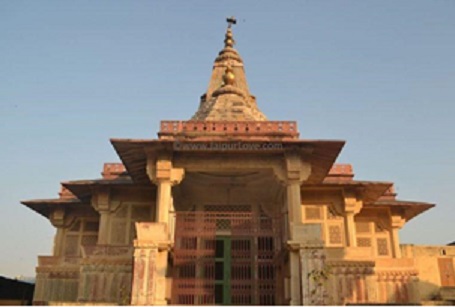 Kalki Temple
Location: Opposite the City Palace’s eastern entrance, near Sireh Deori Bazar.
Deities: Primarily Lord Kalki and his consort Lakshmi.
Architectural Style:Built in South Indian style with stone blocks and a shikhar (tower).
Historical Significance: Constructed by Maharaja Sawai Jai Singh II, the founder of Jaipur, around 1739.
Unique Feature: Believed to be the only temple dedicated to Lord Kalki in the world.
As per Hindu scriptures, Lord Kalki is an avatar that will appear at the end of kali yuga will save the world and usher us all into the satya yuga.
Kalki Temple is located close to the world-famous Hawa Mahal in Sirehdyodi Bazaar, Jaipur.
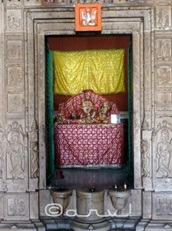 Sanctum, Kalki Temple, Jaipur
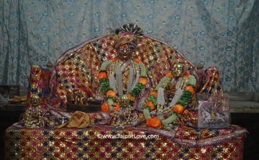 The deity of Kalki Bhagwan
Objective 3: To know about the Architectural features of Kalki Temple
From an architectural perspective, the Shikhar style is in line with the temples of its period. Marble and red sandstone have been used in the construction of the temple. The Mandapas of the temple are in three different styles of architecture.
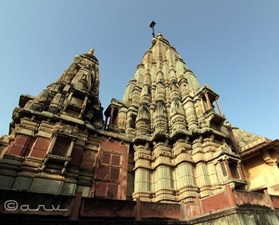 Twin Shikhar of Kalki Mandir Jaipur
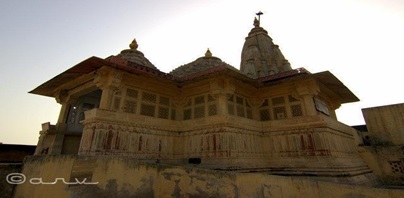 Side view of Kalki Temple in Jaipur
Objective 4: To know about the Devdutt, the white horse of Kalki
The temple has a separate unit that contains a beautifully carved horse made of white marble. People claim there is an injury mark on one of the legs of the horse. Upon self-healing of this injury mark, Kalki Avatar will reincarnate on earth to fight evil forces. The name of this white horse of Kalki is referred to as Devdutt. Many sources claim Kalki Bhagwan will reincarnate riding on a white horse with a blazing sword. This is how people form an image of Kalki Avatar.
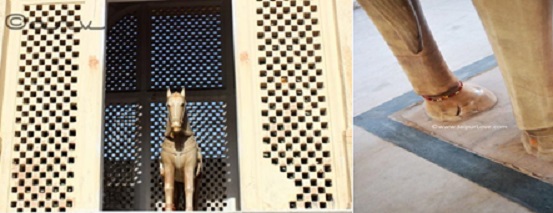 The White Horse of
Lord Kalki at Kalki Temple in Jaipur
Objective 5: To understand about the historical significance of the Kalki Temple
Sawai Jai Singh ll could be the first ever ruler in the world who with his keen knowledge about the Vedas and imagination built the temple of God who is yet to incarnate.
Poet Shree Krishna Bhatt ‘Kalanidhi’ who was a nobleman in Jai Singh’s court quotes in his book that Jai Singh ll built the temple of Lord Kalki in memory of his grandson Shree Kalik ji who passed away in his childhood. Though there are other temples of Kalki God but this temple is the only one solely dedicated to Lord Kalki.
Sawai jai Singh ji ll, the founder of Jaipur was an avid scholar of vedic texts. He built the temple of Lord Kalki just opposite to main entrance of City Palace but behind some noble mansions.
The Singhdwar or entry of Temple is some steps above the ground with big stone blocks. After the Singhdwar is the Mandapa or sitting hall for devotees covered with huge Shikhar or dome. And then Lord Kalki is seated in Garbhgraha with Goddess Lakshmi.
Objective 6: To know about the other deities present in the temple
On the marble door frames of Garbhgraha, 9 incarnations of Lord Vishnu are engraved. On the right side is Lord Brahma and on the left side is Shiv & Parvati seated on Nandi. On the ground made of marble the Lotus flower and Shankha are engraved.
Sun Temple (Surya Mandir) Jaipur:
Objective 7: To know why is this Sun Temple significant
Let’s understand the divine connection of Surya with Krishna.
In Bhagavad-gītā 4.1, Krishna tells Arjuna: “I instructed this imperishable science of yoga to the sun-god, Vivasvān, and Vivasvān instructed it to Manu…”
The Bhagavad-gītā was first spoken millions of years ago, and Surya Bhagavan was the first one to receive it. The name Surya refers to the position and the actual person at that time was called Vivasvan. Krishna taught the Gītā to Vivasvan, and he passed it down through generations. But after some time, that knowledge got lost. So Krishna spoke it again to Arjuna — making that same ancient wisdom available and clear once more.
Gayatri Mantra and Surya Mandala
The Gāyatrī mantra—”Om bhūr bhuvaḥ svaḥ tat savitur vareṇyaṁ…”—glorifies Savitur, which refers to Surya Bhagavān. The “bhūr bhuvaḥ svaḥ…”—all the three worlds and 14 planetary systems—are all illuminated by one Surya only.
Yet, the ultimate object of worship within the Surya Mandala is none other than Lord Narayana.
From SB 5.7.13, Śrīla Prabhupāda writes:
“The predominating Deity within the sun is Hiraṇmaya, Lord Nārāyaṇa. He is worshiped by the Gāyatrī mantra: om bhūr bhuvaḥ svaḥ tat savitur vareṇyaṁ bhargo devasya dhīmahi…Even within the Surya Mandala, the true worshippable Lord is Nārāyaṇa.”
Further, Bharata Mahārāja himself declares that Surya Bhagavān is the embodiment and representation of the entire Vedas. His form is not only light-giving but scripture-giving, making him the cosmic carrier of divine knowledge.
This shows how even Vedic solar worship leads to Krishna as the central object.
Objective 8: To understand the main features of the Sun Temple
Location: Sun Temple of Jaipur is situated on the Eastern hill range of the city, popularly known as Galta hills. It is also called Jaipur Surya Mandir by the locals. Located en-route Jaipur Monkey Temple or Galtaji Temple, it is one of the important heritage temples of Jaipur.
Deities: Dedicated to the Sun God.
Architectural Style: Built using stone masonry and lime, with a gate reminiscent of a noble mansion and fortress-like outer walls.
Historical Significance: Constructed by Maharaja Sawai Jai Singh II, like the Kalki Temple.
Unique Feature: Offers a panoramic view of the city, as it is situated on a hilltop.
The temple faces north while the entry for devotees is from the east side. The Sun Temple is open for devotees from Sunrise to Sunset. The Sun Temple has been managed by the priest family ever since it was built.
Surya Mandir Jaipur Timings
5:00 am – 12:00 pm
4:00 pm – 7:00 pm
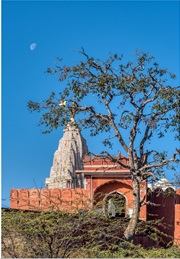
Objective 9: To know why so much importance has been given to the Sun Temple
Maharaja Sawai Jai Singh II was instrumental in the building of Surya Temple in Jaipur.
The Jaipur royalty considers themselves descendants of Lord Ram through his son – Kusha. As Lord Ram was a descendant of Surya or Sun, his lineage was called Suryavanshi.
Before Indian independence, as a ritual, a procession from the Sun temple would pass through the city on a specified date. The custom still continues but it has lost its charm and glory. It was an important event attended by the King and drew huge crowds of the public as well. This explains the importance of the Surya temple for the Jaipur royalty.
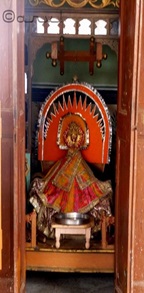 Picture of the effigy used in the Rath Yatrasfor centuries, at Sun Temple, Jaipur
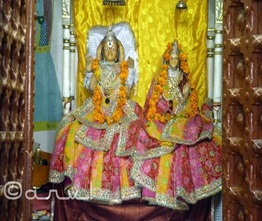 Deity in Sun Temple
Objective 10: To know about the Architectural features of the Sun Temple
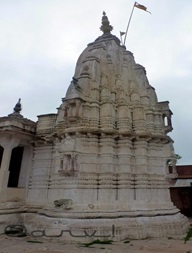
On closer inspection, one finds that this temple has a similar architectural style as the Kalki temple. Although on a scale, the Sun temple is much smaller. Both these temples were made under the order and guidance of Maharaja Sawai Jai Singh II – the founder of Jaipur city.
