
Objectives:
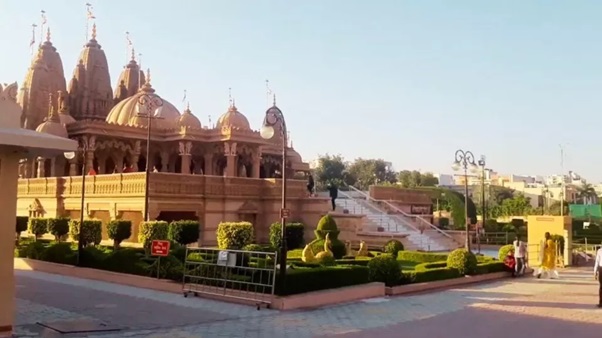
The name Akshardham means “the abode of the eternal” or “the divine home of God”. It is derived from two Sanskrit words: akshar meaning “imperishable” and dham meaning “home” or “abode or seat of God”. The temple is a tribute to Lord Narayana or Lord Vishnu, who is believed to reside in Akshardham along with his divine consort Lakshmi.
Objective 2: To explore the visionaries responsible for the conception and inauguration of the Akshardham Temple.
Akshardham Temple Jaipur was built by the Bochasanwasi Shri Akshar Purushottam Swaminarayan Sanstha (BAPS), a socio-spiritual organization that follows the teachings of Swaminarayan, a Hindu reformer and saint who lived in the 18th and 19th centuries. Swaminarayan established a new sect of Hinduism that emphasizes devotion, service, morality, and non-violence.
The temple was inaugurated in 2012 by Pramukh Swami Maharaj, the fifth spiritual successor of Swaminarayan and the leader of BAPS at that time. The temple is one of the nine Akshardham temples built by BAPS in different parts of India. Each temple is dedicated to a different aspect or form of Lord Vishnu.
Objective 3: To explore the magnificent architectural features & intricate symbolism embedded within the dome and kalash of the Akshardham Temple in Jaipur.
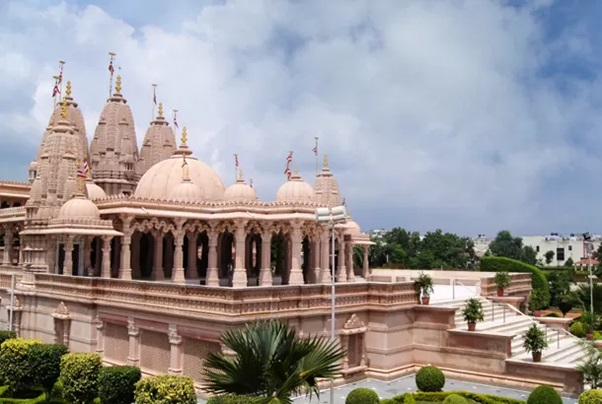
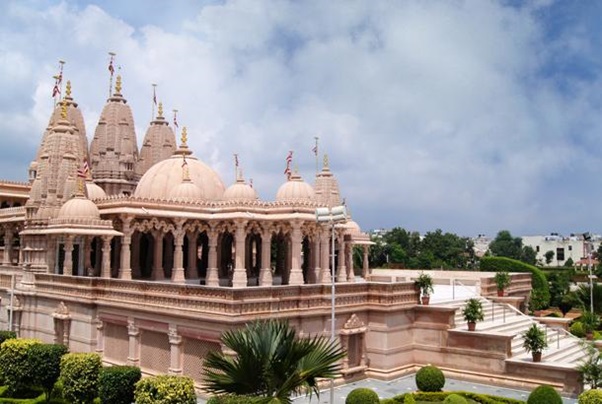
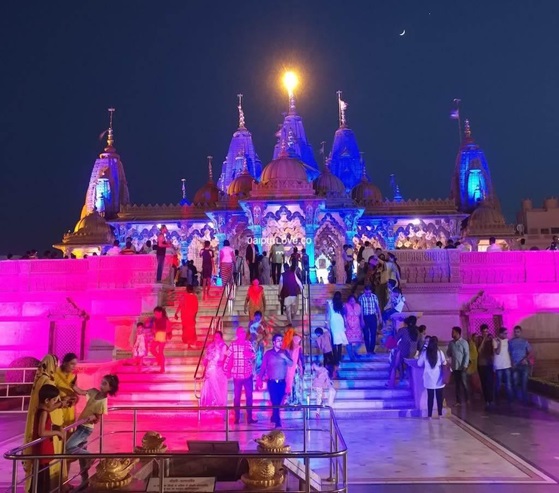
Akshardham Temple Jaipur is a marvel of Indian architecture that showcases the richness and diversity of Hindu culture and heritage. The temple is built with pink sandstone and white marble that blend harmoniously with the color scheme of Jaipur. The temple covers an area of over 30 acres and has a height of 141 feet.
The temple has a majestic dome that rises above the main shrine. The dome is adorned with intricate carvings and sculptures depicting various scenes from Hindu mythology and scriptures. The dome also has a kalash or a golden spire that symbolizes the peak of spirituality.
Objective 4: To describe the main deity enshrined in the temple highlighting their graceful poses, exquisite materials, and radiant divine attributes.
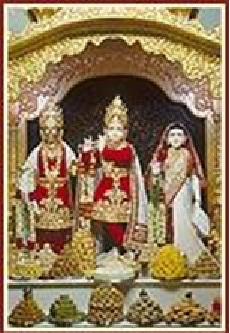
The main shrine houses a beautiful deity of Lord Narayana or Lord Vishnu made of gold and silver. The deity is seated on a lotus throne with his four arms holding a conch, a discus, a mace, and a lotus. The deity is surrounded by four smaller deities of his other forms: Vaasudeva, Pradyumna, Aniruddha, and Sankarshana.
The temple also has four other shrines dedicated to other deities associated with Lord Vishnu: Lakshmi-Narayana, Radha-Krishna, Sita-Rama, and Parvati-Shiva. Each shrine has an exquisite deity made of marble or metal that depicts the divine couple in their characteristic poses and attributes.
Objective 5: To explore the remarkable journey of Swaminarayan’s , additional interactive and educational features of the temple.
The temple also has a hall of values or sahajanand darshan that displays life-like robotic figures and dioramas that illustrate the life and teachings of Swaminarayan. The hall also has an audio-visual show that narrates the story of Swaminarayan’s journey from his birth to his enlightenment.
The temple also has a musical fountain or sat-chit-anand water show that presents a spectacular display of water, light, sound, and music that depicts the creation of the universe according to Hindu cosmology. The show also conveys the message of harmony between nature and humanity.
The temple also has a garden or neelkanth kalyan yatra that recreates the pilgrimage of Swaminarayan across India when he was 11 years old. The garden has statues and scenes that depict his encounters with various sages, saints, kings, and common people during his travels.
