
Objectives:
Objective 1: To identify the main deity of Dauj Temple.
Objective 2: To understand the transcendental position and role of Lord Balarama.
Objective 3: To recognize the key Sanskrit verses praising Lord Balarama.
Objective 5: To know about the major celebrations at Dauji Temple.
Objective 6: To understand the cultural and spiritual importance of Dauji Temple.
Temple Overview
Objective 1: To identify the main deity of Dauji Temple.
Name & Location
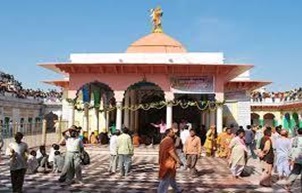
Shri Dauji Maharaj Mandir (Dauji or Dauji Baldev Temple) is located in Baldeo (Chhabirau), Mathura district, Uttar Pradesh.
Primary Deity
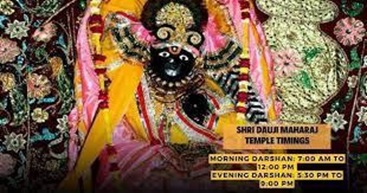
Lord Balarama—also known as Dauji, Baladeva, or Shri Balram—is worshipped here. He is the elder brother of Sri Krishna.
Objective 2: To understand the transcendental position and role of Lord Balarama.
Balarama’s Transcendental Position
First Expansion of Krishna:In Gaudiya theology, Lord Balarama is Sri Krishna’s first bodily expansion (Sankarshana), the original guru and spiritual master.
Protector and Enable: He grants spiritual strength (“bala”) essential for devotional service to Krishna and the spiritual master.
Servant of Sri Krishna: Exhibits the ideal of Dasya Rasa (service mood) – literally serving Krishna by carrying His paraphernalia and assisting in His pastimes.
Iconography & Pastimes
Appearance: Youthful, fair-complexioned, adorned in blue garments, forest flowers, top knot, musk-tilak, earrings, armlets, and earrings.
Divine Exploits: Displays strength through feats like killing Dhenukasura, Pralambasura, killing Romaharshana.
Spiritual Theology
Cosmic Role: In the “chatur-vyuha expnasions,” Lord Balarama forms the basis of Sankarshana and channels divine energy into the material and spiritual universes.
Adi-Guru: One must first gain the mercy of Lord Balarama through seva (service) to reach Sri Krishna.
Incarnations
Appeared as Lakshmana with Lord Rama and as Nityananda with Chaitanya.
Scriptural Reference:
Objective 3: To recognize the key Sanskrit verses praising Lord Balarama.
The prayer known as “Balarama Pranama” is a set of verses from the Brahma Purana Chapter 57, Verses 22 and 23. It is a glorification and prayer offered to Lord Balarama.
Verse 22:
namas te haladhaṛ-grāma, namas te muśalāyudha, namas te revatī-kānta, namas te bhakta-vatsala
Translation:
1. Obeisances to you, O holder of the plow.
2. Obeisances to you, O wielder of the mace.
3. Obeisances to you, O darling of Revati.
4. Obeisances to you, O kind benefactor of your devotees.
Verse 23:
namas te balināṁ śreṣṭha, namas te dharaṇī-dhara, pralambāre namas te ‘stu trāhi māṁ kṛṣṇa-pūrvaja
Translation:
1. Obeisances to you, O best of the strong.
2. Obeisances to you, O upholder of the earth.
3. Obeisances to you, O enemy of Pralamba.
4. Please protect me, O older brother of Krishna.
This prayer is often recited by devotees to seek the blessings of Lord Balarama, who is considered the first expansion of Lord Krishna. He is a source of spiritual strength and is prayed to for help in advancing on the path of devotion.
Historical & Archaeological Significance:
Objective 4: To understand the ancient origin of Lord Balarama’s deity at Dauji Temple and its divine protection during Aurangazeb’s reign.
The deity of Lord Balarama at Dauji Temple was originally installed by Krishna’s great-grandson Vajranabha over 5,000 years ago. The form shows Balarama in a graceful dancing posture, encircled by the coils of Sheshanaga.
Temple Lore:
Aurangzeb Legend
During the reign of Mughal emperor Aurangzeb, temples across Mathura and Vraj faced great danger. When the emperor, envious of the prosperity of the Dauji temple at Baldeo, sent his army to destroy it, an extraordinary incident took place. The soldiers had hardly advanced a short distance when the brave local tribes of Bhauras and Utais rose in defense of their beloved Lord. Fierce battles ensued, and countless soldiers were slain.
So fierce was the resistance that it took Aurangzeb’s army nine days to cover just two and a half kilometers. From this event, the famous saying “Nau din chale adhai kos” (nine days to cover two and a half kilometers) was born, symbolizing extreme delay caused by divine protection and local valor.
On hearing of the plight of his army, Aurangzeb abandoned his plans to harm the shrine. Instead, he issued a royal decree granting protection to the temple and even commissioned the construction of a Naqqarkhana (drum house) at its entrance. The stone inscription in the Naqqarkhana still bears testimony to this extraordinary turn of events.
Thus, through the courage of the devotees and the unseen protection of Lord Dauji, the temple not only survived but continued to flourish even in those turbulent times.
Major Celebrations:
Objective 5: To know about the major celebrations at Dauji Temple.
Huranga – Colourful Holi ritual unique to Dauji; linked to village traditions in Baldeo .
Baldev Chet Mela – Celebrated around Margashirsha Purnima (December), marking Balarama’s appearance; draws devotees from across Vraj.
Balarama Jayanti / Purnima – Grand abhishekam (kalasha snan) and Sankirtan is done on Shravana Purnima (typically August), celebrating His spiritual strength
Cultural & Spiritual Importance:
Objective 6: To understand the cultural and spiritual importance of Dauji Temple.
In Vraj Culture
Kuladevata “King of Vraj”: Typically worshipped by Vraj Brahmins and Gaur communities.
Guardian Deity: Venerated as protector of Vraj;
Bhakti Context
Path to Krishna: Balarama exemplifies dasya bhava—selfless service and dedication.
Spiritual Authority: As adi-guru, he personifies the necessity of pure surrender to the spiritual master.
His humility, strength, and dedication are central to Gaudiya Vaishnava devotional practice
Temple Layout & Setup
Entrances: Four gates—Singhchaur, Janani Deodhi, Goshala Gate, and Badvale.
Sanctum: Houses the primary black deity of Balarama (~7–8′) with Revati; pre-Kushan style and set within a defensive pavilion.
Balabhadra Kund (Kshirsagar): Sacred tank for ablutions behind the temple.
Timings & Access:
Darshan: Around 7 AM–12 PM; 3–4 PM; 5:30–9 PM.
Transport: Easily reached by cab, bus, or autorickshaw from Mathura (4 km);
