
Objectives:
Objective 1: To learn the location and spiritual importance of Lalita Kunda.
Objective 2: To know the role of Lalita Devi as the chief among RadhaRani’s eight Sakhis.
Objective 5: To learn the benefit of visiting Lalita Kunda in destroying major sinful reactions.
Objective 8: To describe the devotional activities and maintenance efforts at Lalita Kunda.
Objective 9: To learn the importance of appearance day of Lalita Devi.
Objective 1: To learn the location and spiritual importance of Lalita Kunda.
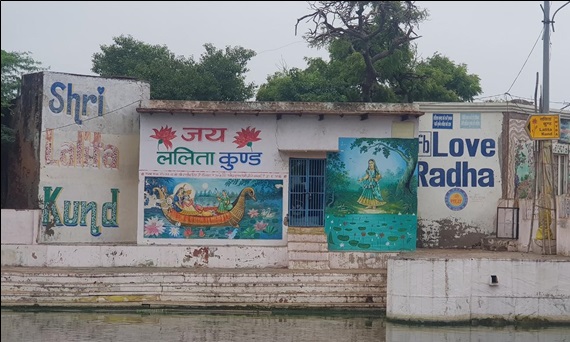
Nestled in the heart of Vraj Bhoomi, within the sacred land of Govardhan, lies Lalita Kunda—a profoundly revered water reservoir that offers a divine glimpse into the eternal pastimes of Srimati Radharani and Bhagavan Sri Krishna. More than just a pond, Lalita Kunda is venerated as the very liquid embodiment of Lalita Devi, the foremost among the ashta-sakhis (eight principal confidantes) of Radharani.
Objective 2: To know the role of Lalita Devi as the chief among RadhaRani’s eight Sakhis.
As the chief of the sakhis, Lalita Devi plays a pivotal role in orchestrating the loving exchanges between Radha and Krishna, and her presence is deeply felt in this holy kunda. Located just a short distance from the supremely sacred Radha Kunda and Shyama Kunda, Lalita Kunda rests in the Govardhan area of Mathura district, Uttar Pradesh—a region pulsing with the divine essence of Gaudiya Vaishnava tradition.
Pilgrims and seekers are drawn to this serene and spiritually potent spot, not only for its tranquil beauty but for its intimate connection to the transcendental pastimes of the Divine Couple and makes it a cherished destination for those seeking a deeper connection with the pastimes of Srimati Radha Rani and Bhagavan Krishna. Visiting Lalita Kunda offers a rare opportunity to immerse oneself in the bhakti-laden atmosphere of Govardhan, where every dust particle, every ripple of water, and every breeze speaks of divine love.
Objective 3: To understand the connection of Lalita Kunda to daily services and divine pastimes of Radha and Krishna.
According to Vedic scriptures, Lalita Kunda is the sacred spot where Lalita Devi would bathe every morning, purifying herself before engaging in her daily seva (service) for the Divine Couple—Srimati Radharani and Bhagavan Krishna. This kunda, therefore, holds a profound connection to the daily divine pastimes, as it was here that Lalita Devi prepared herself for the most intimate and loving service to the Lord and His consort.
Objective 4: To describe the pastime of the swing and garland, involving Krishna, Radha Rani, Lalita Devi and Narada Muni.
In addition to its association with Lalita Devi’s personal worship, Lalita Kunda is also intimately linked with the jhulana-sthali (swinging place), a site that commemorates the enchanting swing pastimes of Radha and Krishna. It is said that Lalita Devi was the one who would arrange these divine swings for the pleasure of the Divine Couple, further showcasing her role as a devoted servant and a bridge between Radha-Krishna’s transcendental love and their earthly devotees.
The intertwined significance of Lalita Kunda and the jhulana-sthali makes this place doubly sacred, as it allows the devotee to connect with the divine through both purification and service. It is a site that invites reflection on the pure love of Lalita Devi, whose devotion to the Divine Couple serves as a model for all who walk the path of bhakti.
Lalita Kunda is steeped in sweet and intimate pastimes (lilā) of Srimati Radha Rani and Bhagavan Krishna, reflecting the playful and loving exchanges between the divine couple and their eternal associates.
The Garland and the Swing:
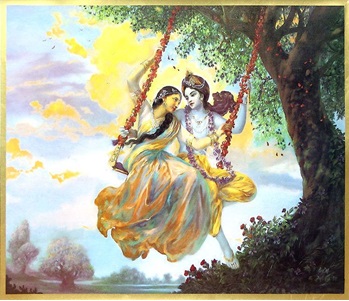
One enchanting pastime highlights the mischievous play between Bhagavan Krishna, Srimati Radharani, Lalita Devi, and Devarishi Narada. Bhagavan Krishna, knowing Narada’s playful nature, once cautioned Radharani about him. Later, Narada observed Lalita Devi diligently making garlands for Bhagavan Krishna, repeatedly discarding them, as she could never achieve the perfect length. Narada, with a twinkle in his eye, suggested that Lalita Devi have Bhagavan Krishna sit beside her to measure the garland. Lalita Devi, desiring perfection, followed his advice.
While they waited for a momentarily delayed Radharani, Narada reminded Bhagavan Krishna of a promise to show him swinging with Lalita Devi. Bhagavan Krishna and Lalita Devi then playfully sat on a swing. Narada, continuing his lighthearted antics, then approached Radharani, singing praises of “Lalita-Krishna” and informing her that Bhagavan Krishna was swinging with Lalita Devi. Although initially disbelieving, Radharani witnessed them from afar and, filled with a beautiful, loving sulky mood (māna), retreated. Bhagavan Krishna later found her and pacified her by revealing Narada’s playful instigation. Finally, Bhagavan Krishna brought Radharani to the swing, and Lalita Devi and Vishakha Devi, her dear friends, joyfully pushed them back and forth, concluding this sweet and intimatepastime.
Liberation from Sins:
Objective 5: To learn the benefit of visiting Lalita Kunda in destroying major sinful reactions.
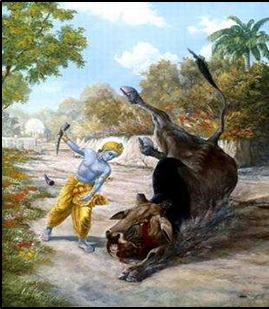
Beyond playful interactions, Lalita Kunda also holds profound spiritual significance related to the removal of karmic reactions. It is said that Lalita Devi, accompanied by Lord Krishna, visited 68 holy places (tirthas) at her kunda. These visits were performed with the specific intention of freeing everyone from the severe reactions of six types of killing (hatya): bhrna-hatya (abortion), krimi-hatya (killing of worms and insects), go-hatya (cow slaughter), brahma-hatya (killing of Brahmins), svana-hatya (killing of dogs), and atma-hatya (suicide). This pastime underscores the immense purifying power attributed to Lalita Kunda.
Objective 6: To know the special qualities and services of Lalita Devi, such as preparing tambula and arranging swings.
Lalita Devi is renowned for her vama-prakhara (contrary and hot-tempered) nature, which she uses to protect Radharani and ensure Bhagavan Krishna behaves respectfully towards her.
She is an expert musician, favoring the veena and the raga bhairava-kalingada.
The area around Lalita Kunda is described as a beautiful grove (kunja) called Lalitananda, to the north of Radha Kunda, adorned with lightning-like brilliance and studded with rubies.
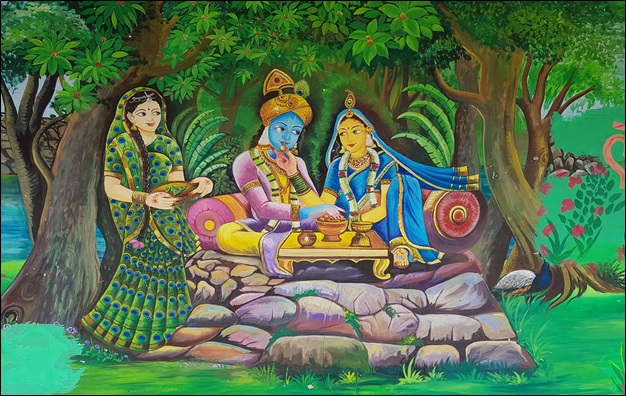
Lalita Devi is celebrated for her expertise in arranging flower decorations, swings, and various playful arenas for the Divine Couple.
Her special service (seva) is preparing and offering tāmbula (betel leaves) to Srimati Radha Rani and Bhagavan Krishna.
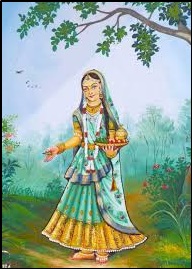
Objective 7: To understand Lalita Devi‘s eternal youth and her appearance in Gauranga Mahaprabhu’s pastimes.
Lalita Devi is eternally 14 years, 8 months, and 27 days old, making her the eldest among the sakhis and a guiding figure for all the gopis.
Lalita Devi incarnated as Svarupa Damodara Goswami in Lord Chaitanya Mahaprabhu’s pastimes, serving as His personal secretary and the examiner of devotional compositions.
Objective 8: To describe the devotional activities and maintenance efforts at Lalita Kunda
Lalita Kunda is cherished by devotees, who regularly organize cleaning and restoration seva (service) to maintain its sanctity. These community efforts are seen as opportunities to receive the blessings of Lalita Devi and participate in her eternal service.
Pilgrims visiting Lalita Kunda often combine their visit with Radha Kunda and Shyama Kunda, participating in parikrama and offering prayers.
Many devotees report feeling a unique sense of peace and spiritual upliftment at Lalita Kunda, attributing this to the special mercy of Lalita Devi.
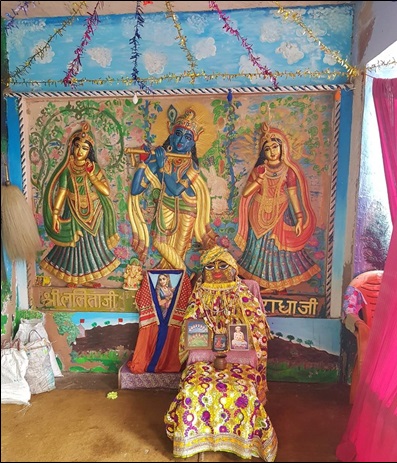
Objective 9: To learn the importance of appearance day of Lalita Devi
Lalita Saptami, the divine appearance day of Srimati Lalita Devi, is celebrated with heartfelt devotion at Lalita Kunda. A day before Radhashtami is the sacred appearance day of Srimati Lalita Devi. Falling on the Shukla Paksha Saptami Tithi of the Bhadrapada month, this day holds immense significance for devotees of the Radha-Krishna tradition.
On Lalita Saptami, special pujas, sankirtan (devotional singing), and bhoga offerings fill the atmosphere with divine joy and reverence. Pilgrims from across India and beyond gather at Lalita Kunda to honor the birth of the foremost sakhi, whose unwavering devotion and loving service to Radha and Krishna exemplify the ideal of selfless bhakti. It is a day not just of celebration, but of deep spiritual reflection and connection.
Objective 10: To know the devotional mood expressed through paintings and murals around Lalita Kunda – Mural and Artistic Depictions
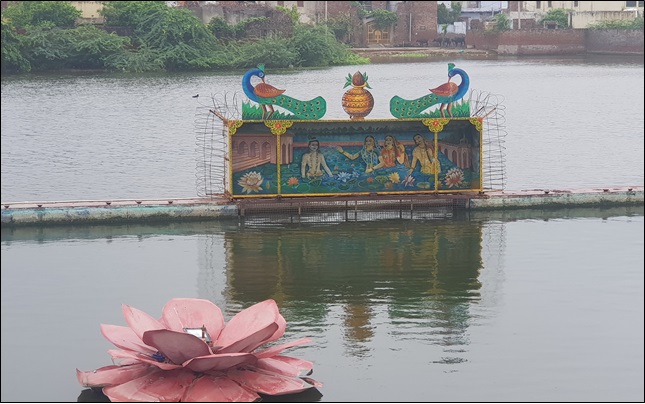
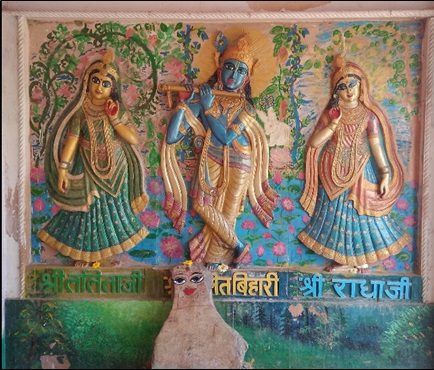
While Lalita Kunda is celebrated more for its spiritually charged atmosphere than for elaborate murals, the surrounding area is often adorned with paintings and devotional art that beautifully depict Lalita Devi’s loving service to Srimati Radharani and Bhagavan Sri Krishna. These sacred images serve not merely as decoration, but as visual meditations—inspiring devotees to contemplate her exemplary devotion, selfless seva, and unwavering loyalty in facilitating the divine pastimes of the Divine Couple
