
Objectives :
Objective 1: To know the historical background and purpose of the Jal Mahal Palace.
Objective 2: To describe the architectural features and structural design of the Jal Mahal.
Objective 3: To understand the impact of environmental factors on the lake and palace surroundings.
Objective 1: To know the historical background and purpose of the Jal Mahal Palace.
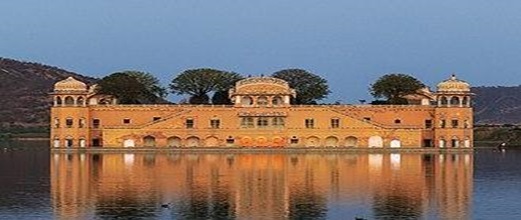
Jal Mahal (meaning “Water Palace”) is a palace in the middle of the Man Sagar Lake in Jaipur city, the capital of the state of Rajasthan, India. The palace was originally constructed around 1699; the building and the lake around it were later renovated and enlarged in the early 18th century by Maharaja Jai Singh II of Amber.
The palace
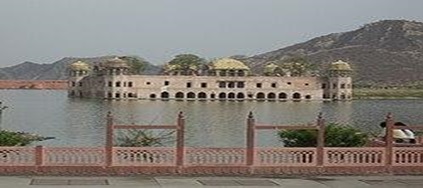 Jal Mahal Palace after renovation
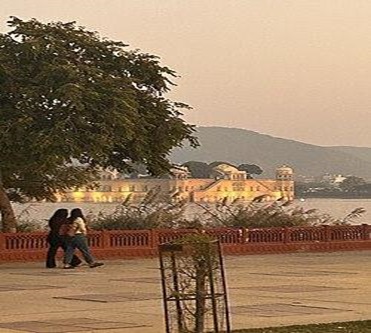 The Jal Mahal in 2025
Objective 2: To describe the architectural features and structural design of the Jal Mahal.
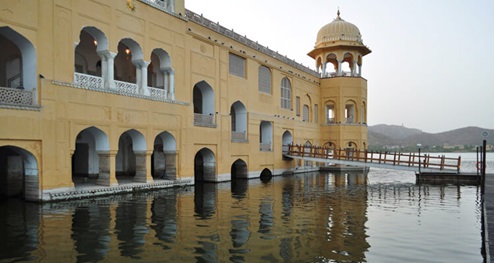
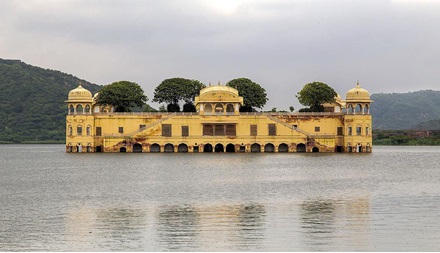
To describe the architectural features and structural design of the Jal Mahal
The palace, built with local sandstone, is a three-storied building, with the third floor only existing on the eastern side of the palace. The eastern side is not visible from the road side.
The additional lower levels of the eastern side remain underwater when the lake is full. The Jal Mahal has a terrace floor with a garden, and the garden has four Tibaris facing north, south, east and west. The Tibaris are designed in the Bengal roof style architecture while the four octagonal Chhatri on the roof mark the corners of the monument.
Objective 3: To understand the impact of environmental factors on the lake and palace surroundings.
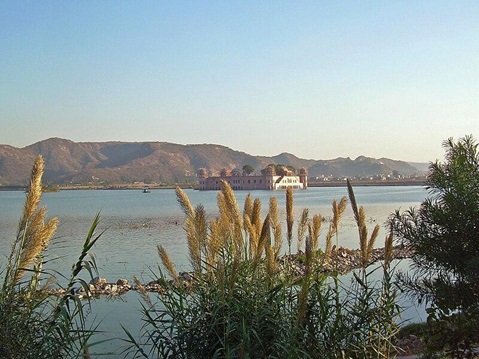
The hills surrounding the lake area, towards the north east of Jaipur, have quartzite rock formations (with a thin layer of soil cover), which is part of the Aravalli hills range. Rock exposures on the surface in some parts of the project area have also been used for constructing buildings. From the northeast, the Kanak Vrindavan valley, where a temple complex sits, the hills slope gently towards the lake edge. Within the lake area, the ground area is made up of a thick mantle of soil, blown sand, and alluvium. Forest denudation, particularly in the hilly areas, has caused soil erosion, compounded by wind and water action. As a result, silt built up in the lake incrementally raises the lake bed.[2] On the terrace of the palace, a garden was built with arched passages. At each corner of this palace semi-octagonal towers were built with an elegant cupola.
Objective 4: To highlight Maharaja Jai Singh II’s contributions towards the renovation and architectural enhancement of Jal Mahal.
The royal family chhatris and cenotaphs
At Gaitore opposite the lake are chhatris and cenotaphs erected over cremation platforms of some of the Kachwaha rulers of Jaipur. They were built by Jai Singh II within landscaped gardens. The cenotaphs are in honor of Pratap Singh, Madho Singh II and Jai Singh II among others. Jai Singh II’s cenotaph is made of marble and has impressive intricate carvings. It has a dome with 20 carved pillars.
Joint sector project
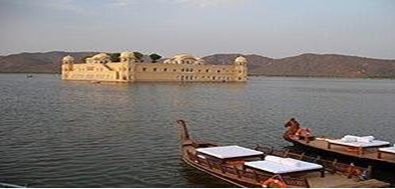 Jal Mahal palace in 2011, after restoration.
