Objectives :
Objective 1: To learn about Ghat Ke Balaji Temple.
Objective 2: To know about the Architecture of Ghat Ke Temple.
Objective 3: To learn about the Cultural Practices followed.
Objective 1: To learn about Ghat Ke Balaji Temple.
Holy origins:
Believed to be a swayambhu (self-manifested) deity of Lord Hanuman, the deity faces south and is known locally as ‘Ghat Ke Balaji’ due to its origins among the historic water-logged ghats created by nearby valleys and ponds
Objective 2: To know about the Architecture of Ghat Ke Temple.
Majestic haveli style:
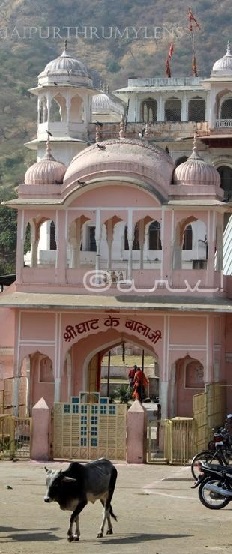
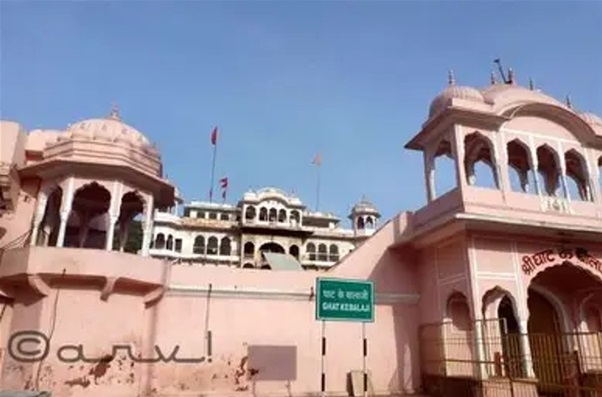
The temple’s pink sandstone façade, arched entrances, pillared prayer hall, mezzanine with heritage ceiling paintings, and jharokhas echo the grandeur of Jaipur’s royal haveli architecture
Sanctum details:
Housing the south-facing Hanuman deity, the sanctum is flanked by smaller shrines—a Shiva temple to the right, Panch-Ganesh carvings, plus additional niches for Ram-Sita and Shaligram—integrated within the main complex
Natural amphitheater:
Built into the valley, the temple opens up toward former ghats and serene greenery, creating a reflective, open-air experience.
Objective 3: To learn about the Cultural Practices followed.
Sawa Mani Prasad:
A custom where devotees, upon fulfilment of a wish, offer a 46.65 kg grain offering to Hanuman, served as communal prasad—a deeply local tradition.
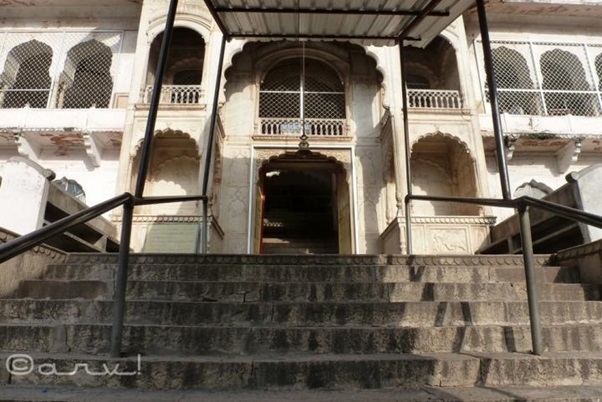 The entrance of Ghat Ke Balaji temple, Jaipur.
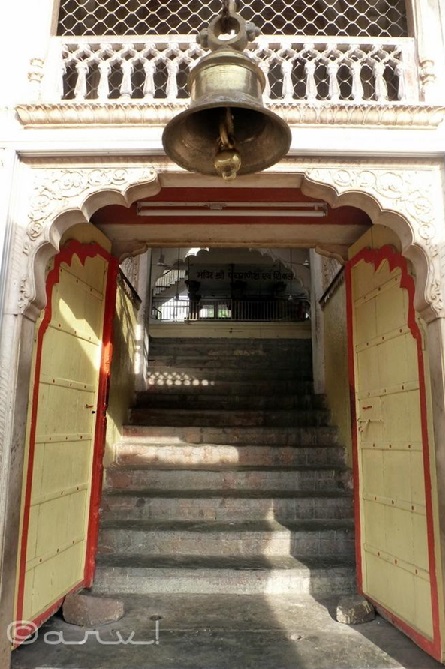 Temple Bell & the entrance. Ghat Ke Balaji, Jaipur
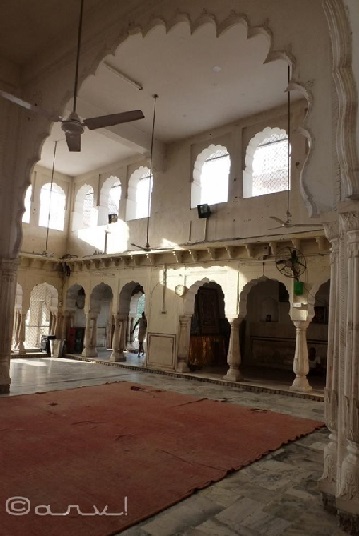 Jagmohan or Prayer hall at Ghat Ke Balaji temple, Jaipur.
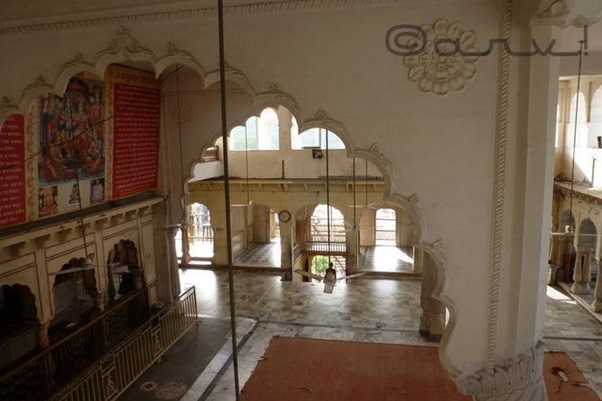 Another view of the prayer hall at Ghat Ke Balaji temple.
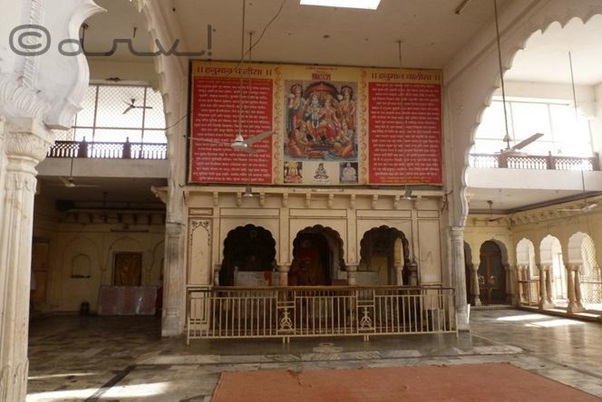 Overlooking the sanctum. Ghat Ke Balaji temple, Jaipur
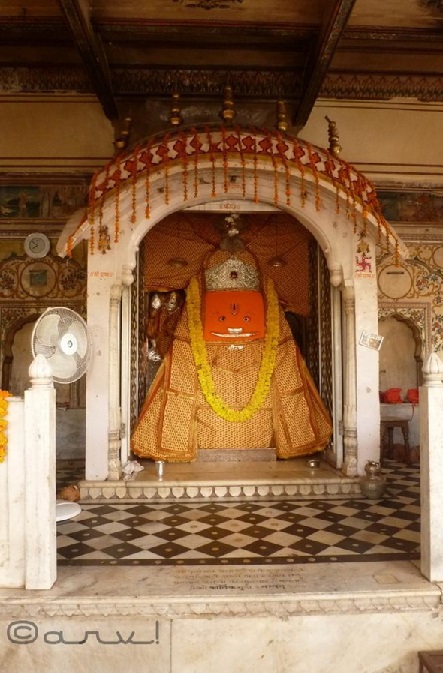 Sanctum –Ghat Ke Balaji temple
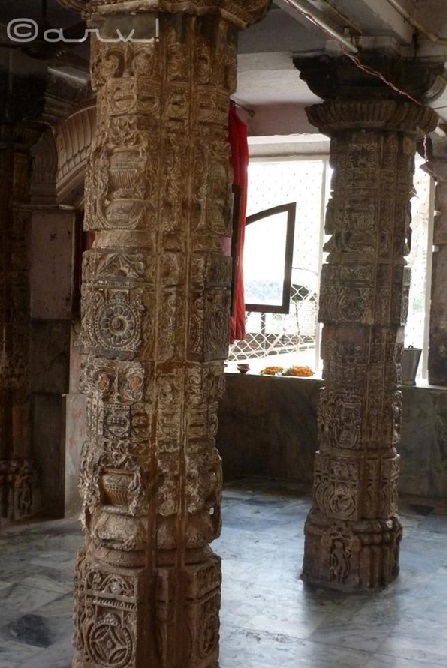 These pillars located on mezzanine floor look out of place with rest of the Ghat Ke Balaji temple architecture
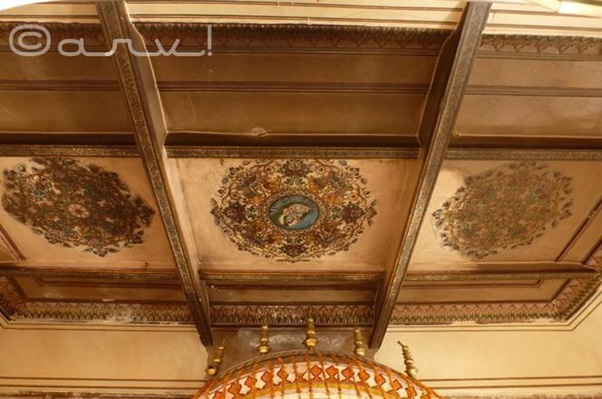 Paintings on the ceiling inside the sanctum. Ghat Ke Balaji temple
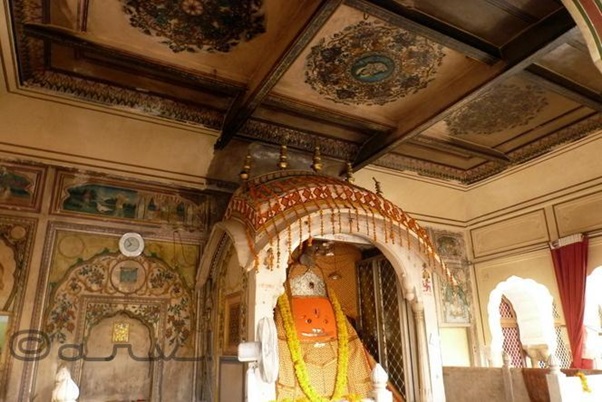 Beautiful paintings inside Ghat Ke Balaji temple.
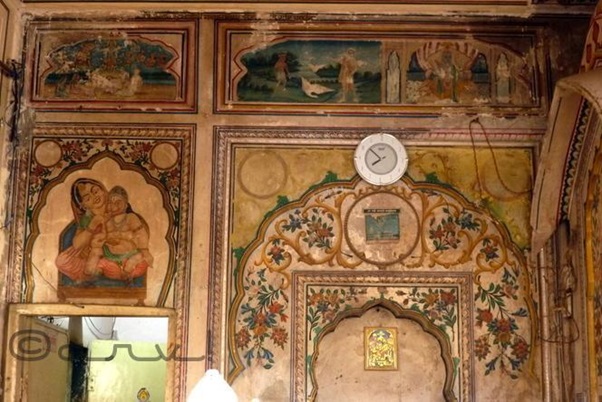 Heritage paintings are in urgent need of attention & care.