
OBJECTIVES:
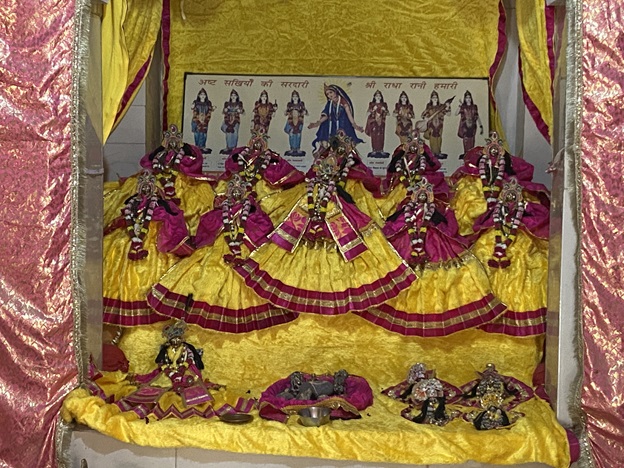
Objective1: To know about Ashtasakhi Temple in Barsana.
Objective9: To describe Indulekha’s special skills and her role in serving Radha and Krishna.
Objective11: To know about the Birth place of 8 important gopis with RadhaRani
Objective1: To know about Ashtasakhi Temple in Barsana.
The Aṣṭa-sakhī Temple in Barsana is a sacred site deeply cherished by devotees, especially within the Gaudiya Vaishnava tradition.
The temple is dedicated to Śrīmatī Rādhārāṇī and Her eight closest sakhīs (friends), known as the Aṣṭa-sakhīs:
Lalitā
Viśākhā
Citrā
Indulekhā
Campakalatā
Raṅgadevī
Sudevī
Tuṅgavidyā
These sakhīs are not just companions—they are intimate associates who assist Rādhā in Her loving pastimes with Kṛṣṇa. Each one embodies a unique mood of service (sevā-bhāva), and the temple honors their eternal roles.
The temple is situated in Barsana, the sacred village of Rādhārāṇī. The temple is a pilgrimage highlight for devotees visiting Vraja-maṇḍala.
It reflects the mood of madhura-rasa and sakhī-bhāva, central to Gaudiya Vaishnavism..
Objective2: To provide knowledge about the Ashta-sakhis and their devotional roles through the statues and teachings at Lalita Sakhi Mandir.
The eight friends of Shri Radha Rani are known as her Sakhis and special worship and devotion is done for them.
The Sakhis of Shri Radha Rani
The eight principal friends (Ashta-sakhis) of Shri Radha Rani are her constant companions and play a vital role in her divine pastimes with Shri Krishna. These sakhis are not only revered as spiritual guides but are also worshipped with deep devotion in the Gaudiya Vaishnava tradition.
At Lalita Sakhi Mandir in Unchagaon, special attention is given to honoring these sacred companions. The temple features beautifully crafted statues of all eight sakhis, including Lalita, Visakha, and others. Visitors can learn about each one’s unique qualities, moods (bhavas), and their loving services to Radha and Krishna
Objective3: To explain the central role of the Ashta-sakhis in devotional practices across major Krishnaite traditions and how they serve as a medium to approach Radha-Krishna.
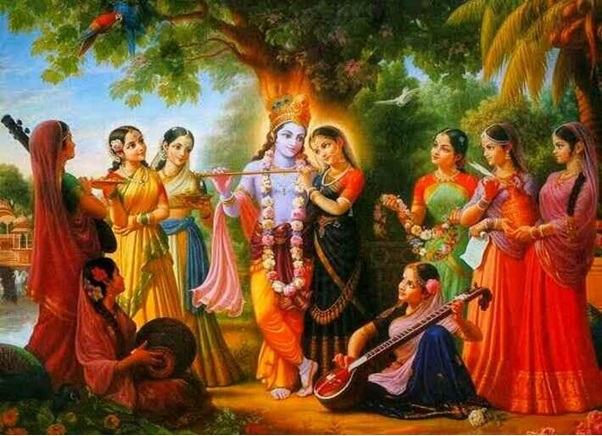
In many Krishnaism traditions, Ashtasakhi are worshipped and through them Radha-Krishna are approached. Ashtasakhi play pivotal role in beliefs and practices of Vallabhacharya’s Pushtimarg Sampradaya, Swami Haridas’s Haidasi Sampradaya, Hith Harivansh Mahaprabhu’s Radha Vallabh Sampradaya, Chaitanya Mahaprabhu’s Gaudiya Vaishnav Sampradaya, Kripalu Maharaj’s Jagat Guru Kripalu Parishat and Nimabarkacharya’s Nimbarka Sampradaya.
Their roles in the Raslila
Across various Krishnaism traditions like Pushtimarg Sampradaya, Gaudiya Vaishnav Sampradaya, and others, the Ashtasakhi occupy revered positions. They serve as intermediaries through whom devotees approach and connect with Radha-Krishna, playing a crucial role in spiritual beliefs and practices.
Objective4: To highlight key temples dedicated to the Ashta-sakhis and promote their role as sacred centers for devotion and blessings in the Radha-Krishna tradition.
Numerous temples across different regions serve as centers for the veneration of the Ashtasakhi. Among these, the Sri Radha Rasbihari Ashtasakhi Temple in Vrindavan and the Sri Ashtasakhi Temple in Barsana stand as prominent sites for devotees to express their reverence and seek blessings from these divine companions.
Objective5: To present the unique qualities, responsibilities, and divine role of Sri Lalita Devi as the chief among the Ashta-sakhis in the loving pastimes of Radha and Krishna.
Among the eight Gopis of Vrindavan, Sri Lalita devi is the chief. She is twenty-seven days older than Sri Radha. Another of her names is ‘Anuradha’. Her body possesses a yellowish tone resembling that of cow’s urine and her attire mirrors the hue of a peacock feather. Visoka is her father and Sarada is her mother. She is endowed with the quality of harshness which adds a special flavor to her relationship with Krishna. Bhairava, her husband, also a friend of the cowherd boy Govardhana.
Lalita devi is in charge of the most exalted gopis. She is an expert in making an agreement when Radha and Krishna engage in their loving disputes. Sometimes She even offends Krishna for the sake of taking Sri Radha’s side. During the meetings between Sri Radha and Krishna, she behaves like an indifferent person. Although it is Lalita devi along with Purnamasi who helps Radha and Krishna meet in the first place. Lalita devi is in charge of all the gopis who supply betel nuts to Sri Radha and Krishna, who are their maidservants, and also those who are devoted to Sri Balarama.
Objective6: To describe the qualities and divine services of Sri Visakha Devi, highlighting her intimate role in Radha-Krishna’s pastimes through her artistic, emotional, and communicative expertise.
Visakha’s behavior, qualities, and perception are similar to that of Lalita. She was born almost at the same time as Radha. She wears a blue garment with white dots resembling a sky full of stars. Her bodily complexion is like lightning. Her father’s name is Vahika and her mother is Jatila’s niece, named Dakshina.
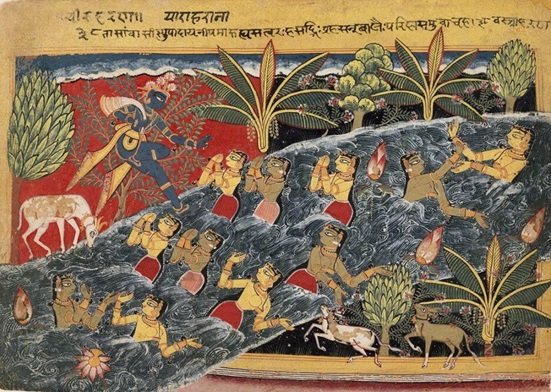
Visakha is young, auspicious, and is an expert in the subject of ecstatic love. Sometimes she teases Krishna and is capable of reading the intentions of the divine couple. She is also an expert in carrying messages and in consoling Radha-Krishna when they feel separated from one another. She is an expert in singing and can do so in different languages. She is skilled in performing magical shows, illusory activities, puppet shows, etc. She is also an expert in artistic works, like drawing beautiful designs on the floor, preparing enchanting Tilaka, flower decorations, etc.
Objective7: To describe Champakalata’s role as protector of Vrindavan’s plants and her devotion to Radha and Krishna.
Champakalata is the third of the Gopis and is as talented as Visakha. She is a day younger than Radha. Her father is Arama and her mother is Vatika. Her bodily hue resembles that of a fully blossomed jasmine flower and Her dress mirrors the color of a kingfisher. The cowherd Chandaksha is her husband. Champakalata is in charge of all those gopis who are engaged in protecting the trees, creepers, and plants of Vrindavan.
Objective8: To describe the talents and important roles of Citra and Tungavidya in serving Radha and Krishna.
Citra
Citra is twenty-six days younger than Srimati Radharani. She wears a dress that resembles glass and her bodily hue is just like vermillion. Her father’s name is Chatura who is also the uncle of Suryamitra. Her mother is Charchika. Citra’s husband is Pithara. Citra always remains engrossed in the ecstasy of Krishna’s love.
Citra is especially talented and is capable of mixing with all groups. She can handle any dispute. She knows the identities of everyone and arranges the meeting between Radha and Krishna. She is adorned with the third among the six qualities of abhisarana. She is also an expert in the art of writing and knows the language of various countries. She is an expert in cooking and is proficient in preparing foodstuffs from honey and milk. She is a specialist in astrology. She is also skilled in planting and maintaining trees. She knows the characteristics of different animals. She also knows how to make glass vessels, arrows, sweet drinks, and so on.
Tungavidya
Tungavidya is the fifth of the eight principal gopis. She is five days older than Sri Radha and her bodily aroma mirrors that of sandalwood pulp blended with camphor. Her bodily complexion resembles vermillion. She wears an attire of blue mixed with yellow. Her mother is Medha and her father is Pushkara. Her husband’s name is Balisa.
Tungavidya has mastered the eighteen branches of knowledge and is highly skilled with respect to medicinal herbs and gardening. She is an expert in transcendental mellows and in matters of morality. She enjoys the full confidence of Krishna and is also an expert in formulating treaties. She is highly skilled in music, drama, and playing musical instruments like mrdanga and vina. She is in charge of the eight female messengers headed by Manju Medha who create alliances between the two opposing groups of Gopis. She is also a master of those gopis who are given services like fetching water from streams.
Objective9: To describe Indulekha’s special skills and her role in serving Radha and Krishna.
Indulekha
Indulekha is three days younger than Sri Radhika. Her mother is Vela and her father is Sagara. Her husband’s name is Durvala. Her tone is bright as the sun and she adorns a pomegranate-colored attire. She is endowed with the quality of harshness which adds a special flavor to her relationship with Krishna.
Authored Books
Indulekha is highly skilled in the art of charming snakes. She is also an expert in chanting mantras and palmistry. She strings garlands, decorates teeth, and is a specialist in testing precious gems. She arouses attachment between Sri Radha and Krishna and thus helps them to enjoy transcendental bliss. She is in charge of all the gopis who are engaged as maidservants, who prepare ornaments, dresses, protect treasury, and defend the land of Vrindavan.
Objective10: To explain the roles and special talents of Rangadevi and Sudevi in serving Radha and Krishna and leading various groups of gopis in Vrindavan.
Rangadevi is the seventh Gopi and is seven days younger than Sri Radha. She possesses characteristics similar to that of Champakalata. Her bodily hue is that of the filament of a lotus flower. She adorns a red dress echoing a China rose flower. Her father is Rangasara and her mother is Karuna.
Rangadevi
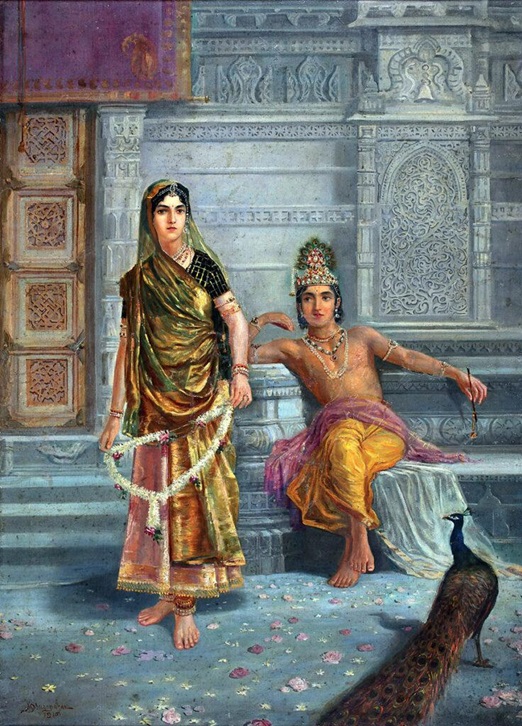
Rangadevi is always intoxicated with the mood of awe and reverence. Occasionally, she even teases Radharani in front of Krishna. She anticipates a suitable time before executing any service. She is an expert in musical instruments. By dint of her austerity, she had previously mastered the mantra for attracting Krishna. She is the leader of the gopis headed by Kalakanthi who render various services like painting, drawing, applying scented objects, offering ghee lamps, igniting a fire in winter, and fanning the divine couple with Camara in summer. She is also the leader of those gopis who are engaged in supervising animals like lions and deer.
Sudevi
Sudevi is the eighth principal gopi. She is married to Bhairava, the brother of Vakrasena. She is the twin sister of Rangadevi. She is gentle and possesses almost the same qualities as her.
Sudevi always accompanies Srimati Radharani and assists in decorating her hair, applying black ointment to Her eyes, and messaging Her feet. Sudevi conducts boat festivals and arranges conversations between the male and female parrot. She is knowledgeable about the auspicious and inauspicious astrological signs and can comprehend the languages of the birds and beasts. She knows about the flowers that bloom at night and is an expert in the matter of fireworks. Sudevi is the leader of those Gopis who are engaged in arranging sitting places, who have knowledge about birds, who are aware of the movement of opposing gopis, who can disguise themselves whenever there is a need, those who know about literary works, and those who are friends of the predominating deity of the forest.
Objective11: To know about the Birth place of 8 important gopis with RadhaRani
The Ashta Sakhis or 8 Gopis are the principal companions of Radha Rani in the spiritual tradition of Vrindavan, especially in Gaudiya Vaishnavism. These gopis are considered eternal associates of Sri Radha and Sri Krishna, and their divine pastimes are described in various scriptures and traditions.
Here are the 8 principal Gopis (Ashta Sakhis) along with their commonly accepted birthplaces according to traditional beliefs (especially in the Braj region):
| Name of Ashta Sakhi | Birthplace | Details |
|---|---|---|
| Lalita Sakhi | Unchagaon (Uncha Gaon) | Elder among the sakhis, known for her boldness and leadership. |
| Vishakha Sakhi | Kamai (near Barsana) | Very close to Radha; expert in arts and poetry. |
| Chitra Sakhi | Chiksoli (near Barsana) | Skilled in painting and fine arts. |
| Champakalata Sakhi | Karhela | Expert in arranging meetings between Radha and Krishna. |
| Tungavidya Sakhi | Dabhala | Scholar among the sakhis, master of scriptures and music. |
| Indulekha Sakhi | Anjanoka | Known for her cleverness and knowledge of astrology. |
| Rangadevi Sakhi | Rakovat | Known for her bold and passionate nature. |
| Sudevi Sakhi | Sunhera | Twin sister of Rangadevi, dedicated and humble. |
Radha Rani’s Birthplace is Barsana (Braj region, Uttar Pradesh).
These villages are located in the Braj region, which spans around Mathura, Vrindavan, Barsana, and nearby areas in Uttar Pradesh, India.
