
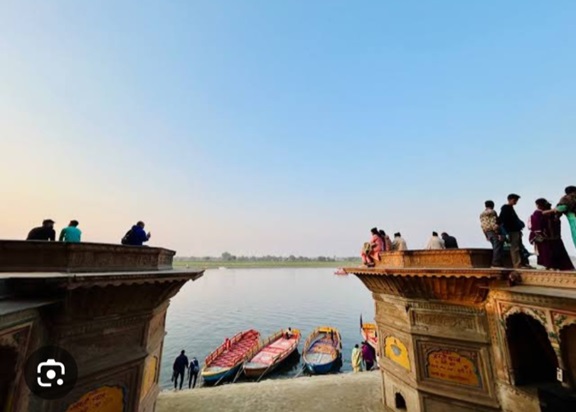
Objectives:
Objective 1: To explain why Yamunā is called “Kṛṣṇā” and the meaning of her dark complexion.
Objective 2: To present Yamunā’s spiritual supremacy over other sacred rivers.
Objective 3: To describe Yamunā’s personified nature and symbolism.
Objective 4: To recount Yamunā’s intimate pastimes with Kṛṣṇa.
Objective 5: To explain Yamunā’s distress during the Kāliya episode.
Objective 6: To draw devotional lessons from Yamunā’s qualities.
Objective 7: To outline ways devotees can remember and serve Yamunā today.
Objective 1: To explain why Yamunā is called “Kṛṣṇā” and the meaning of her dark complexion.
In the pages of the Śrīmad-Bhāgavatam, during the narration of the Kāliya-damana pastime, the river Yamunā is addressed as “Kṛṣṇā.” This name is not merely a poetic touch — it reveals her inner mood. Her waters shine with a dark, bluish-black hue, not from any impurity, but from deep absorption in loving remembrance of Lord Kṛṣṇa. Just as Uddhava’s complexion took on the color of a raincloud from constant meditation on the Lord, Yamunā too has become dark through her unwavering contemplation and service. Her darkness is thus the radiance of devotion. In striking contrast, Kāliya, who also appears dark, carries within him only venom, envy, and malice. In Yamunā’s case, the same darkness is transformed into beauty by bhakti, while in Kāliya’s, it reflects his poisonous nature.
Objective 2: To present Yamunā’s spiritual supremacy over other sacred rivers

Among the many tīrthas and sacred rivers, Yamunā occupies a place of special honor. Śrīla Jīva Gosvāmī writes that if the waters of the Gaṅgā are purified one hundred times, they become Yamunā. Gaṅgā is supremely pure, flowing from the lotus feet of the Lord, yet Yamunā’s sanctity surpasses even this because she is eternally and intimately connected with Kṛṣṇa’s personal pastimes in Vṛndāvana. Śrīla Prabhupāda beautifully explains that the Lord touched Yamunā’s waters far more often than He touched Gaṅgā, and this repeated, affectionate contact has infused her with a sweetness and sanctity unique to her.

Objective 3: To describe Yamunā’s personified nature and symbolism.
In her mood, Yamunā mirrors the gopīs of Vṛndāvana. Like them, she is bound — they by family duties, she by her two banks — yet both strive to reach Kṛṣṇa despite all constraints. Flowing toward Him against the natural current that should carry her to the ocean, she shows the determination of love. Her gentle waves are the outward signs of her joy in His presence, while her deep whirlpools reflect the churning of her heart when she hears His flute-song. She carries fresh lotus flowers in her current as offerings for her beloved Lord. Whether calm and clear or turbulent and rushing, her every mood is an expression of service to Śyāmasundara.
Objective 4: To recount Yamunā’s intimate pastimes with Kṛṣṇa.
From His early childhood in Vṛndāvana, Kṛṣṇa delighted in Yamunā’s waters. He would wash His lotus face in her currents, fill His mouth with her water and spray playful fountains toward His friends, or climb a low branch overhanging her surface and let His feet dip into her cool flow, inviting her to rise up and touch them. Along her banks He enjoyed salila-vihāra, joyful water games, and jūlana-vihāra, playful boat rides, surrounded by the laughter of the gopas and gopīs. Each ripple, each splash was a form of her loving service, and she treasured every contact with His form.
One of her most sacred moments came on the night of His birth. As Vasudeva carried the newborn Kṛṣṇa across her turbulent waters to safety in Gokula, Yamunā parted to make way, yet at one point rose in a wave, longing to touch His feet. That single touch was her prayer, an intimate request that He one day remove the poison of Kāliya from her heart and waters.
Objective 5: To explain Yamunā’s distress during the Kāliya episode.
Her joy was clouded when Kāliya, driven from his distant home by Garuḍa, found refuge in a side-lake connected to Yamunā. Because Garuḍa had been cursed by the sage Śaubarī not to enter her waters, the serpent was safe from his enemy. Here he built his underwater palace and began releasing his venom into her currents. Trees along her banks withered, animals died, and even birds flying overhead dropped lifeless when the breeze carried the poisoned vapors. Yamunā, once a gentle current of life, became choked by this contamination. At times she seemed to turn upstream, as though trying to escape her own waters. Inwardly, she prayed to Kṛṣṇa with all her being: “Please, purify me and free me from this serpent’s grip.” That prayer would soon be answered in the divine dance of Kāliya-damana.
Objective 6: To draw devotional lessons from Yamunā’s qualities.
From Yamunā’s life we learn that absorption in Kṛṣṇa changes our very nature, just as her complexion reflects her meditation on Him. She teaches that love may mean flowing against the current — pursuing bhakti even when circumstances and the world pull us elsewhere. Her suffering from Kāliya’s poison reminds us how dangerous bad association is, for it can pollute even what is pure. And her moods — sometimes calm, sometimes agitated — show that service to the Lord is not limited to a single state of mind; every feeling can be offered to Him if it is rooted in love.
Objective 7: To outline ways devotees can remember and serve Yamunā today.
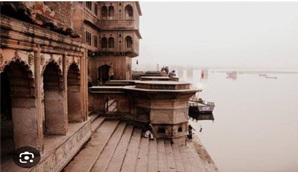
For devotees in any part of the world, serving Yamunā can begin with remembrance. One may recite Śrī Yamunāṣṭakam by Vallabhācārya, offering heartfelt obeisances upon seeing her photo or visiting her sacred banks. Meditating on her as a gopī carrying lotuses to Kṛṣṇa brings her service mood into one’s own heart. Scripture assures that bathing in her waters with devotion, or even remembering her with faith, purifies the soul of all contamination. She is the flowing embodiment of loving remembrance, always seeking Kṛṣṇa’s touch, carrying the fragrance of devotion, and longing to be freed from whatever pollutes her waters — and in this, she stands as a living example for every devotee.
The Holy River Yamuna is not merely a physical river but an eternal goddess, purifier, and beloved companion of Lord Krishna. From the Rig Veda to the Bhagavata Purana, she is glorified as a liberator from sin and fear of death, a source of devotion, and a witness to countless divine pastimes. Through the tireless efforts of Gaudiya Vaishnavas and ISKCON devotees worldwide, her spiritual glory continues to inspire millions to reconnect with Krishna consciousness — and to protect her sacred flow for generations to come.
Yamuna Devi is Krishna’s inseparable, eternal consort in His Braja lilas.A devotee who remembers Yamuna, bathes in her waters, or even meditates on her flow is guaranteed purification and devotion to Krishna.
