
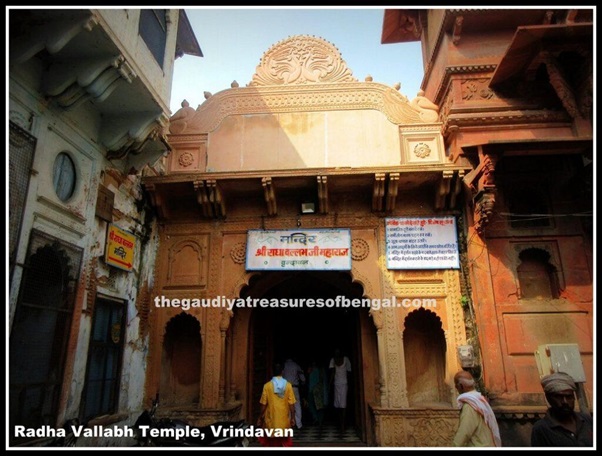
Objectives:
Objective 4 : To describe the divine appearance and sacred origin of the Śrī Rādhā Vallabha Deity.
Objective 1 : To learn about the spiritual and historical significance of Śrī Rādhā Vallabha Temple in Vṛndāvana.
Glories of Śrī Rādhā-Vallabha Temple
Located in the sacred town of Vṛndāvana, the Śrī Rādhā-Vallabha Mandira is a historic and spiritually profound temple dedicated to Śrī Śrī Rādhā and Kṛṣṇa, specifically in the mood of Rādhā Vallabha, meaning “the Beloved of Śrīmatī Rādhārāṇī.” This temple is a central place of worship within the Rādhā Vallabha Sampradāya, founded by the great Vaiṣṇava saint Śrī Hita Harivaṁśa Mahāprabhu.
Objective 2 : To know the unique worship tradition where Śrīmatī Rādhārāṇī is symbolized through a crown beside Śrī Kṛṣṇa.
Deity Darśana: Rādhā-Vallabha Śrī Kṛṣṇa
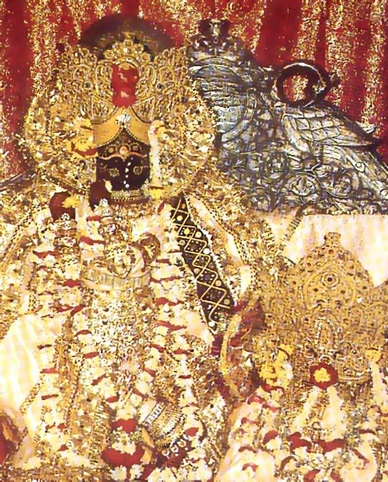
The main deity of the temple is Śrī Kṛṣṇa, worshiped as Rādhā Vallabha. In a most unique and exalted manner, Śrīmatī Rādhārāṇī is worshipped in the form of a divine crown placed beside the Deity of Śrī Kṛṣṇa, symbolizing Her transcendental presence and spiritual supremacy.
This practice emphasizes the mood of mādhurya-bhāva (the sweet conjugal relationship), wherein Śrīmatī Rādhārāṇī is understood to be the original source of all devotional service and the supreme worshipable goddess.
Objective 3 : To understand the foundational role of Śrī Hita Harivaṁśa Mahāprabhu and his disciple Sundardāsa in establishing the temple.
Historical Origins
The temple was established in 1585 A.D. by Śrī Sundardāsa Bhaṭṭanāgara, a disciple of Śrī Vānacandra, who was the son of Śrī Hita Harivaṁśa Mahāprabhu. At that time, Śrī Sundardāsa was serving under Abdul Rahīm Khānkhanā, one of Emperor Akbar’s trusted ministers. With Khānkhanā’s support, he received royal permission and a grant to construct the temple using red sandstone—a material typically reserved only for imperial palaces and forts.
Despite a prevailing legend that whoever constructs the temple would not live long, Sundardāsa offered his life in devotional service and passed away within a year of the temple’s completion.
Objective 4 : To describe the divine appearance and sacred origin of the Śrī Rādhā Vallabha Deity.
The Divine Appearance of the Deity
According to the sacred tradition, the Deity of Śrī Rādhā Vallabha did not originate from a sculptor’s hands. Rather, Lord Śiva Himself gifted the Deity to a devoted brāhmaṇa named Ātmadeva, who had performed great austerities. When Śrī Hita Harivaṁśa Mahāprabhu traveled to Vṛndāvana at the age of 32, he received instructions from Śrīmatī Rādhārāṇī in a divine vision to marry Ātmadeva’s daughters. Upon their marriage, Ātmadeva gifted the Deity of Śrī Rādhā Vallabha to them. Thus, this Divine Form was lovingly brought to Vṛndāvana and installed with great honor and devotion.
Objective 5 : To highlight the architectural uniqueness and historical transitions of the temple, including its red sandstone construction.
Temple Architecture
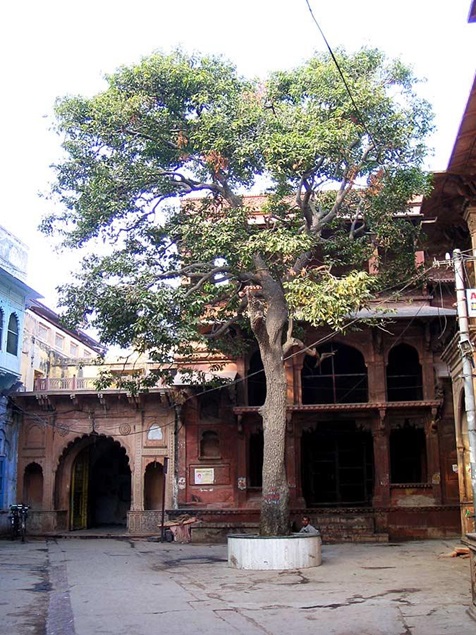
The original temple was located near Gotam Nagar, on a high cliff adjacent to the famous Śrī Bāṅke Bihārī Mandira. Constructed with red sandstone, the temple is a rare example of imperial architectural style used for a devotional structure. The walls are 10 feet thick, built in two stages, reflecting both strength and artistic splendor.
In 1670, during Mughal invasions, the original temple was desecrated. The original Deity was safely moved, and a new temple was constructed adjacent to the old one, where the Deity continues to be worshipped today. The original shrine is now known as Hita Mandira.
Objective 6 : To know the major and minor festivals celebrated in the temple and their spiritual significance.
Festivals and Celebrations
The temple is renowned for its colorful, ecstatic festivals, celebrated with deep devotion, music, kīrtana, and sacred rituals.
Major Festivals
Hitoṣava (Hitotsav):
An 11-day festival commemorating the appearance and teachings of Śrī Hita Harivaṁśa Mahāprabhu.
Rādhāṣṭamī:
A 9-day celebration of the appearance day of Śrīmatī Rādhārāṇī, who is regarded as the guru and guiding force of the Rādhā Vallabha tradition.
Janmāṣṭamī:
The divine appearance day of Śrī Kṛṣṇa, observed with deep devotion, fasting, and night-long celebrations.
Vivāha Utsava (Byāhūlā):
A reenactment of the transcendental marriage of Rādhā and Kṛṣṇa, celebrated as a major community event, full of spiritual enthusiasm and congregational gatherings.
Other Celebrations
Holi – Festival of divine colors
Dīpāvalī – Festival of lights
Śarada Pūrnīmā – Rāsa-līlā night
Dussehra, Phūla Baṅgalās, Jhūlān Yātrā, Sāñjhī Utsava, and Patotsava
Each of these events is accompanied by kīrtana, bhajana, flower decorations, prasāda distribution, and deep philosophical discourses.
Objective 7 : To describe the other shrines within the temple complex that honor different aspects of Rādhā-Kṛṣṇa’s divine relationship.
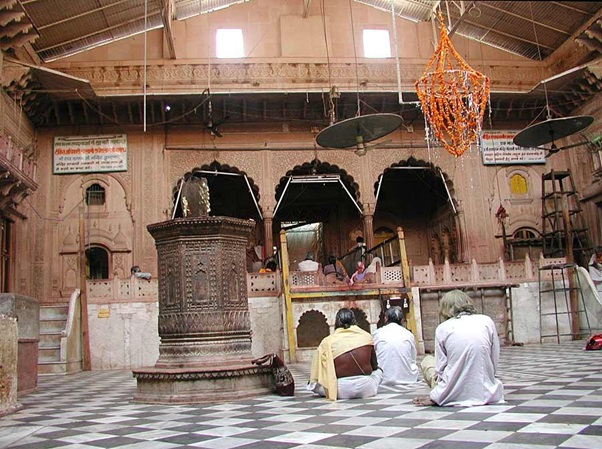
Other Temples in the Complex
Within the same temple compound are shrines dedicated to various divine forms of Lord Kṛṣṇa in His sweet relationship with Rādhārāṇī:
Śrī Rādhā Ānanda-Vallabha
Śrī Rādhā Jīvana-Vallabha
Śrī Rādhā Kiśorī-Vallabha
Objective 8 : To highlight the temple’s role as a living expression of mādhurya-rasa and Rādhā’s supreme spiritual position.
The Eternal Service of Rādhā and Kṛṣṇa
Śrī Rādhā Vallabha Mandira is not just a place of worship but a living heritage of bhakti, inviting every soul to dive into the nectar of devotional service and the divine love of Śrīmatī Rādhārāṇī and Śrī Kṛṣṇa.
For followers of Gauḍīya Vaiṣṇavism and all Vaiṣṇavas alike, visiting this temple is a sacred opportunity to witness mādhurya-rasa in its purest expression.
Objective 9 : To understand the contributions of Sundardāsa to the Radha Vallabh tradition through both temple construction and devotional poetry.
Life History of Sundardasa
Name: Sundardasa (also spelled Sundardas or Sundar Das)
Time Period: Late 16th to early 17th century (approx.)
Affiliation: Radha Vallabh Sampradaya
Spiritual Master: Shri Hit Harivansh Mahaprabhu
Place: Vrindavan, India
Spiritual Background
Sundardasa was a devoted disciple of Shri Hit Harivansh Mahaprabhu, the founder of the Radha Vallabh tradition, which emphasizes the supreme position of Radha in devotion to Krishna.
He was deeply immersed in prem bhakti (loving devotion) toward Radha Rani, following the teachings of his guru that Radha is the supreme goddess and Krishna is subordinate to her divine love.
Literary Contributions
Sundardasa was also a poet-saint who composed devotional hymns and poems in praise of Radha and Krishna.
His works align with the Bhakti movement, where emotional, direct devotion to God was expressed through poetry in vernacular languages.
Legacy
Sundardasa is remembered as one of the foremost disciples who materialized the teachings of Shri Harivansh Ji into a living tradition.
The Radha Vallabh Sampradaya remains a living tradition with followers primarily in Vrindavan and parts of North India.
The temple he built continues to be a center of devotional music (kirtan) and bhakti practices centered on Radha’s love.
